
Oven Roasted Salmon
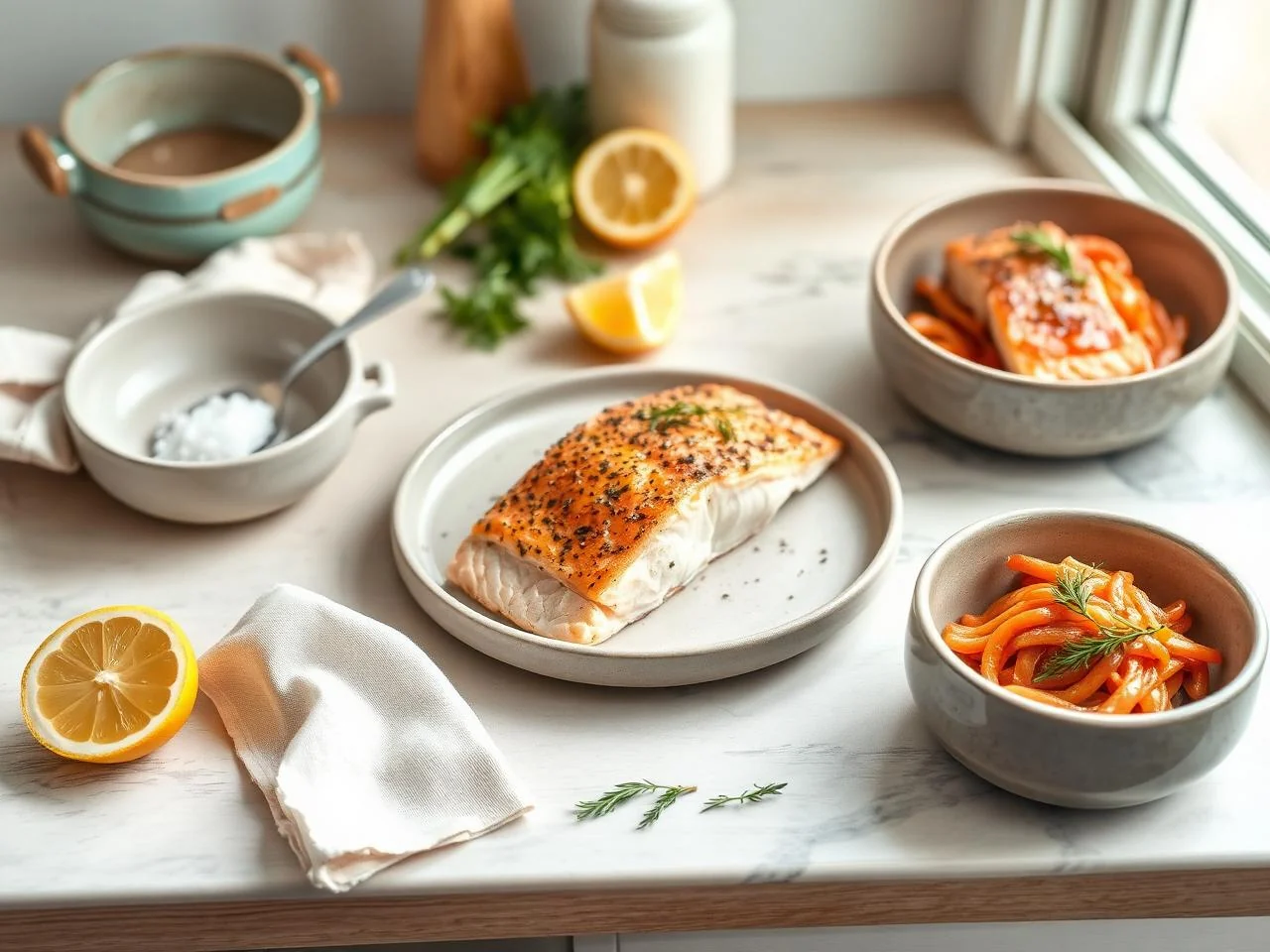
I still remember the first time I cooked salmon in the oven. I was a bit nervous, not knowing if it would turn out dry or overcooked. But with a few simple tips and tricks, I was able to achieve a perfectly cooked, moist, and flavorful piece of fish. Since then, oven roasted salmon has become a staple in my household, and I'm excited to share my recipe with you.
One of the reasons I love this recipe is that it's incredibly easy to make. With just a few ingredients and some basic cooking techniques, you can have a delicious, restaurant-quality meal on the table in no time. Plus, salmon is an excellent source of protein and omega-3 fatty acids, making it a great choice for a healthy dinner.
In this recipe, we'll be using a combination of lemon juice, olive oil, and herbs to give the salmon a bright, citrusy flavor. We'll also be cooking the fish at a moderate temperature to ensure that it stays moist and tender. Whether you're a seasoned cook or just starting out, this recipe is perfect for anyone looking to make a delicious and easy oven roasted salmon.
So, who is this recipe for? It's for anyone who loves salmon, of course! But it's also for those who are looking for a quick and easy dinner solution that's also healthy and flavorful. Whether you're cooking for one or for a crowd, this recipe is sure to please. And the best part? It's ready in just 20 minutes, making it perfect for a weeknight dinner or a special occasion.
In the following sections, we'll dive into the details of the recipe, including the ingredients, equipment, and step-by-step instructions. We'll also cover some common mistakes to avoid, variations, and serving suggestions. So, let's get started and make some delicious oven roasted salmon!
Why You’ll Love This Recipe
- This recipe is easy to make and requires minimal ingredients and equipment.
- The oven roasted salmon is moist and flavorful, with a bright and citrusy flavor profile.
- The recipe is perfect for a weeknight dinner or special occasion, and can be made in just 20 minutes.
- The salmon is a great source of protein and omega-3 fatty acids, making it a healthy and nutritious choice.
- The recipe is versatile and can be customized with your favorite herbs and spices.
- The oven roasted salmon is a crowd-pleaser and is sure to impress your friends and family.
Why This Recipe Works
The key to making great oven roasted salmon is to cook it at the right temperature and for the right amount of time. In this recipe, we'll be cooking the fish at 400°F (200°C) for 12-15 minutes, or until it reaches an internal temperature of 145°F (63°C). This ensures that the fish is cooked through and flaky, but still moist and tender.
Another important factor is the use of acid, such as lemon juice, to help break down the proteins in the fish and add flavor. The acidity also helps to balance out the richness of the salmon, creating a bright and refreshing flavor profile.
In addition to the lemon juice, we'll also be using olive oil to add moisture and flavor to the fish. The olive oil helps to keep the fish moist and tender, while also adding a rich and savory flavor.
Finally, the use of herbs such as thyme and rosemary adds a fragrant and aromatic flavor to the dish. These herbs complement the bright, citrusy flavor of the lemon juice and the richness of the salmon, creating a well-balanced and delicious flavor profile.
Ingredients You’ll Need
When it comes to making oven roasted salmon, the ingredients are just as important as the cooking technique. In this recipe, we'll be using a combination of fresh and high-quality ingredients to create a delicious and flavorful dish. From the salmon fillets to the lemon juice and olive oil, each ingredient plays a crucial role in the final product. So, let's take a look at what we'll need to make this recipe.
When shopping for salmon, look for fresh and sustainable options. You can choose either wild-caught or farmed salmon, depending on your preference and what's available in your area. For this recipe, we'll be using 4 salmon fillets, each weighing about 6 ounces.
- 4 salmon fillets, 6 oz (170g) eachLook for fresh and sustainable salmon fillets, either wild-caught or farmed. Make sure they are skinless and boneless for easy cooking.
- 2 tbsp olive oilUse a high-quality olive oil with a mild flavor to add moisture and flavor to the salmon.
- 2 tbsp freshly squeezed lemon juiceFreshly squeezed lemon juice adds a bright and citrusy flavor to the dish. Make sure to use real lemons and not bottled juice.
- 2 cloves garlic, mincedMinced garlic adds a pungent and savory flavor to the dish. Use fresh garlic for the best flavor.
- 1 tsp dried thymeDried thyme adds a fragrant and aromatic flavor to the dish. Use high-quality thyme for the best flavor.
- 1 tsp saltSalt enhances the flavor of the salmon and helps to bring out the natural flavors of the dish.
- 1/2 tsp black pepperBlack pepper adds a sharp and peppery flavor to the dish. Use freshly ground pepper for the best flavor.
- 1/4 cup chopped fresh parsleyChopped fresh parsley adds a fresh and herbaceous flavor to the dish. Use curly-leaf or flat-leaf parsley for the best flavor.
- 2 tbsp unsalted butter, softenedSoftened butter adds a rich and creamy flavor to the dish. Use high-quality butter for the best flavor.
- 1 lemon, cut into wedgesLemon wedges are used for serving and adding a squeeze of fresh lemon juice to the dish.
Equipment You’ll Need
How to Make Oven Roasted Salmon
- 1Preheat the oven to 400°F (200°C). Line a large baking sheet with aluminum foil, leaving enough room to fit the salmon fillets.
- 2Rinse the salmon fillets under cold water and pat them dry with paper towels. Season the salmon with salt and black pepper.
- 3In a small bowl, mix together the olive oil, lemon juice, garlic, and thyme. Brush the mixture evenly over both sides of the salmon fillets.
- 4Place the salmon fillets on the prepared baking sheet, leaving about 1 inch of space between each fillet.
- 5Bake the salmon in the preheated oven for 12-15 minutes, or until it reaches an internal temperature of 145°F (63°C). Check the temperature with an instant-read thermometer in the thickest part of the fillet.
- 6While the salmon is baking, melt the butter in a small saucepan over medium heat. Add the chopped parsley and cook for 1-2 minutes, or until the parsley is fragrant and the butter is melted.
- 7Remove the salmon from the oven and brush the melted butter and parsley mixture evenly over the top of each fillet.
- 8Return the salmon to the oven and bake for an additional 1-2 minutes, or until the butter is melted and the salmon is cooked through.
- 9Remove the salmon from the oven and let it rest for 2-3 minutes before serving.
- 10Serve the salmon hot, with a squeeze of fresh lemon juice and a side of your favorite vegetables or rice.
Expert Tips
- Make sure to pat the salmon dry with paper towels before cooking to remove excess moisture.
- Use a meat thermometer to ensure the salmon is cooked to a safe internal temperature.
- Don't overcook the salmon, as it can become dry and tough.
- Let the salmon rest for a few minutes before serving to allow the juices to redistribute.
- Use fresh and high-quality ingredients for the best flavor and texture.
- Experiment with different herbs and spices to find your favorite flavor combination.
- Consider serving the salmon with a side of roasted vegetables or a salad for a well-rounded meal.
- Leftover salmon can be stored in the refrigerator for up to 3 days and reheated in the oven or microwave.
Common Mistakes to Avoid
- Overcooking the salmon, which can make it dry and tough.
- Not patting the salmon dry with paper towels before cooking, which can prevent it from cooking evenly.
- Not using a meat thermometer to ensure the salmon is cooked to a safe internal temperature.
- Not letting the salmon rest for a few minutes before serving, which can cause the juices to run out and the fish to become dry.
- Using low-quality ingredients, which can affect the flavor and texture of the dish.
- Not experimenting with different herbs and spices to find your favorite flavor combination.
Variations and Substitutions
- Try using different types of fish, such as tilapia or cod, for a different flavor and texture.
- Add some heat to the dish by sprinkling a pinch of red pepper flakes over the salmon.
- Use fresh herbs, such as dill or basil, for a different flavor profile.
- Add some lemon slices or wedges to the baking sheet with the salmon for extra flavor.
- Try using a different type of citrus, such as lime or orange, for a different flavor profile.
- Add some chopped onions or shallots to the baking sheet with the salmon for extra flavor.
- Use a different type of oil, such as avocado or grapeseed, for a different flavor profile.
What to Serve With Oven Roasted Salmon
Oven roasted salmon is a versatile dish that can be served with a variety of sides and flavors. Consider serving it with a side of roasted vegetables, such as asparagus or Brussels sprouts, for a well-rounded meal. You could also serve it with a salad, such as a mixed green salad or a quinoa salad, for a lighter option.
For a more indulgent option, consider serving the salmon with a side of creamy mashed potatoes or roasted sweet potatoes. You could also serve it with a side of steamed broccoli or green beans for a healthier option.
Make-Ahead, Storage, Freezing and Reheating
Leftover oven roasted salmon can be stored in the refrigerator for up to 3 days. To store, place the salmon in an airtight container and refrigerate at a temperature of 40°F (4°C) or below.
To reheat, place the salmon in the oven at 300°F (150°C) for 5-7 minutes, or until it reaches an internal temperature of 145°F (63°C). You can also reheat it in the microwave, but be careful not to overcook it.
Oven roasted salmon can also be frozen for up to 2 months. To freeze, place the salmon in an airtight container or freezer bag and store at a temperature of 0°F (-18°C) or below. To reheat, thaw the salmon overnight in the refrigerator and then reheat it in the oven or microwave as desired.
When reheating leftover salmon, make sure to check the internal temperature to ensure it reaches a safe minimum internal temperature of 145°F (63°C). This will help prevent foodborne illness and ensure the salmon is safe to eat.
Frequently Asked Questions
What type of salmon is best for oven roasting?
Any type of salmon can be used for oven roasting, but wild-caught or farmed Atlantic salmon is a good choice. Look for fresh and sustainable options.
How do I know when the salmon is cooked?
The salmon is cooked when it reaches an internal temperature of 145°F (63°C). Use a meat thermometer to check the temperature.
Can I use frozen salmon for oven roasting?
Yes, frozen salmon can be used for oven roasting. Just thaw it first and pat it dry with paper towels before cooking.
How do I prevent the salmon from sticking to the baking sheet?
To prevent the salmon from sticking to the baking sheet, make sure to line the sheet with aluminum foil or parchment paper and brush it with oil or cooking spray.
Can I oven roast salmon without the skin?
Yes, you can oven roast salmon without the skin. Just make sure to adjust the cooking time and temperature accordingly.
How do I store leftover oven roasted salmon?
Leftover oven roasted salmon can be stored in the refrigerator for up to 3 days or frozen for up to 2 months. Reheat it in the oven or microwave as desired.
Can I use a different type of fish for oven roasting?
Yes, you can use a different type of fish for oven roasting. Just adjust the cooking time and temperature accordingly based on the type and thickness of the fish.
How do I add flavor to the salmon?
You can add flavor to the salmon by using different herbs and spices, such as thyme, rosemary, or lemon juice. You can also try marinating the salmon in a mixture of oil, acid, and spices before cooking.
Ingredients
- 4 salmon fillets, 6 oz (170g) each
- 2 tbsp olive oil
- 2 tbsp freshly squeezed lemon juice
- 2 cloves garlic, minced
- 1 tsp dried thyme
- 1 tsp salt
- 1/2 tsp black pepper
- 1/4 cup chopped fresh parsley
- 2 tbsp unsalted butter, softened
- 1 lemon, cut into wedges
Instructions
- Preheat the oven to 400°F (200°C). Line a large baking sheet with aluminum foil, leaving enough room to fit the salmon fillets.
- Rinse the salmon fillets under cold water and pat them dry with paper towels. Season the salmon with salt and black pepper.
- In a small bowl, mix together the olive oil, lemon juice, garlic, and thyme. Brush the mixture evenly over both sides of the salmon fillets.
- Place the salmon fillets on the prepared baking sheet, leaving about 1 inch of space between each fillet.
- Bake the salmon in the preheated oven for 12-15 minutes, or until it reaches an internal temperature of 145°F (63°C). Check the temperature with an instant-read thermometer in the thickest part of the fillet.
- While the salmon is baking, melt the butter in a small saucepan over medium heat. Add the chopped parsley and cook for 1-2 minutes, or until the parsley is fragrant and the butter is melted.
- Remove the salmon from the oven and brush the melted butter and parsley mixture evenly over the top of each fillet.
- Return the salmon to the oven and bake for an additional 1-2 minutes, or until the butter is melted and the salmon is cooked through.
- Remove the salmon from the oven and let it rest for 2-3 minutes before serving.
- Serve the salmon hot, with a squeeze of fresh lemon juice and a side of your favorite vegetables or rice.