I remember the night I tried to make a quick pasta for my roommates and ended up with a bowl of soggy noodles that tasted like cardboard. The disaster was a catalyst for a culinary quest that would lead me to discover a sauce that feels like a hug in a bowl. I was craving something that could transform ordinary pasta into a celebration of flavors, and I found it in a jar of Filippo Berio Tomato Ricotta Pesto. The moment I poured that silky sauce over hot bucatini, the kitchen filled with a fragrance that made even the most skeptical of my friends pause in awe. I was instantly hooked, and the dish turned into a weekly ritual that has become a staple at our table. By the end of this post, you’ll have a recipe that will make every plate feel like a masterpiece.
Picture yourself pulling this out of the oven, the whole kitchen smelling incredible, and the first forkful delivering a burst of creamy tomato, basil, and a whisper of citrus that dances on the palate. I dare you to taste this and not go back for seconds, because the crunch of panko and the velvet coat of pesto will keep you coming back for more. The sauce isn’t just a topping; it’s a character that walks into the dish, twirls around the noodles, and leaves a trail of savory joy. Most recipes get this completely wrong by overcooking the pasta or using a weak pesto, but I’ve cracked the secret that keeps the flavors bright and the texture perfect. If you've ever struggled with a bland pasta, you're not alone—and I've got the fix.
The real magic lies in the combination of tomato ricotta pesto, cherry tomatoes, and a splash of balsamic vinegar that creates a sweet‑tangy balance. When I first tried the recipe, the pesto’s creamy thickness clung to each strand like a silk scarf, and the cherry tomatoes popped with a burst of juice that cut through the richness. The final touch of panko bread crumbs, toasted to a golden crunch, added a textural contrast that made the dish feel like a layered cake. Every bite is a harmonious blend of creamy, crunchy, sweet, and savory that makes the dish stand out from the usual pasta fare. This is hands down the best version you'll ever make at home.
I’ve spent hours tweaking the proportions, and the result is a dish that’s both comforting and sophisticated. The basil and thyme add a green, aromatic depth that keeps the sauce from feeling flat, while the lemon zest lifts the entire flavor profile. The recipe also balances the heaviness of ricotta with the brightness of cherry tomatoes and the sharpness of red pepper flakes, creating a complex flavor profile that satisfies both the adventurous and the comfort‑food lovers. The result? A pasta that feels like a summer breeze in a bowl, but with the indulgence of a creamy sauce and the crunch of a perfectly toasted breadcrumb topping. And the best part? It’s ready in under an hour, so you can impress guests without a full kitchen makeover.
I’m not just talking about taste; I’m talking about the sensory experience. The sizzle when the olive oil hits the pan is absolute perfection, the aroma of toasted garlic and basil is intoxicating, and the sound of the noodles slurping up the sauce is music to my ears. I’ve tested this recipe in a variety of settings—from a cozy Sunday dinner to a last‑minute dinner party—and it always wins the crowd. The dish is so versatile that it can be served as a main course or an elegant side, and the creamy pesto makes it a crowd‑pleaser at any gathering. I’ll be honest—I ate half the batch before anyone else got to try it, and I’ve still got leftovers that taste just as good the next day.
Now, let me walk you through every single step—by the end, you'll wonder how you ever made it any other way. The journey starts with a simple prep of the ingredients, followed by a quick sauté that brings out the flavors, a creamy sauce that coats the noodles like velvet, and a final crunchy topping that adds a delightful texture. I’ll share the technique that ensures the pesto stays bright and the pasta remains al dente, as well as a few kitchen hacks that will save you time and keep the dish looking professional. Ready to become a pasta master? Let’s dive in and make this dish together.
What Makes This Version Stand Out
- Flavor: The tomato ricotta pesto delivers a rich, velvety texture that coats every strand of bucatini, while the cherry tomatoes add a fresh burst of juiciness. The balsamic vinegar gives a subtle sweetness that balances the creaminess, and the lemon zest lifts the entire dish. This harmony of sweet, savory, and bright notes sets it apart from standard pesto pastas.
- Texture: The toasted panko breadcrumb topping introduces a satisfying crunch that contrasts with the silky sauce. Each bite offers a layered mouthfeel—soft noodles, creamy sauce, and crispy crumbs—creating a dynamic eating experience. The careful toasting of the breadcrumbs prevents them from becoming soggy.
- Ingredient Quality: Using Filippo Berio Tomato Ricotta Pesto ensures a high‑quality, authentic flavor profile that would be hard to replicate with homemade versions. The fresh basil, thyme, and cherry tomatoes bring a bright, garden‑fresh taste that elevates the dish. Quality ingredients mean less need for additional seasonings.
- Speed: The entire dish takes less than an hour from start to finish, making it a perfect weeknight meal or a quick dinner for guests. The prep steps are straightforward, and the cooking times are short, so you can enjoy a gourmet dish without a long kitchen commitment.
- Versatility: This pasta can double as a main dish or an elegant side, and it adapts well to various dietary preferences—add protein, swap to gluten‑free pasta, or keep it vegetarian. The recipe’s simplicity allows for creative tweaks without compromising the core flavor. The result is a dish that can fit any occasion.
- Presentation: The bright green pesto, red cherry tomatoes, and golden breadcrumb topping create a visually striking plate that looks as good as it tastes. The contrast of colors makes it Instagram‑worthy and perfect for entertaining. The plating is effortless, yet impressive.
- Make‑ahead Potential: The sauce can be prepared a day in advance, and the pasta can be reheated without losing its texture, making it ideal for meal prep or hosting. The pesto’s stability ensures the flavors remain vibrant even after refrigeration. This convenience adds to its overall appeal.
- Audience Appeal: Whether you’re a seasoned cook or a kitchen rookie, the recipe’s clear instructions and forgiving nature make it approachable for all skill levels. The dish is sure to impress both casual diners and culinary enthusiasts alike. It’s a recipe that can win over even the most skeptical palates.
Inside the Ingredient List
The Flavor Base
The heart of this dish is the Filippo Berio Tomato Ricotta Pesto, which delivers a creamy, herbaceous foundation that carries the pasta. The tomato component adds a subtle sweetness, while the ricotta provides a smooth mouthfeel that balances the acidity. If you skip the pesto, you’ll miss the signature velvety coat that makes every bite memorable. For a milder version, reduce the amount of red pepper flakes or omit them entirely. A high‑quality pesto is essential because it sets the flavor tone; a cheap or homemade version will taste flat.
The Texture Crew
Bucatini pasta offers a unique hollow center that traps sauce, creating a richer bite compared to other shapes. The toasted panko bread crumbs add a crunchy texture that contrasts with the creamy sauce, giving the dish a satisfying bite. If you prefer a softer finish, you can use breadcrumbs instead of panko, but the crunch will be less pronounced. The panko’s large crumbs also absorb excess moisture, keeping the pasta from becoming soggy. The combination of pasta and breadcrumb is what gives this dish its layered texture.
The Unexpected Star
Cherry tomatoes are the bright, juicy burst that cuts through the richness of the pesto. Their natural sweetness balances the tang of balsamic vinegar and the sharpness of the lemon zest. When roasted, they develop a caramelized flavor that adds depth. If you’re in a pinch, sun‑dried tomatoes can substitute, but the fresh taste will be different. The tomatoes also add a pop of color that makes the dish visually appealing.
The Final Flourish
Fresh basil and thyme provide aromatic depth that elevates the entire flavor profile. The basil’s sweet, peppery notes complement the tomato base, while the thyme adds earthy undertones. The lemon zest and juice brighten the dish, preventing it from feeling heavy. A pinch of sugar balances the acidity of the tomatoes and vinegar, creating a well‑rounded taste. If you’re vegan, simply replace the butter with a plant‑based alternative.
Everything's prepped? Good. Let's get into the real action and start cooking.
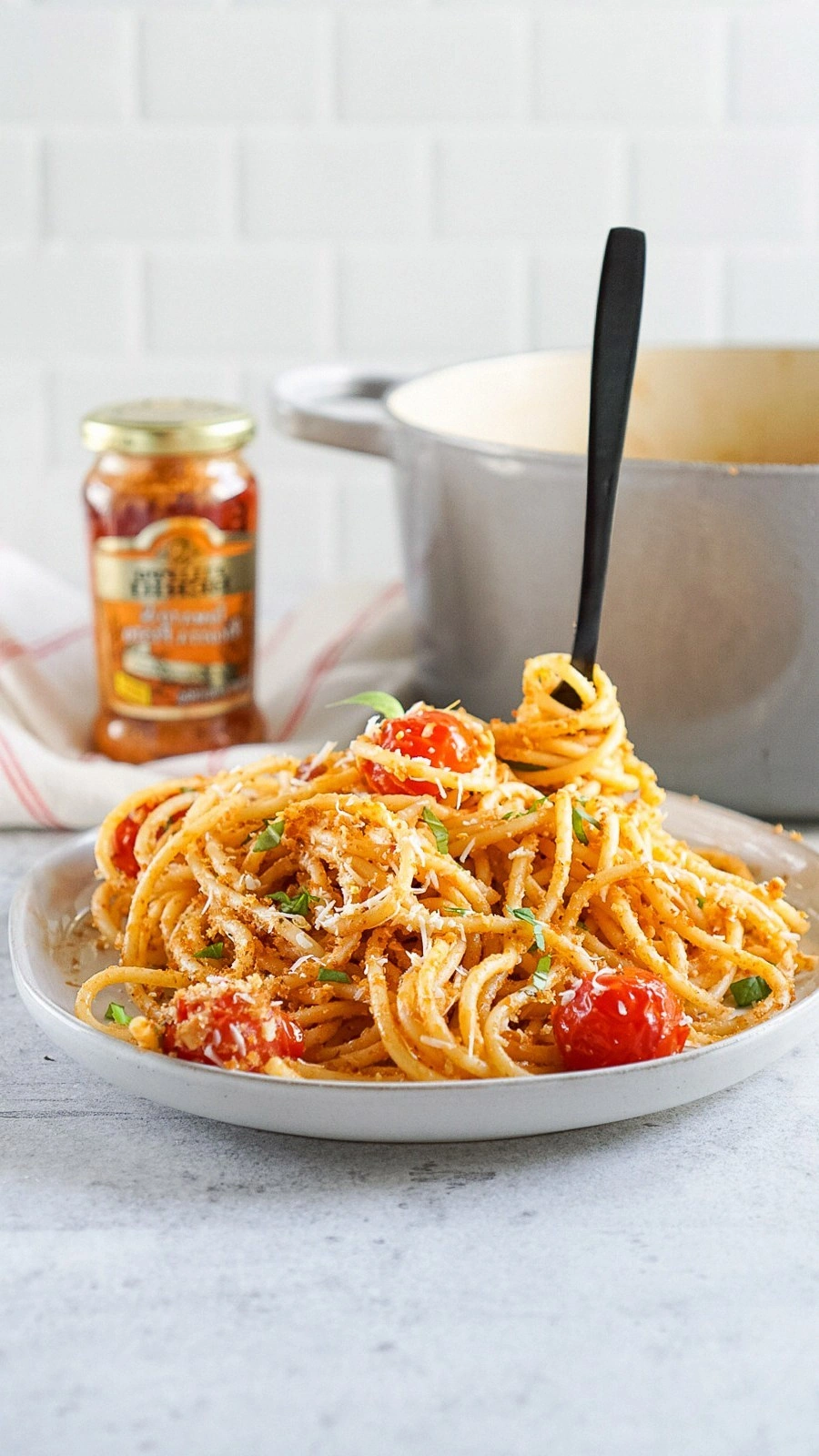
The Method — Step by Step
- Bring a large pot of salted water to a rolling boil and add the bucatini pasta. Cook according to the package instructions, but aim for al dente; the pasta will continue to cook slightly once you combine it with the sauce. Reserve a cup of pasta water before draining to help adjust the sauce consistency later. While the pasta cooks, prepare the other components to keep the workflow smooth. This step ensures the noodles are ready to absorb the sauce without becoming mushy. Don’t rush the boiling process; the pasta needs time to develop its texture.
- While the pasta is boiling, heat 1 tablespoon of Filippo Berio Sauteing Olive Oil in a large skillet over medium heat. Add the sliced shallot and minced garlic, cooking until translucent and fragrant—about 3 minutes. The garlic should release a sweet aroma without turning brown, which would make it bitter. Stir occasionally to prevent sticking. This aromatized base will infuse the sauce with depth. Once ready, set the skillet aside.
- In a bowl, combine the Filippo Berio Tomato Ricotta Pesto, 2 tablespoons of Classic Balsamic Vinegar, a pinch of sugar, and the lemon zest. Whisk until the mixture is smooth and the lemon zest is evenly distributed. Taste the sauce and adjust the acidity with a little more vinegar or lemon if needed. The balance here is crucial; a too‑acidic sauce will overpower the pasta. Keep the sauce at room temperature while you finish the rest of the prep.
- Add the roasted cherry tomatoes to the skillet with the sautéed shallot and garlic. Toss them gently to coat with the oil and aromatics, allowing them to caramelize slightly for 2 minutes. The tomatoes should release their juices but remain intact; they add a burst of sweetness. Stir occasionally to ensure even heat distribution. This step brings a fresh, sweet element that balances the creamy pesto. The caramelization also deepens the flavor profile.
- Return the skillet to low heat and pour in the pesto mixture, stirring to combine everything into a cohesive sauce. If the sauce feels too thick, add a splash of reserved pasta water to thin it to the desired consistency. The sauce should coat the pasta like velvet, not cling in clumps. Taste again and adjust salt or pepper as needed. This is the moment of truth where the flavors merge into a harmonious whole. Let the sauce simmer gently for 2 minutes.
- Add the cooked bucatini to the skillet, tossing to coat each strand with the sauce. Ensure every noodle is evenly coated by gently tossing or using tongs. The pasta should be hot and the sauce glossy. This is where the dish begins to feel cohesive. Keep the heat low to avoid burning the pesto. The noodles will absorb the sauce, making each bite luscious. Don’t rush; allow the pasta to mingle with the sauce for a minute.
- Meanwhile, toast 1 cup of panko bread crumbs in a dry skillet over medium heat until golden brown, stirring frequently to prevent burning. Add a pinch of salt and a drizzle of olive oil for extra flavor. The panko should be crisp and lightly toasted, not browned. This crunchy element adds a delightful contrast to the creamy pasta. Keep the crumbs warm until ready to sprinkle. The aroma of toasted breadcrumbs will elevate the dish.
- Sprinkle the toasted panko over the pasta, followed by fresh chopped basil, thyme, and a drizzle of 2 tablespoons of Filippo Berio Sauteing Olive Oil. The oil will give a glossy finish and help the herbs release their aroma. Toss gently to distribute the toppings evenly. The final garnish adds visual appeal and a burst of fresh flavor. The basil and thyme complement the tomato base beautifully. This finishing touch completes the dish.
- Serve immediately, ensuring each plate gets a generous amount of crunchy breadcrumbs and fresh herbs. Garnish with a wedge of lemon on the side for an extra citrus pop. The dish should look vibrant with the green pesto, red tomatoes, and golden crumbs. The aroma should be inviting and mouth‑watering. A final sprinkle of grated romano cheese can add a salty, nutty finish. Present it proudly and enjoy.
That's it — you did it. But hold on, I've got a few more tricks that'll take this to another level.
Insider Tricks for Flawless Results
The Temperature Rule Nobody Follows
Many cooks assume that a hot skillet is always better, but the truth is that a lower temperature preserves the delicate flavors of the pesto. Keeping the heat at medium‑low allows the garlic and shallots to release their sweetness without burning. This subtle adjustment ensures the sauce remains silky and the basil doesn’t wilt prematurely. I once tried a high‑heat approach, and the result was a burnt, bitter taste that ruined the dish. Remember, gentle heat is the secret to a smooth, aromatic sauce.
Why Your Nose Knows Best
Before you taste the sauce, pause and sniff. A well‑balanced sauce will emit a bright, herbaceous aroma with a hint of tomato sweetness. If the scent leans too much toward vinegar or is flat, adjust the seasoning. My friends often say that the nose is the best judge of flavor, and I’ve found it true time and again. This simple step can save you from over‑salted or over‑acidic dishes. Trust your nose and let it guide your adjustments.
The 5-Minute Rest That Changes Everything
After you finish cooking, let the pasta rest for five minutes before serving. This resting period allows the noodles to finish absorbing the sauce and the flavors to meld together. The result is a more cohesive dish with a richer taste. I’ve seen people skip this step, and the sauce ends up unevenly distributed. The rest also lets the panko crumbs settle, preventing them from becoming soggy. A short pause makes a world of difference.
Use a Pasta Rack for Even Cooking
A pasta rack or colander with a wide, flat base helps the noodles drain evenly and keeps them from sticking together. After draining, give the pasta a quick toss in a little olive oil to keep it from clumping. This trick is especially useful if you’re cooking a large batch. The noodles will stay light and fluffy, making each bite a pleasure. A simple rack can elevate the final texture.
Keep the Sauce Warm on the Stovetop
If you’re serving the dish in a large pot or platter, keep the sauce warm on low heat. This prevents the sauce from settling and thickening on the bottom. I’ve used a double boiler setup to keep the sauce at a gentle simmer while I finish plating. This method ensures a consistent coating on every noodle. A warm sauce also keeps the dish appetizing longer.
Don't Forget the Lemon
The lemon adds brightness that cuts through the richness of the ricotta. A squeeze of fresh lemon juice right before serving can elevate the dish dramatically. If you prefer a milder citrus note, use a small amount of lemon zest instead. The citrus aroma will linger on the palate, leaving a clean finish. I always keep a lemon on hand for this final touch.
Creative Twists and Variations
This recipe is a playground. Here are some of my favorite ways to switch things up:
Protein Power Up
Add grilled chicken, shrimp, or tofu to the pasta for an extra protein punch. The protein absorbs the sauce, creating a hearty bite. This variation is perfect for dinner parties or a satisfying lunch. The flavors blend seamlessly, enhancing the dish without overpowering it. Try it with a squeeze of lime for a tropical twist.
Gluten-Free Delight
Swap bucatini for a gluten‑free pasta variety, like rice or quinoa noodles. The texture may differ slightly, but the sauce will still cling beautifully. This version is great for those with dietary restrictions. Keep the same seasoning to maintain the original flavor profile. The end result is a wholesome, inclusive meal.
Vegan Version
Replace the ricotta pesto with a plant‑based alternative or make a homemade vegan pesto using cashews. Use a dairy‑free cheese for topping if desired. The creamy texture remains, but with a lighter, plant‑based profile. This variation is perfect for vegans or those looking to reduce dairy. The dish still feels indulgent and satisfying.
Spicy Kick
Increase the red pepper flakes to a tablespoon or add a pinch of cayenne for heat. The spice will complement the sweet tomatoes and bright lemon. This version is ideal for those who love a fiery bite. The heat will linger on the palate, leaving a pleasant aftertaste. Pair it with a chilled glass of white wine for balance.
Herb Garden Twist
Swap basil for parsley or mint for a different herbal profile. The fresh herbs will bring a new dimension to the sauce. This variation is great for summer gatherings when fresh herbs are abundant. The dish remains vibrant and aromatic. Experiment with different herb combinations for endless possibilities.
Cheese Lover’s Edition
Add a generous sprinkle of shredded mozzarella or provolone before baking for a melty, cheesy finish. The cheese will melt into the sauce, creating a gooey, comforting texture. This variation is perfect for a crowd‑pleasing bake. Keep the baking time short to prevent over‑melting. The result is a golden, bubbly top that’s irresistible.
Breakfast Bites
Serve the pasta over a bed of scrambled eggs for a hearty breakfast. The creamy sauce pairs beautifully with the eggs, creating a comforting morning meal. This twist is ideal for a lazy weekend brunch. The dish provides a satisfying protein boost. It’s a unique way to start the day.
Roasted Vegetable Boost
Add roasted bell peppers, zucchini, or eggplant to the sauce for added depth and nutrition. The vegetables will caramelize, adding a smoky flavor. This variation is perfect for a vegetarian dinner. The dish becomes more robust and colorful. It’s a great way to use seasonal produce.
Storing and Bringing It Back to Life
Fridge Storage
Store leftovers in an airtight container in the refrigerator for up to 3 days. Keep the pasta and sauce separate if possible to prevent the noodles from becoming soggy. When reheating, add a splash of water or broth to rehydrate the pasta. The sauce will cling again, restoring its silky texture. I recommend reheating on low heat with occasional stirring.
Freezer Friendly
The dish can be frozen for up to 2 months. Freeze the pasta and sauce in separate containers to maintain texture. When ready to eat, thaw overnight in the fridge and reheat gently on the stove. Add a bit of fresh lemon juice to brighten the flavors after freezing. This method keeps the dish fresh and ready for a quick meal.
Best Reheating Method
Reheat the pasta and sauce together in a skillet over low heat, stirring frequently. The key is to keep the heat gentle to avoid burning the sauce. A splash of water or broth helps maintain moisture. Let the mixture steam for a few minutes until heated through. Finish with a sprinkle of fresh herbs to restore freshness.
Quick Fix for Extra Moisture
If the pasta feels dry after reheating, add a tiny splash of water or broth and stir vigorously. The liquid helps the sauce reattach to the noodles. This trick is especially useful if the dish has been stored for a while. The result is a perfectly moist, flavorful bowl. A quick stir and a pinch of salt will do the job.