
Love this? Pin it for later! 📌
Carrot Ginger Soup with Coconut Milk: Your New Favorite Cozy Seasonal Dinner
There’s a certain magic that happens when the first crisp autumn breeze sweeps through the kitchen window, carrying with it the scent of fallen leaves and distant woodsmoke. It was on one such evening last October that I found myself rummaging through the crisper drawer, determined to create something that would wrap my family in warmth from the inside out. What emerged was this luminous, sunset-hued carrot ginger soup—an accidental masterpiece that has since become our seasonal tradition.
My husband, who typically eyes vegetable soups with suspicion, actually asked for seconds (and thirds!). My eight-year-old declared it “better than mac and cheese,” which, if you know anything about third-grade culinary standards, is the highest praise imaginable. What makes this soup truly special isn’t just its silky texture or the way the coconut milk tames the ginger’s bite; it’s the way it transforms humble carrots into something extraordinary. Whether you’re hosting a sophisticated dinner party or simply need a bowl of comfort after a long day, this soup delivers restaurant-quality flavor with minimal effort.
Why This Recipe Works
- Depth of Flavor: Roasting the carrots before simmering intensifies their natural sweetness and adds caramelized complexity
- Perfect Balance: Fresh ginger provides bright heat while coconut milk creates luxurious creaminess without dairy
- Nutrient-Dense: Packed with beta-carotene, vitamin C, and healthy fats for immune-boosting comfort
- Make-Ahead Friendly: Flavors deepen beautifully overnight, making it perfect for meal prep
- One-Pot Wonder: Minimal cleanup required with maximum flavor payoff
- Freezer Approved: Portions perfectly for busy weeknights when you need instant comfort
- Restaurant Quality: Immersion blender creates velvety texture that rivals any fine dining establishment
Ingredients You'll Need
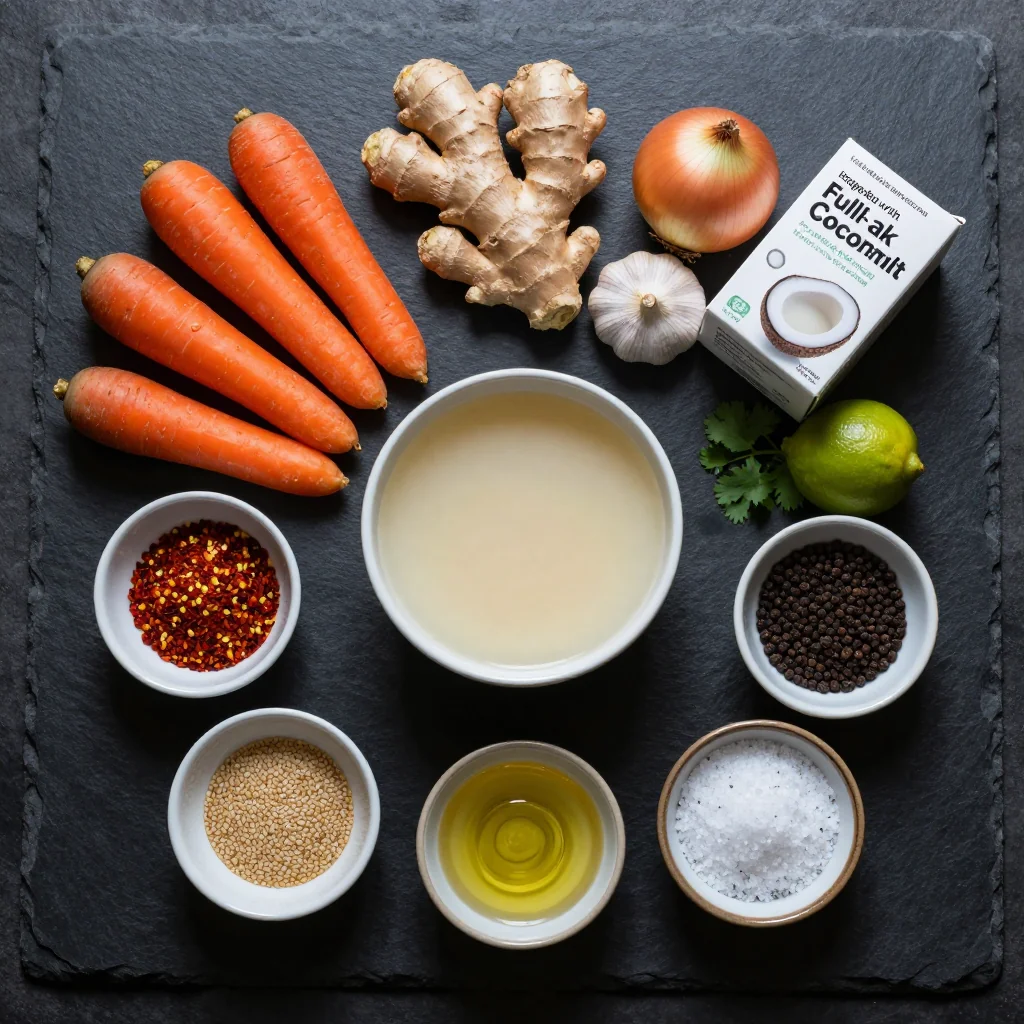
The beauty of this soup lies in its simplicity—each ingredient plays a crucial role in creating the final symphony of flavors. Let’s explore what makes each component special and how to select the best quality ingredients for maximum impact.
The Carrots: The Star of the Show
For optimal sweetness and color, choose medium-sized carrots that feel heavy for their size with smooth, firm skin. Avoid carrots with cracks, soft spots, or those that feel limp. While baby carrots work in a pinch, whole carrots provide superior flavor and texture. Pro tip: if you can find rainbow carrots at your farmer’s market, they add gorgeous color variations, though orange carrots will give you that classic, vibrant hue.
Ginger: Fresh is Non-Negotiable
Fresh ginger root delivers a bright, peppery heat that ground ginger simply cannot replicate. Look for plump, smooth ginger with taut skin—wrinkles indicate age and woodiness. Store unpeeled ginger in your freezer; it grates beautifully when frozen and lasts for months. For this recipe, we’ll use a generous 2-inch piece, but feel free to adjust based on your heat preference.
Coconut Milk: Full-Fat for Full Flavor
Please, please don’t substitute light coconut milk here. The full-fat version provides essential richness that balances the ginger’s heat and creates that luxurious, spoon-coating texture we’re after. Shake your can vigorously before opening, or if separation has occurred, whisk the thick cream with the liquid until smooth. For an extra-decadent finish, reserve the thick cream from the top to drizzle as a garnish.
Aromatics: The Flavor Foundation
Yellow onion provides a sweet, mellow base that melts into the soup without overpowering. Three cloves of garlic might seem excessive, but they mellow beautifully during cooking, adding depth without harshness. Choose firm onions with dry, papery skin and avoid any with soft spots or sprouting.
Vegetable Broth: Quality Matters
The broth forms the backbone of your soup, so choose wisely. Homemade is exceptional, but a high-quality store-bought version works beautifully. Look for low-sodium options that list vegetables as the first ingredients, not salt. Better Than Bouillon’s vegetable base dissolved in hot water is my go-to when homemade isn’t an option.
Lime Juice: The Finishing Touch
Fresh lime juice added at the end brightens all the flavors and prevents the coconut milk from feeling too heavy. Bottled juice lacks the vibrant acidity that makes this soup sing. Roll your lime on the counter before cutting to maximize juice extraction.
How to Make Carrot Ginger Soup with Coconut Milk for Cozy Seasonal Dinners
Roast the Carrots for Maximum Flavor
Preheat your oven to 425°F (220°C). Peel and cut 1½ pounds of carrots into ½-inch chunks—uniform size ensures even cooking. Toss with 2 tablespoons olive oil, 1 teaspoon salt, and ½ teaspoon pepper on a rimmed baking sheet. Roast for 25-30 minutes, stirring once halfway through, until carrots are tender and caramelized at the edges. This step concentrates the natural sugars and adds incredible depth to your final soup.
Build Your Aromatic Base
While carrots roast, heat 2 tablespoons olive oil in a large Dutch oven over medium heat. Dice 1 large yellow onion (about 1½ cups) and sauté for 5-6 minutes until translucent but not browned. Add 3 minced garlic cloves and cook for 30 seconds more—just until fragrant. This creates the flavor foundation that will carry through the entire soup.
Add Ginger and Spices
Peel and grate a 2-inch piece of fresh ginger (about 2 tablespoons) directly into the pot. Add 1 teaspoon ground coriander and ½ teaspoon ground cumin. Cook for 1 minute, stirring constantly, until spices are toasted and aromatic. This brief cooking time mellows the ginger’s bite while allowing its essential oils to bloom.
Combine with Broth
Add your roasted carrots to the pot along with 4 cups vegetable broth. Increase heat to high and bring to a boil, then reduce to a simmer. Cover and cook for 15 minutes to allow all flavors to meld beautifully. The carrots should be completely tender when pierced with a fork.
Blend Until Silky Smooth
Remove from heat and add 1 can (13.5 oz) full-fat coconut milk. Using an immersion blender, blend directly in the pot until completely smooth and creamy, about 2-3 minutes. If using a countertop blender, work in batches, filling the blender no more than half full and removing the center cap to allow steam to escape. Blend each batch for 30-45 seconds until velvety.
Season and Brighten
Return to low heat and add 2 tablespoons fresh lime juice, 1 tablespoon maple syrup (optional but recommended for balancing flavors), and additional salt and pepper to taste. The soup should coat the back of a spoon—if too thick, thin with additional broth. If too thin, simmer for 5-10 minutes to reduce.
Serve with Style
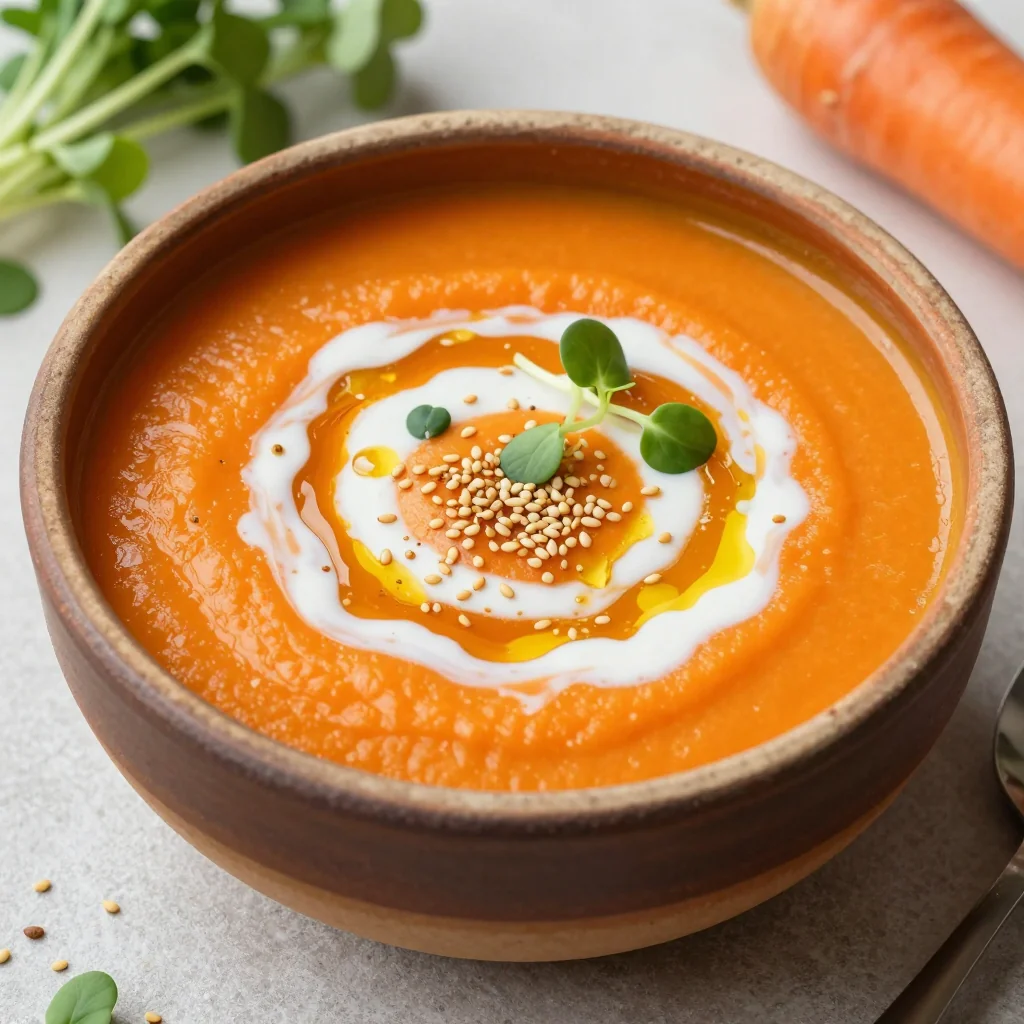
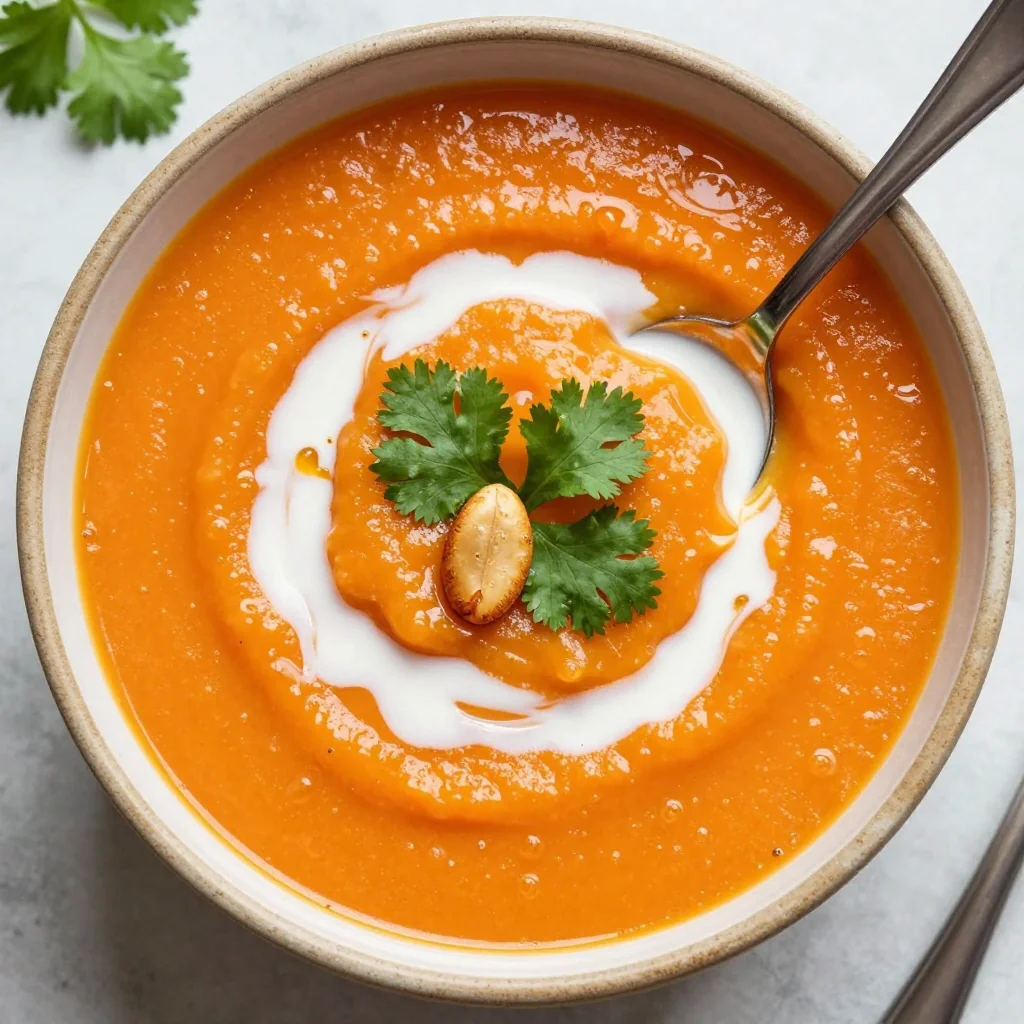
Ladle into warmed bowls and garnish with a swirl of coconut cream, toasted pumpkin seeds, fresh cilantro leaves, and a lime wedge. Serve with crusty bread for dipping. For an extra-special presentation, drizzle with chili oil for color contrast and gentle heat.
Expert Tips
Temperature Matters
Always warm your bowls before serving hot soup. This simple step keeps the soup at optimal temperature longer and prevents the jarring experience of hot soup hitting cold ceramic. Simply rinse bowls with hot water and dry before ladling.
Ginger Selection
Choose ginger with smooth, taut skin and no soft spots. Young ginger has thinner skin and juicier flesh. If ginger is slightly wrinkled, it’s still usable—just peel more deeply to remove the fibrous outer layer. Store unused ginger in your freezer for future use.
Blending Safety
When using a countertop blender, never fill more than half full with hot liquid. Remove the center cap and cover with a kitchen towel to allow steam to escape. Start on low speed and gradually increase to prevent explosive situations.
Color Preservation
To maintain the soup’s vibrant orange color, add lime juice at the very end of cooking. Acid can dull colors if simmered too long. The soup will naturally darken slightly over time, but proper timing preserves maximum vibrancy.
Texture Control
For ultra-smooth restaurant quality, strain the soup through a fine-mesh sieve after blending. This removes any fibrous bits from the ginger or carrots, creating an impossibly silky texture worthy of the finest establishments.
Serving Suggestions
Create a soup bar for entertaining: offer toppings like toasted coconut flakes, chopped peanuts, chili oil, fresh herbs, and lime wedges. This transforms simple soup into an interactive experience that guests will remember.
Variations to Try
Thai-Inspired Version
Add 1 stalk lemongrass (smashed) and 1 Thai chili to the simmering broth. Replace coriander with Thai basil and finish with fish sauce instead of salt. The result is a soup that bridges the gap between cozy comfort and exotic adventure.
Autumn Harvest
Replace half the carrots with butternut squash or sweet potato for deeper autumn flavors. Add ½ teaspoon cinnamon and a pinch of nutmeg. This variation tastes like fall in a bowl and pairs beautifully with apple cider.
Protein-Packed
Add 1 can rinsed chickpeas or 1 cup red lentils during the simmering stage. For non-vegetarians, shredded rotisserie chicken stirred in at the end creates a complete meal. These additions transform the soup from starter to main course.
Cooling Summer Version
Serve the soup chilled with additional coconut milk swirled in and topped with diced mango and fresh mint. This refreshing take is perfect for hot weather when you want soup flavors without the heat.
Storage Tips
This soup is a meal-prep dream, actually improving in flavor as the ingredients meld together. Here’s everything you need to know about storing and making ahead:
Refrigerator Storage
Cool completely before transferring to airtight containers. The soup will thicken considerably when chilled—this is normal and actually preferred. Store up to 5 days in the refrigerator. When reheating, add vegetable broth or water to achieve desired consistency. Warm gently over medium-low heat, stirring occasionally, until heated through.
Freezer Instructions
Portion cooled soup into freezer-safe containers, leaving 1-inch headspace for expansion. Freeze up to 3 months for optimal flavor, though it remains safe indefinitely. Thaw overnight in the refrigerator or use the defrost setting on your microwave. Reheat slowly, adding liquid as needed. The coconut milk may separate slightly upon thawing—simply whisk vigorously or blend briefly to reincorporate.
Make-Ahead Strategy
Prepare the soup completely up to 3 days in advance. The flavors actually intensify over time, making this perfect for entertaining. If serving to guests, prepare the soup base but wait to add the lime juice and final seasoning until reheating. This ensures maximum brightness and allows you to adjust seasoning based on how flavors have developed.
Frequently Asked Questions
While fresh ginger is strongly recommended for its bright, complex flavor, you can substitute ground ginger in a pinch. Use ½ teaspoon ground ginger for every tablespoon of fresh. However, the soup will lack the vibrant, peppery notes that make this recipe special. If using ground ginger, add it with the other dried spices and cook for 30 seconds before adding liquids.
Absolutely! This soup is naturally vegan as written, using coconut milk instead of dairy. Just ensure your vegetable broth is certified vegan (some contain honey or other animal products). The coconut milk provides plenty of richness, making this soup satisfying for vegans and non-vegans alike. For extra protein, consider adding chickpeas or serving with quinoa.
If the ginger heat is overwhelming, stir in additional coconut milk or a splash of heavy cream for non-vegan versions. You can also add a diced potato during simmering, then blend—it will absorb some heat. A teaspoon of honey or maple syrup helps balance spiciness too. Next time, start with 1 tablespoon of ginger and add more to taste.
Yes! For slow cooker preparation, add all ingredients except coconut milk and lime juice to your slow cooker. Cook on low for 6-7 hours or high for 3-4 hours until carrots are very tender. Add coconut milk during the last 30 minutes of cooking. Blend as directed, then stir in lime juice before serving. Note that roasting the carrots first still provides the best flavor, even when using a slow cooker.
This soup pairs beautifully with crusty sourdough bread, garlic naan, or grilled cheese sandwiches. For a lighter option, serve with a crisp green salad dressed with lime vinaigrette. As a starter, it complements roasted chicken, grilled salmon, or vegetable curry. For garnish, try toasted coconut flakes, pumpkin seeds, fresh herbs, or a swirl of yogurt.
While coconut milk provides the signature flavor, you can substitute with heavy cream for a richer, non-vegan version. For dairy-free alternatives, try cashew cream (blend soaked cashews with water until smooth) or oat milk for a lighter option. Keep in mind these substitutions will change the flavor profile significantly—the coconut milk’s sweetness is part of what balances the ginger’s heat.
Carrot Ginger Soup with Coconut Milk for Cozy Seasonal Dinners
Ingredients
Instructions
- Roast the carrots: Preheat oven to 425°F. Toss carrot chunks with 2 tablespoons olive oil, salt, and pepper. Roast for 25-30 minutes until tender and caramelized.
- Build the base: In a large Dutch oven, sauté onion in remaining oil until translucent. Add garlic and cook 30 seconds.
- Add aromatics: Stir in ginger, coriander, and cumin. Cook 1 minute until fragrant.
- Simmer: Add roasted carrots and broth. Bring to a boil, then simmer 15 minutes.
- Blend: Add coconut milk and blend until smooth using an immersion blender.
- Finish: Stir in lime juice and maple syrup. Season to taste and serve hot with garnishes.
Recipe Notes
Soup thickens considerably when chilled. Thin with additional broth when reheating. Flavors improve overnight, making this perfect for meal prep and entertaining.