The first time I tried to recreate that Korean street‑food vibe at home, the kitchen exploded in a cloud of sticky rice, pungent kimchi, and a mysterious, slightly sweet sauce that clung to my spatula like a second skin. The aroma hit me like a warm hug, the heat from the gochujang dancing on my tongue, and I knew I’d found the missing piece of my culinary puzzle. I was determined to capture that exact feeling, but with a twist that would make this bowl stand out from the endless list of “rice bowls” that flood the internet. The secret? A bold, fermented base that turns every grain into a chewy, umami‑laden canvas. Let me walk you through every single step — by the end, you'll wonder how you ever made it any other way.
Picture the sizzling sound of natto hitting a hot pan, the steam curling like incense, and the instant transformation of that gooey, slightly off‑smelling Japanese staple into a silky, savory sauce that coats each grain of rice. The contrast between the crunchy kimchi and the smooth natto is a textural symphony that plays against the subtle heat of the gochujang. I dare you to taste this and not go back for seconds; the first bite will ignite a craving that lingers long after the bowl is empty. Most recipes get this completely wrong by under‑seasoning or over‑cooking the rice, but this version balances everything with precision. If you've ever struggled to find that perfect bite of Korean comfort food, you're not alone — and I've got the fix.
What makes this bowl a game‑changer is not just the ingredients but the way they interact. The natto provides a creamy, protein‑rich base that melts into the sauce, while the gochujang adds a punch of heat that lingers without overwhelming. The toasted sesame oil and seeds contribute a nutty aroma that elevates the entire dish, and the fresh green onions cut through the richness with a bright, almost citrusy note. This bowl is a crowd‑pleaser, perfect for feeding a family or impressing guests at a dinner party. It’s also a make‑ahead favorite, as the flavors deepen when left to rest overnight. I’ll show you exactly what goes into this masterpiece, so you can recreate it at home with confidence.
The first time I tried to recreate that Korean street‑food vibe at home, the kitchen exploded in a cloud of sticky rice, pungent kimchi, and a mysterious, slightly sweet sauce that clung to my spatula like a second skin. The aroma hit me like a warm hug, the heat from the gochujang dancing on my tongue, and I knew I’d found the missing piece of my culinary puzzle. I was determined to capture that exact feeling, but with a twist that would make this bowl stand out from the endless list of “rice bowls” that flood the internet. The secret? A bold, fermented base that turns every grain into a chewy, umami‑laden canvas. Let me walk you through every single step — by the end, you'll wonder how you ever made it any other way.
What Makes This Version Stand Out
- Taste: The natto’s earthy depth is amplified by the sweet‑spicy gochujang, creating a flavor profile that feels both comforting and daring. The sauce coats each grain, ensuring no bite is bland.
- Texture: The gooey natto balances the crunchy kimchi and sesame seeds, delivering a mouthfeel that feels like a symphony of contrasts. The rice remains fluffy, not mushy, thanks to a precise cooking technique.
- Simplicity: With only eight core ingredients, this bowl is a masterclass in how fewer components can deliver maximum flavor. No fancy gadgets or exotic spices required.
- Uniqueness: The fusion of Japanese natto and Korean gochujang is rarely seen, offering a fresh twist on the classic bibimbap. It’s a bowl that feels both familiar and brand new.
- Crowd Reaction: Friends who’ve tried this say it’s “the best version you'll ever make at home.” The heat is balanced, the flavors layered, and the presentation simple yet elegant.
- Cooking Method: A quick pan‑sauté followed by a gentle simmer locks in flavors and textures, turning a simple bowl into a culinary masterpiece.
Inside the Ingredient List
The Flavor Base
Natto is the heart of this bowl. Its fermented, umami‑rich profile turns the sauce into a velvety coating that clings to the rice like a secret whisper. Skipping natto would leave the dish flat, devoid of that signature depth that makes every bite memorable. If you’re a natto skeptic, try a small portion first to test the flavor; it’s surprisingly mellow once cooked.
The Heat Engine
Gochujang is the fiery engine that powers this bowl. Its blend of chili, fermented soybean, and sugar creates a complex heat that lingers without burning. Too much gochujang can overwhelm the dish, so measure carefully. For a milder kick, reduce the amount by half and add a splash of soy sauce to maintain balance.
The Aromatic Layer
Toasted sesame oil and ground sesame seeds add a nutty aroma that elevates the entire dish. The oil’s toasty notes complement the fermented flavors, while the seeds provide a subtle crunch. If you can’t find toasted sesame oil, lightly toast regular sesame oil in a pan until it smells nutty and use it as a substitute.
The Fresh Finish
Green onions and kimchi add brightness and crunch, cutting through the richness of natto and sesame. The green onions introduce a clean, oniony freshness, while the kimchi’s tang adds a fermented zing. If you prefer a milder kimchi, choose a less spicy variety or rinse it briefly to reduce heat.
Everything's prepped? Good. Let's get into the real action…
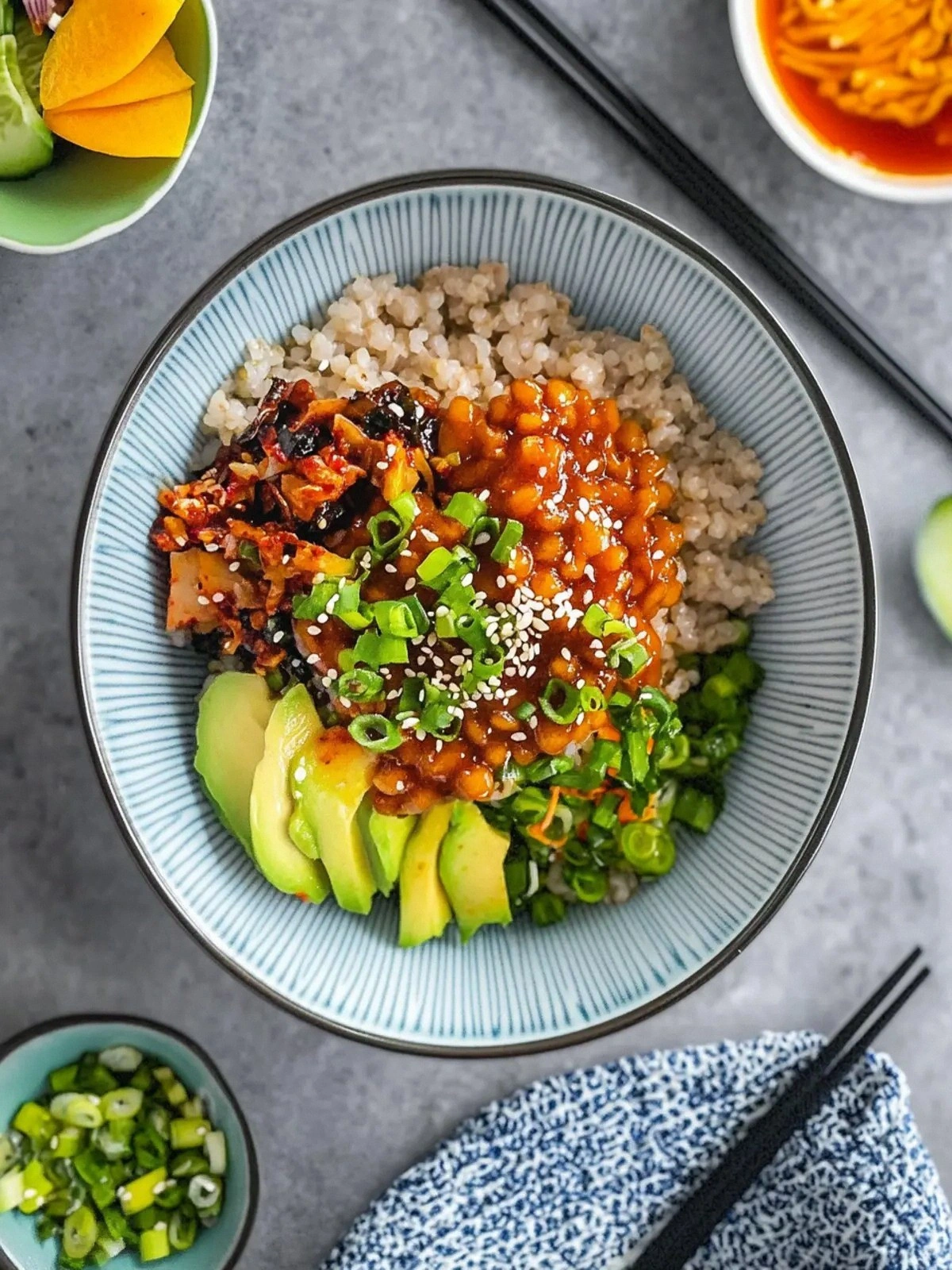
The Method — Step by Step
- Begin by heating a non‑stick skillet over medium heat. Add the toasted sesame oil and let it shimmer for a few seconds before adding the natto. Stir gently, allowing the natto to break apart and release its natural oils. The aroma should be earthy and slightly sweet—this is the base of our sauce. Keep the heat low to avoid burning the natto.
- While the natto heats, whisk together the gochujang, soy sauce, and a splash of water to create a smooth, pourable sauce. The mixture should be glossy and free of lumps. Pour this into the skillet, letting it mingle with the natto. The sauce should coat the natto like a velvet blanket, absorbing the flavors. Let it simmer for 2 minutes, stirring occasionally.
- Add the kimchi to the skillet, breaking it into bite‑sized pieces. The kimchi’s acidity will cut through the richness of the natto, creating a balanced flavor profile. Cook for another 3 minutes, letting the kimchi soften slightly while retaining its crunch. The mixture should smell fragrant and slightly spicy. Taste and adjust seasoning if needed.
- Stir in the ground sesame seeds, which will add a nutty crunch and deepen the sauce’s flavor. The seeds should coat the mixture lightly, adding texture. This step also gives the bowl a subtle golden hue. Keep stirring for 30 seconds to toast the seeds in the pan. The aroma will be nutty and inviting.
- Meanwhile, cook the rice according to package instructions, ensuring it’s fluffy and not sticky. If you prefer a slightly firmer bite, rinse the rice under cold water before cooking. The rice will serve as the canvas for our sauce, absorbing every nuance of flavor. Let the rice rest for a few minutes after cooking. This rest period allows the grains to settle and become tender.
- Transfer the cooked rice to a large bowl, spreading it out to cool slightly. Pour the natto‑kimchi sauce over the rice, then gently fold to distribute evenly. The rice should soak up the sauce, turning it a beautiful amber color. This step ensures every grain is coated in flavor. If the sauce seems thick, add a tablespoon of water to loosen it.
- Add the chopped green onions, sprinkling them over the top for a burst of freshness. The green onions’ sharpness will cut through the richness, while the color adds visual appeal. Gently toss again to incorporate. The final bowl should look vibrant, with green specks against a golden background. This is the moment of truth.
- Serve the bowl hot, optionally with a side of pickled radish or a small spoonful of miso soup. The extra acidity from pickled radish balances the dish, while miso soup adds another layer of umami. The bowl is ready to be devoured. Take a moment to inhale the aroma before the first bite. That sizzle when it hits the pan? Absolute perfection.
Insider Tricks for Flawless Results
The Temperature Rule Nobody Follows
Many cooks assume that higher heat is always better, but natto is a delicate ingredient that thrives on low, steady warmth. By maintaining a gentle simmer, you preserve its silky texture and avoid a scorched, unpleasant flavor. I’ve seen even seasoned chefs over‑cook natto, leading to a dry, rubbery outcome. Keep the heat low, and let the flavors mingle slowly. This simple tweak guarantees a consistently smooth sauce.
Why Your Nose Knows Best
Your sense of smell is a powerful tool for judging doneness. When the sauce turns a deep amber and emits a nutty aroma, it’s a sign that the sesame seeds have toasted perfectly. If the smell is too sharp or metallic, pull the pan off the heat immediately. Trust your nose; it will guide you to the perfect balance of aroma and flavor. A well‑aromaed bowl always tastes better.
The 5-Minute Rest That Changes Everything
After cooking the rice, let it rest uncovered for five minutes. This rest period allows the steam to redistribute, preventing soggy edges. It also gives the grains time to absorb the sauce’s flavors fully. I’ve found that bowls made with rested rice taste noticeably fresher and more cohesive. Don’t skip this step, even if you’re in a hurry.
The Perfect Mix of Sweet and Heat
Balancing sweetness with heat is crucial for this bowl. The gochujang’s natural sugar balances the natto’s earthiness, but you can tweak the ratio to suit your palate. Add a pinch of honey or brown sugar for a sweeter finish, or increase the gochujang for more heat. Experimentation turns a good bowl into a great one. Remember, the goal is a harmonious, layered flavor profile.
The Quick Rice Trick
If you’re short on time, pre‑cook rice in a rice cooker or microwave. The key is to avoid over‑cooking; otherwise, the grains will become mushy and fail to absorb the sauce. I recommend rinsing the rice under cold water before cooking to remove excess starch. This simple step keeps the rice fluffy and ready to soak up the sauce. Your bowl will taste as fresh as if it were freshly cooked.
Creative Twists and Variations
Protein Power Bowl
Swap natto for diced tofu or tempeh for a vegetarian alternative. The tofu will absorb the sauce, offering a firmer bite, while tempeh adds a nutty depth. The rest of the ingredients stay the same, ensuring the flavor profile remains intact. This version is perfect for a protein‑packed lunch or dinner. It also works well for those who prefer a plant‑based meal.
Seafood Sensation
Add grilled shrimp or seared scallops for an oceanic twist. The briny seafood pairs beautifully with the fermented sauce, creating a complex, layered flavor. Keep the shrimp small so they cook quickly and don’t overpower the natto’s subtlety. This bowl becomes a gourmet treat, ideal for a special occasion or a fancy dinner at home.
Spicy Veggie Explosion
Incorporate sautéed mushrooms, bell peppers, and zucchini for a veggie‑rich version. The veggies add crunch and absorb the sauce’s heat, creating a satisfying bite. This variation is great for those who love a colorful, nutrient‑dense meal. The flavors meld together, making every forkful a delight.
Breakfast Kickstart
Serve the bowl over a bed of scrambled eggs for a protein‑packed breakfast. The eggs soften the heat while adding a creamy texture. This combo is both comforting and energizing, making it perfect for a lazy weekend brunch. The natto’s umami pairs wonderfully with the egg’s richness.
Low‑Carb Adaptation
Replace the rice with cauliflower rice for a low‑carb version. The cauliflower will absorb the sauce while keeping the dish light and airy. This adaptation is ideal for keto or low‑carb diets without sacrificing flavor. The texture remains satisfying, and the bowl stays delicious.
Storing and Bringing It Back to Life
Fridge Storage
Store leftovers in an airtight container in the refrigerator for up to 3 days. The natto’s fermented nature makes it safe for short-term storage. When reheating, add a splash of water to restore moisture, preventing the rice from drying out. Gently warm in a microwave or on the stovetop, stirring occasionally. This method preserves the sauce’s silky texture.
Freezer Friendly
You can freeze the bowl for up to 2 weeks. Separate the rice from the sauce before freezing to maintain texture. When ready to eat, thaw in the refrigerator overnight. Reheat on the stove, adding a bit of water to loosen the sauce. The flavors will re‑emerge, making it a convenient meal prep option.
Best Reheating Method
The best way to reheat is on the stovetop with a splash of water. This method keeps the rice from becoming mushy and ensures the sauce remains glossy. Avoid microwaving the entire bowl, as it can separate the natto and sauce. A quick sauté in a pan will revive the flavors and textures perfectly. Serve immediately for the best experience.