Love this? Pin it for later! 📌
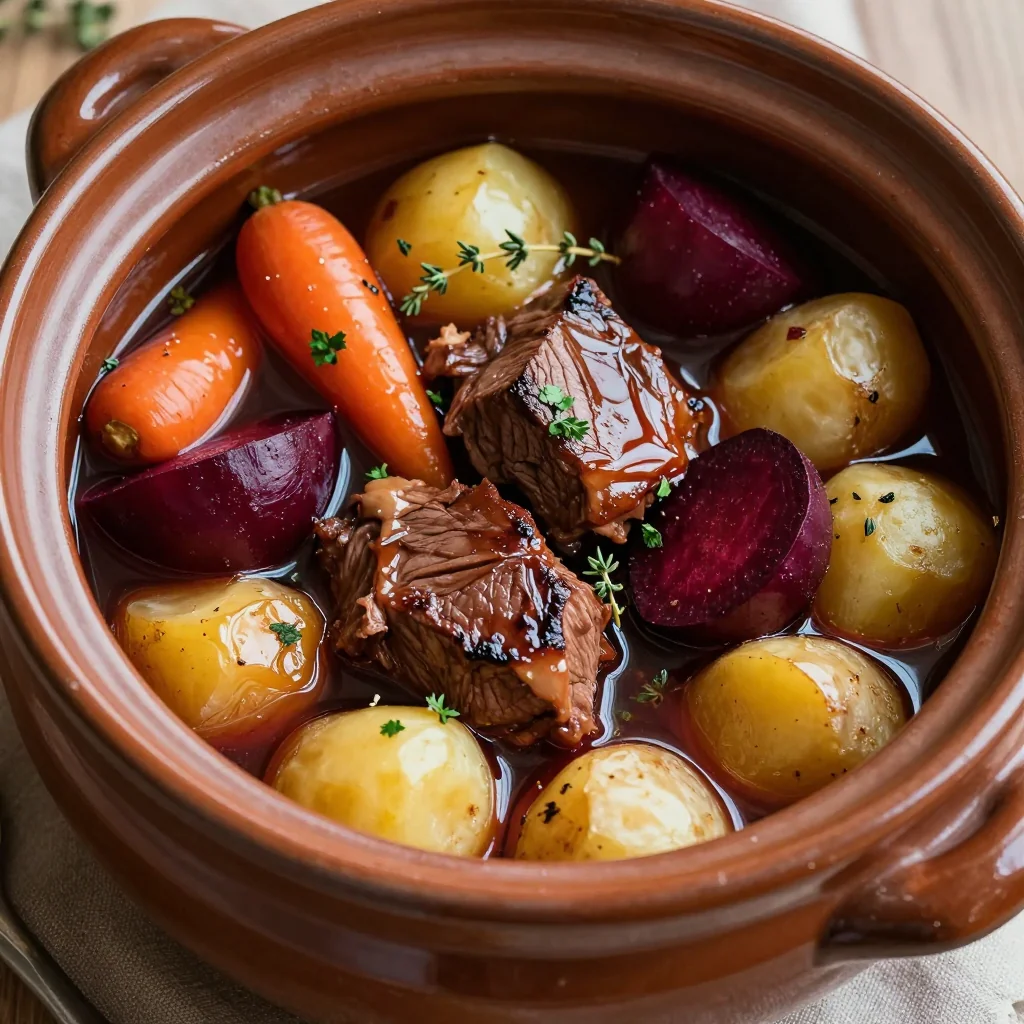
My grandmother called this “set-it-and-forget-it supper,” but for me it’s more like a quiet promise: by the time the moon climbs over the neighbor’s barn roof, the house will smell like bay leaf and red wine, bowls will be steaming, and the only decision left is whether we spoon the stew over buttery egg noodles or thick slices of toasted sourdough.
I developed this particular version after years of testing (and tasting, and testing again) for my catering clients who want something luxurious enough for a holiday open-house yet humble enough to pack into Thermoses for Friday-night hockey practice. The secret trio: a quick stovetop sear for caramelized depth, a tablespoon of tomato paste for umami-rich body, and a whisper of maple syrup to coax the natural sweetness from parsnips and carrots. The slow cooker does the heavy lifting while you binge-watch British murder mysteries, wrap presents, or—if you’re me—sneak out for a twilight snowshoe before dinner.
If you’ve been searching for the definitive winter stew—one that perfumes the house with nostalgia, yields spoon-tender beef that collapses into silky gravy, and keeps the whole family lingering at the table long after the bowls are empty—bookmark this page. Dinner is handled.
Why This Recipe Works
- Two-Step Browning: Searing the beef and toasting tomato paste on the stovetop first builds a fond that translates into restaurant-level depth after eight hours of gentle braising.
- Layered Veg Timing: Sturdy roots go in at dawn; delicate potatoes and peas join the party later so nothing turns to mush.
- Maple & Thyme Balance: A kiss of maple syrup amplifies the vegetables’ sweetness while thyme and bay leaf keep the profile firmly savory.
- Silky Gravy Hack: A quick slurry of arrowroot and starchy potato water thickens the sauce without that pasty flour taste.
- Freezer-Friendly: Make a double batch; leftovers freeze beautifully for up to three months and reheat like a dream on busy weeknights.
- Slow & Safe: The low, moist heat of the crock ensures collagen-rich chuck breaks down into fork-tender morsels without drying out.
- One-Pot Comfort: From searing to serving, everything happens in a single vessel—minimal dishes, maximal hygge.
Ingredients You'll Need
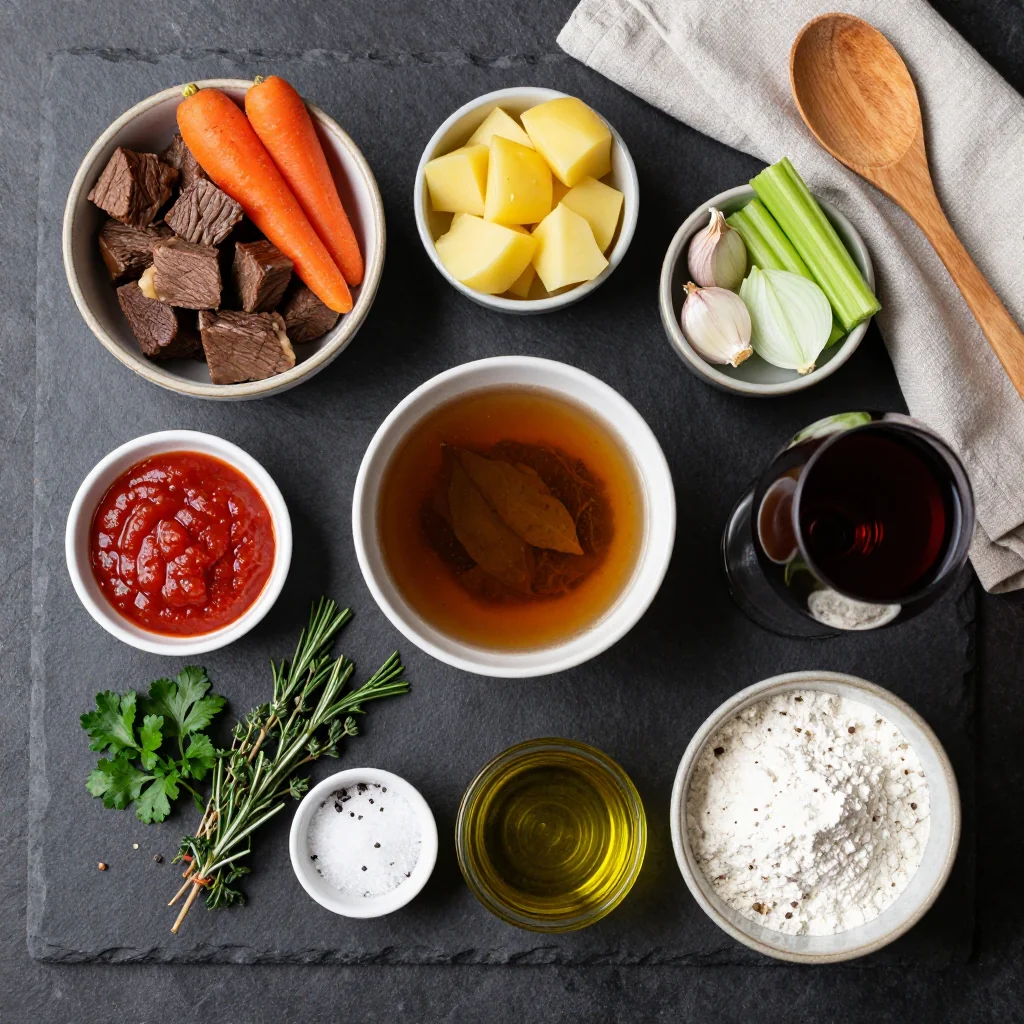
Chuck roast is the undisputed champion of slow cooking thanks to its generous marbling and connective tissue. Look for a well-trimmed, bright-red piece with fat that appears waxy, not yellow. If you spot a “roast” labeled round or rump, keep walking—those cuts dry out before they tenderize.
For the vegetables, think farmers-market winter staples: parsnips for honeyed perfume, carrots for color, celery root for subtle celery-parsley complexity, and Yukon Gold potatoes because their thin skins stay tender and their flesh holds shape. If parsnips are scarce, swap in an equal weight of sweet potato; if celeriac feels intimidating, substitute two ribs of celery plus a small handful of parsley stems.
Tomato paste in a tube is a pantry hero—concentrated, double-strength, and easy to store. Buy the Italian variety packed in glass; it tastes brighter than canned. Similarly, seek out real maple syrup (Grade A Amber) rather than pancake syrup made from corn syrup; you need only a tablespoon, so splurge on the good stuff.
Low-sodium beef broth keeps the salt level in your control. I prefer the boxed organic brands, but if you keep homemade stock in the freezer, now is its moment to shine. Red wine adds tannic backbone; use anything you’d happily drink—Cabernet, Merlot, or a Côtes du Rhône blend.
Fresh thyme and bay leaves perfume the stew without overwhelming it. In summer I strip leaves from my garden hedge; in winter I buy the plastic clamshell and freeze what I don’t use—frozen thyme beats dried any day.
Finally, arrowroot starch yields a glossy, gluten-free gravy. Cornstarch works in a pinch, but arrowroot freezes and reheats more reliably.
How to Make Slow Cooker Beef Stew with Root Vegetables for Cozy Winter Evenings
Pat, Season, and Sear the Beef
Pat 2 ½ lb chuck roast dry with paper towels—moisture is the enemy of browning. Cut into 1 ½-inch cubes, discarding large seams of fat but leaving the small white flecks; they’ll melt into unctuous goodness. Season generously with 1 ½ tsp kosher salt and 1 tsp freshly ground black pepper. Heat 1 Tbsp canola oil in a heavy 12-inch skillet over medium-high until shimmering. Working in two batches (crowding = gray meat), sear the cubes 2–3 minutes per side until a chestnut crust forms. Transfer beef to the slow-cooker insert, leaving the flavorful fond behind.
Bloom Tomato Paste & Aromatics
Lower heat to medium; add 2 tsp more oil to the same skillet. Stir in 1 chopped onion and cook 3 minutes until translucent edges appear. Push onions to the rim, add 2 Tbsp tomato paste to the center, and let it caramelize 90 seconds—this concentrates sugars and removes any tinny edge. Stir together, then add 3 minced garlic cloves, 2 tsp fresh thyme leaves, and 1 bay leaf. Cook 30 seconds until fragrant. Deglaze with ½ cup dry red wine, scraping the browned bits into a velvety sauce. Simmer 2 minutes to cook off raw alcohol.
Load the Slow Cooker
Scrape the onion-wine mixture over the beef. Add 1 ½ cups low-sodium beef broth, 1 Tbsp Worcestershire sauce, 1 Tbsp maple syrup, 1 tsp balsamic vinegar, 2 peeled carrots cut into ½-inch coins, 2 peeled parsnips cut similarly, and 1 small celery root peeled and diced ¾ inch. Stir to combine, nestling vegetables around the meat so everything is mostly submerged. Cover and refrigerate overnight if you like; otherwise proceed.
Choose Your Speed
Cook on LOW 8–9 hours or HIGH 4–5 hours. Low is my default; the collagen breaks down slowly, yielding fork-tender chunks that retain their shape. If you’re short on time, high works, but check at 4 hours—beef can go from perfect to stringy quickly.
Add the Potatoes
When 2 hours remain (or 1 hour on high), stir in 1 lb Yukon Gold potatoes, scrubbed and cut into 1-inch pieces. Nestle them below the surface so they simmer rather than steam. This timing keeps them creamy, not mushy.
Finish the Gravy
Taste and adjust salt. Ladle ¼ cup hot broth into a small jar with 2 Tbsp arrowroot starch; screw on lid and shake until smooth. Stir slurry back into the stew, cover, and cook 10 minutes more until the sauce turns glossy and lightly thickens. If you prefer a looser consistency, thin with a splash of hot broth or water.
Brighten & Serve
Remove bay leaf. Stir in ½ cup frozen peas (they’ll thaw instantly) and a handful of chopped parsley for color. Ladle into deep bowls over egg noodles, mashed potatoes, or crusty bread. Garnish with more parsley and a crack of black pepper.
Expert Tips
Brown = Flavor
Don’t rush the sear. Those mahogany crusty bits (fond) dissolve into the braising liquid and give the stew its rich, complex backbone.
Size Matters
Keep your vegetable cuts uniform so they cook evenly—about ¾ inch for long-cooking roots, 1 inch for quicker potatoes.
Deglaze Delight
If you’re avoiding alcohol, substitute ½ cup pomegranate juice + 1 tsp red wine vinegar for similar tannic brightness.
Thickening 101
Arrowroot keeps leftovers glossy when frozen. Cornstarch can turn spongy; flour can taste raw. Keep arrowroot in your pantry for perfect results.
Herb Swap
Out of thyme? Use 2 tsp herbes de Provence or 1 tsp each dried rosemary and oregano. Add dried herbs earlier so they hydrate.
Make-Ahead Magic
Prep everything the night before; store the insert (covered) in the fridge. Next morning, set it in the base and hit START—no extra mess.
Variations to Try
-
Irish Stout Twist: Replace red wine with ½ cup Guinness and swap maple syrup for 1 Tbsp dark brown sugar. Serve with soda bread.
-
Mushroom Lover: Add 8 oz quartered cremini mushrooms during the last 2 hours. Their earthy flavor marries beautifully with beef.
-
Smoky Heat: Stir ½ tsp smoked paprika and a pinch of cayenne into the tomato paste. Finish with a squeeze of lime for brightness.
-
Paleo-Friendly: Skip the maple and peas; thicken with 2 Tbsp finely shredded sweet potato instead of arrowroot.
-
Weeknight Chicken Swap: Use boneless skinless thighs; reduce cooking time to 3 hours on low. Add potatoes at the start since chicken releases less liquid.
Storage Tips
Cool leftovers to lukewarm, then portion into shallow airtight containers. Refrigerate up to 4 days; the flavor actually improves on day two as the herbs meld. To freeze, ladle cooled stew into freezer-safe quart bags, press out excess air, label, and freeze flat up to 3 months. Thaw overnight in the fridge, then reheat gently with a splash of broth to loosen. If the sauce separated, whisk in a teaspoon of arrowroot slurry while warming and it will bounce back glossy and cohesive.
Frequently Asked Questions
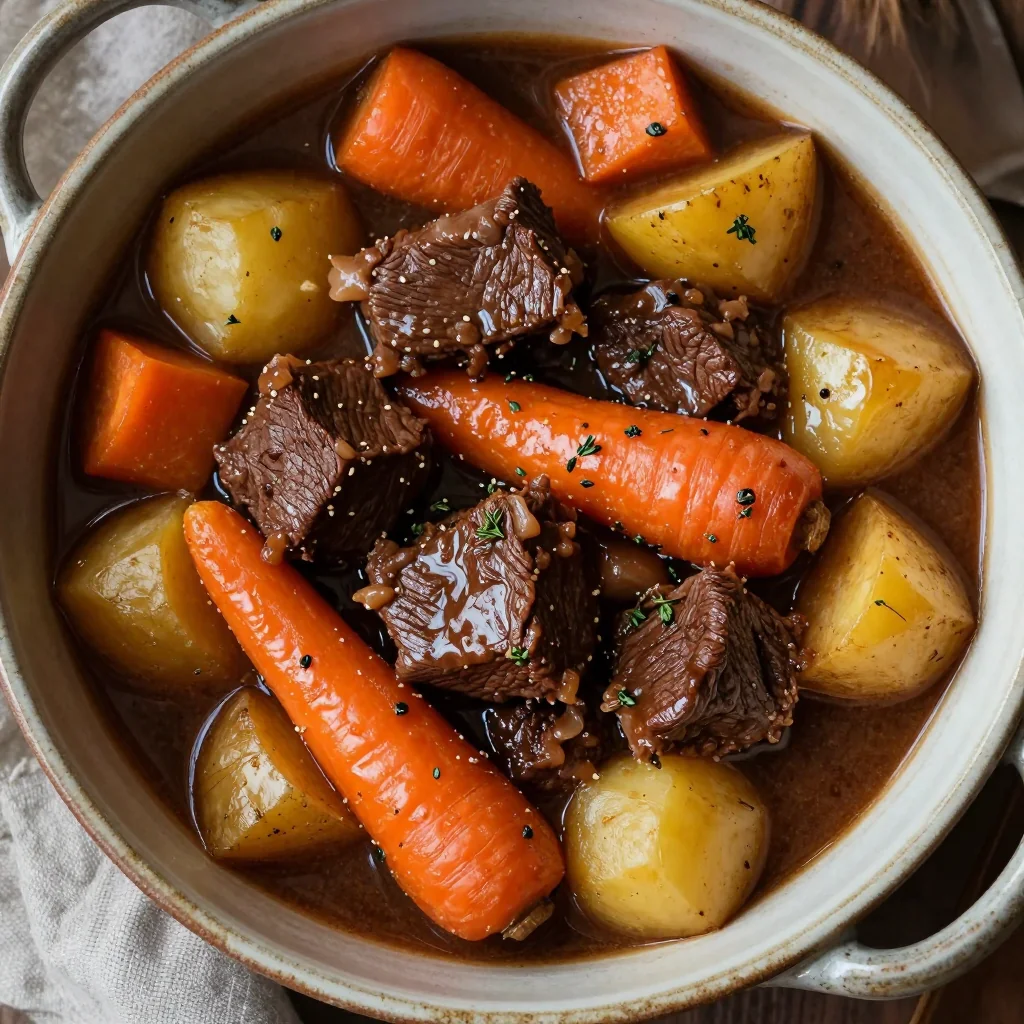
Slow Cooker Beef Stew with Root Vegetables for Cozy Winter Evenings
Ingredients
Instructions
- Prep & Sear: Pat beef dry; season with 1 ½ tsp salt and 1 tsp pepper. Heat 2 tsp oil in a large skillet over medium-high. Brown beef in two batches, 2–3 min per side. Transfer to slow cooker.
- Build the Base: Add remaining oil to skillet; cook onion 3 min. Add tomato paste; cook 1 min. Stir in garlic, thyme, and bay; cook 30 sec. Deglaze with wine; simmer 2 min. Scrape into slow cooker.
- Add Flavor Liquids: Stir in broth, Worcestershire, maple syrup, balsamic, carrots, parsnips, and celery root. Cover.
- Slow Cook: Cook on LOW 8–9 hours or HIGH 4–5 hours, adding potatoes during the final 2 hours (LOW) or 1 hour (HIGH).
- Thicken: Mix arrowroot with ¼ cup hot broth; stir into stew. Cook 10 min more until glossy.
- Finish & Serve: Discard bay leaf; stir in peas and parsley. Taste for salt. Serve hot over noodles or bread.
Recipe Notes
Stew thickens as it stands. Thin leftovers with broth when reheating. For make-ahead, assemble through Step 3 and refrigerate overnight; start cooking in the morning.