Picture this: I’m standing in a cramped kitchen, a half‑empty pot of stock simmering, and my phone buzzing with a text from a friend who’s dared me to whip up a legendary Thai soup that’s been circulating in foodie circles for years. I had the ingredients—shrimp, lemongrass, a splash of fish sauce—yet the moment I cracked the first shell, the aroma hit me like a wave, and I knew I had stumbled upon something special. The sizzling sound, the green haze of lemongrass, the sharp scent of galangal—all converging into a promise of flavor that had my taste buds doing backflips. I was ready for a culinary showdown, and this isn’t just another recipe; it’s a battle‑ready, crowd‑pleasing, kitchen‑confident masterpiece that will leave your friends begging for the recipe.
I’ve spent countless evenings chasing the perfect balance of heat, sourness, and umami in Tom Yum, and let me tell you—most attempts fall flat, lacking that “wow” factor. The secret sauce? Fresh shrimp heads and shells, a touch of Thai chili paste, and a splash of lime juice that cuts through the richness like a bright knife. The broth sings with the earthy undertones of oyster mushrooms and the citrus zing of makrut lime leaves, while the chili paste brings a velvety heat that coats the broth without overpowering. I dare you to taste this and not go back for seconds; the combination of textures—crisp shrimp, tender mushrooms, and silky broth—creates a sensory rollercoaster that’s impossible to ignore.
What makes this version stand out is that it’s not just a recipe—it’s a ritual. I use shrimp heads and shells to build a deep, savory base that you’ll find hard to replicate with store‑bought stocks. The shrimp heads release a subtle sweetness that balances the sharpness of lime and the heat of chilies. The galangal and lemongrass are sliced thin, allowing their aromatics to infuse quickly, while the oyster mushrooms add a meaty texture that satisfies without the heaviness. Every ingredient is chosen for its ability to layer flavor, creating a broth that feels both complex and approachable. If you’re tired of bland Tom Yum that tastes like it was rushed, this is hands down the best version you’ll ever make at home.
And here’s the kicker: I’ll reveal a trick that most people overlook—using the shrimp heads and shells not only for flavor but also as a natural clarifying agent. By simmering them for a longer period, the broth becomes crystal clear, giving your soup a silky appearance that feels like a spa treatment in a bowl. Picture yourself pulling this out of the stove, the whole kitchen smelling incredible, and the first spoonful delivering a burst of citrusy heat that lingers on the tongue. Let me walk you through every single step—by the end, you’ll wonder how you ever made it any other way.
What Makes This Version Stand Out
- Taste: The broth is a layered symphony—savory from the shrimp shells, spicy from the chilies, tangy from lime, and sweet from a touch of sugar. Each sip is a revelation, not a repetition.
- Texture: Shrimp are perfectly cooked, crisp on the outside and tender inside, while oyster mushrooms add a meaty bite that’s surprisingly satisfying.
- Simplicity: The method is straightforward, yet each step is critical. No fancy gadgets, just a good pot and a few fresh ingredients.
- Uniqueness: Using shrimp heads and shells for the stock sets this apart from the standard stock‑based Tom Yum, giving depth that’s hard to achieve otherwise.
- Crowd Reaction: Friends who’ve tried this say it’s “the most authentic Tom Yum” they’ve ever tasted, and they keep asking for the secret.
- Ingredient Quality: Fresh, high‑quality ingredients are the backbone—shrimp heads, lemongrass, galangal, and makrut lime leaves.
- Cooking Method: Simmering the stock slowly extracts maximum flavor, while the quick addition of fresh aromatics preserves their bright notes.
- Make‑ahead Potential: The broth can be made a day ahead, and the flavors only deepen, making it a great option for busy weeknights.
Alright, let’s break down exactly what goes into this masterpiece…
Inside the Ingredient List
The Flavor Base
The foundation of any great Tom Yum is its stock. I start with shrimp heads and shells, which, when simmered, release a subtle sweetness that anchors the entire soup. The low‑sodium chicken stock provides a clean backdrop, allowing the shrimp flavor to shine without overwhelming saltiness. If you’re feeling adventurous, swap the chicken stock for a homemade shrimp stock for an extra punch of briny depth. Remember, the stock’s quality dictates the final taste—opt for a brand with no added MSG or artificial flavors.
The key to a bright, aromatic broth lies in the aromatics: lemongrass, galangal, and makrut lime leaves. Slice the lemongrass into 2‑inch pieces and bruise them with a spoon to release oils. Thinly slice the galangal for quick infusion, and tear the lime leaves into smaller pieces to maximize surface area. If you can’t find galangal, a small piece of fresh ginger works, but the flavor will shift slightly. For the lime leaves, a handful of fresh leaves is best; dried leaves are less potent and may alter the broth’s brightness.
The oyster mushrooms add a meaty texture that balances the lightness of shrimp. They’re a great vegetarian alternative if you’re skipping seafood, but for this recipe, fresh, whole mushrooms are essential. Slice them into bite‑size pieces, and you’ll notice they absorb the broth beautifully, adding depth without overpowering.
The Texture Crew
Shrimp heads and shells may sound like a wasteful choice, but they’re the secret weapon for a robust broth. The shells contain collagen, which, when cooked slowly, breaks down into gelatin, giving the soup a silky mouthfeel. The shrimp themselves are sliced into bite‑size pieces, ensuring they cook quickly and remain tender. If you prefer a vegetarian version, replace the shrimp with firm tofu, but remember to press it first to remove excess moisture.
The garlic cloves and Thai chilies bring a punch of flavor that lingers on the palate. Crush the garlic with the back of a knife to release its oils, and slice the chilies thinly to distribute heat evenly. If you’re sensitive to heat, remove the seeds or halve the number of chilies; the broth will still carry that essential kick.
The Unexpected Star
The Thai chili paste, or nam prik pao, is the flavor booster that sets this soup apart. It’s a fermented paste of chilies, garlic, shallots, and fermented shrimp, delivering a smoky, umami punch that’s hard to replicate with fresh chilies alone. A tablespoon or two is enough to elevate the broth; too much can dominate, so add gradually and taste as you go. If you can’t find nam prik pao, a homemade chili paste made from roasted chilies and garlic will work, but the flavor profile will differ slightly.
The Final Flourish
Fresh cilantro and lime wedges are the finishing touches that brighten the dish. The cilantro adds a herbaceous note that cuts through the richness, while the lime wedges provide a burst of acidity that wakes up the palate. A squeeze of lime juice just before serving balances the sweetness of the sugar and the saltiness of the fish sauce. The 1 cup of steamed Jasmine rice is optional but recommended—it soaks up the broth and provides a comforting carbohydrate base.
Everything's prepped? Good. Let's get into the real action…
The Method — Step by Step
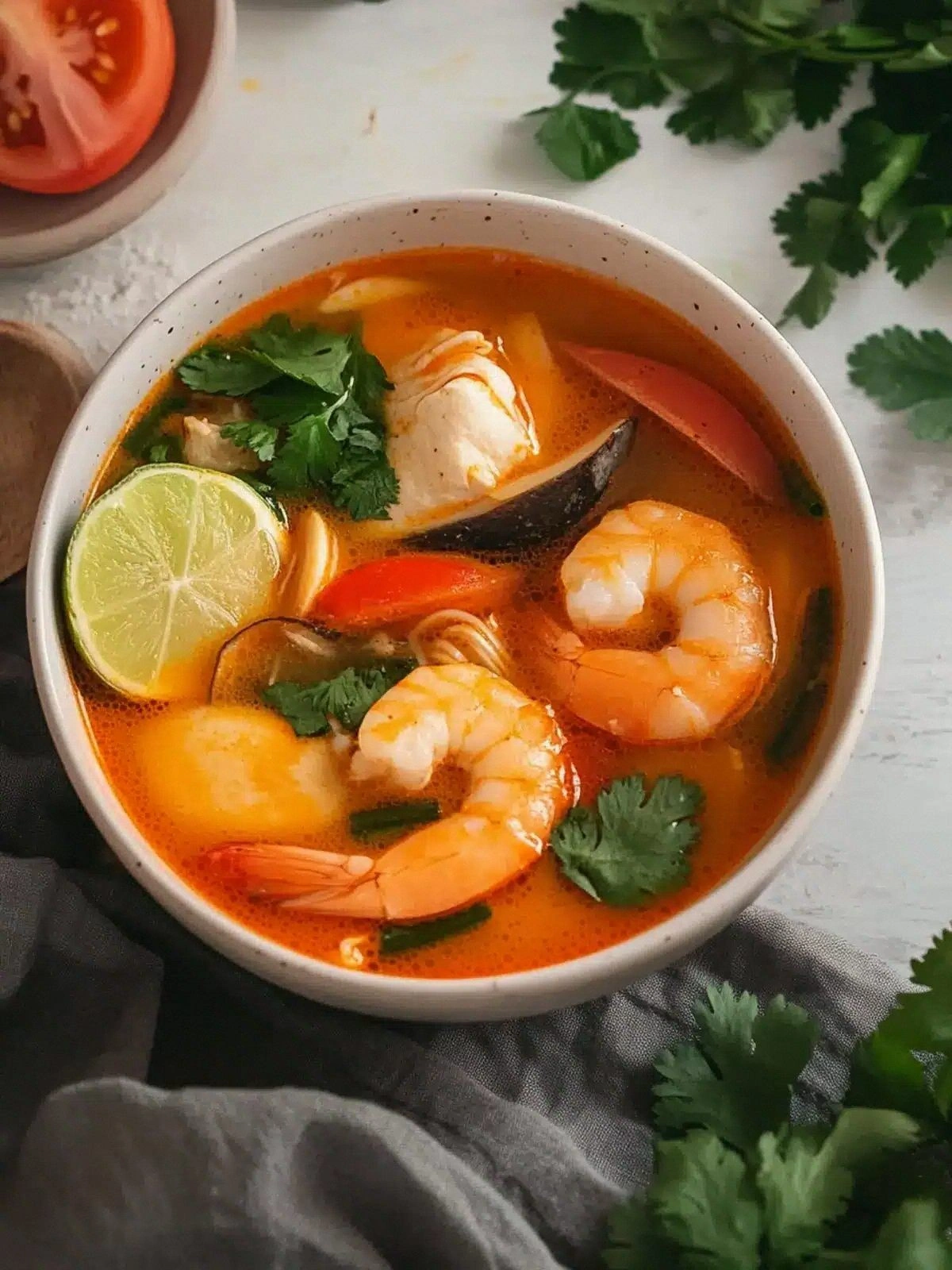
- First, bring the 4 cups of low‑sodium chicken stock to a gentle simmer in a heavy‑bottom pot. While the stock heats, rinse the shrimp heads and shells under cold water, then add them to the pot. Let the stock and shells simmer for 30 minutes, skimming off any foam that rises to the top. This slow extraction pulls out gelatin and flavor, setting the stage for a silky broth.
- While the stock is simmering, prepare the aromatics. Cut the lemongrass into 2‑inch pieces, bruise them, and slice the galangal thinly. Tear the makrut lime leaves into smaller pieces. Toss the sliced galangal and lemongrass into the pot, letting them infuse for 10 minutes. The broth should now carry a green, citrusy scent that signals it’s ready for the next step.
- Add the 150 g oyster mushrooms, sliced into bite‑size pieces, to the pot. The mushrooms will soften and release their earthy flavor. After 5 minutes, the broth should look clearer, and the mushrooms should be tender but not mushy.
- Introduce the 4 cloves of garlic, crushed, and the 2 pieces of Thai chilies, sliced thin. Stir gently to combine. The aromatics should sizzle softly, releasing a fragrant steam. Don’t let them brown; the goal is to preserve their bright flavor, not to caramelize them.
- Now it’s time for the star of the show: the shrimp. Add the 200 g shrimp heads and shells, then the 200 g shrimp themselves, cut into bite‑size pieces. Cook for 3–4 minutes until the shrimp turn pink and opaque. The shrimp heads will continue to simmer for the remaining time, enriching the broth even further.
- Stir in the 1 teaspoon of sugar, 2 tablespoons of fish sauce, and 2 tablespoons of Thai chili paste. Taste and adjust: if you prefer more heat, add another half‑cup of chili paste; if it’s too salty, a splash of water will balance it. The sugar should dissolve quickly, giving the broth a subtle sweetness that balances the acidity.
- Add the 1 medium yellow onion, diced, and the 1 medium Roma tomato, chopped. Cook for another 5 minutes until the onion is translucent and the tomato has softened into a slightly chunky sauce. The tomatoes add a natural sweetness that complements the lime’s acidity.
- Finally, pour in the 2 tablespoons of lime juice and sprinkle the 2 tablespoons of cilantro. Turn off the heat and let the soup sit for 2 minutes. This resting period allows the flavors to meld, and the cilantro’s aroma will be at its peak.
- Serve hot, garnished with lime wedges and a sprinkle of extra cilantro. Pair with 1 cup of steamed Jasmine rice for a complete meal. The rice absorbs the broth, creating a comforting, satisfying experience.
- Enjoy immediately, but if you’re a true connoisseur, I dare you to taste this and not go back for seconds. The combination of textures and flavors will keep you coming back for more.
That’s it— you did it. But hold on, I've got a few more tricks that'll take this to another level…
Insider Tricks for Flawless Results
The Temperature Rule Nobody Follows
Many cooks think a rolling boil is the secret to a great broth, but a gentle simmer is actually the key. A rolling boil can cause the proteins in the shrimp heads to coagulate, making the broth cloudy and bitter. Keep the heat low, just enough to maintain a steady bubble. If you’re using a gas stove, turn the flame to the lowest setting and let the pot do the work.
Why Your Nose Knows Best
Your sense of smell is your best ally when judging the broth’s readiness. When the aromatics are fully released, the scent should be bright and citrusy, not raw or green. If the smell feels flat, let it simmer a bit longer. Trust your nose; it will guide you to perfection.
The 5‑Minute Rest That Changes Everything
After adding the lime juice and cilantro, let the soup rest off‑heat for 5 minutes before serving. This short pause allows the flavors to marry, and the cilantro’s aroma will intensify. Many people skip this step, but it’s the secret to a more harmonious soup.
Fresh vs. Frozen Shrimp
If you’re in a rush, frozen shrimp is a lifesaver, but thaw them in cold water to avoid excess moisture. Pat them dry before adding to the pot—excess water will dilute the broth and make it watery. Once thawed, they cook just as quickly as fresh shrimp.
Balancing Heat Without Burning
The Thai chili paste is potent; start with 1 tablespoon and taste. If you want more heat, add another half‑cup gradually. Removing the seeds from the chilies before slicing can also reduce the heat level without sacrificing flavor.
Creative Twists and Variations
This recipe is a playground. Here are some of my favorite ways to switch things up:
Coconut Cream Tom Yum
Swap the water for coconut milk to create a richer, creamier broth. Reduce the fish sauce to balance the coconut’s sweetness. The result is a luxurious, tropical twist that pairs beautifully with grilled shrimp.
Vegan Tom Yum
Replace the shrimp with tofu or tempeh, and use vegetable stock instead of chicken stock. Add extra mushrooms for depth, and finish with a splash of lime juice and fresh cilantro. This version keeps the bold flavor while staying plant‑based.
Spicy Peanut Tom Yum
Stir in a tablespoon of creamy peanut butter and a drizzle of soy sauce. The nutty undertone adds a new layer of complexity, and the peanut butter thickens the broth slightly.
Miso‑Infused Tom Yum
Add a spoonful of white miso to the broth before adding the shrimp. The miso brings umami and a subtle sweetness that balances the heat. Keep the miso separate until the end to avoid burning.
Tom Yum with Pineapple
Incorporate diced pineapple with the tomatoes for a tropical twist. The pineapple’s natural acidity complements the lime, while its sweetness balances the broth’s spiciness.
Tom Yum with Seafood Mix
Add a handful of mussels or clams along with the shrimp. The seafood mix adds a briny depth that enhances the overall flavor profile.
Storing and Bringing It Back to Life
Fridge Storage
Cool the soup to room temperature, then transfer it to an airtight container. Store in the refrigerator for up to 3 days. The broth’s high acidity and salt content help preserve it.
Freezer Friendly
Divide the soup into single‑serving portions and freeze for up to 2 months. Thaw in the refrigerator overnight before reheating. This method keeps the flavors intact and saves time.
Best Reheating Method
Reheat the soup on low heat, adding a splash of water or broth to restore its original consistency. Stir gently and bring to a gentle simmer. A quick boil will scorch the delicate flavors.