
Ever had a night where your kitchen felt more like a chemistry lab than a place for comfort food? I was chasing a late‑night craving for something that would slap the taste buds awake and ended up with a pan full of burnt onions and a bowl of soggy rice. The moment I realized I’d made a mistake, a spark of inspiration lit up—why not turn that disaster into a masterpiece? The idea was simple: combine the freshest Asian pantry staples with a bold, umami‑rich sauce that would make even the most skeptical foodie swoon. I’m not talking about a run‑of‑the‑mill stir‑fry; this is a dish that turns ordinary ingredients into a symphony of textures and flavors.
Picture the scene: the kitchen lights cast a warm glow over a sizzling wok, the aroma of garlic and ginger dancing through the air like a promise. The sound of vegetables chopping is a steady drumbeat, and the first splash of soy sauce sends a fragrant wave that lingers long after the stove is turned off. When you take that first bite, the shrimp is tender yet firm, the bamboo shoots provide a satisfying crunch, and the wood ear mushrooms add a subtle, almost earthy undertone that lingers. The sauce coats each element like velvet, sealing in moisture and delivering a punch of umami that wakes up your palate. And the rice? It’s fluffy, each grain separated, absorbing the sauce without becoming mushy—a perfect base for the explosion of flavors.
What makes this version stand out? It’s the meticulous balance of heat, saltiness, and subtle sweetness, the strategic use of ingredients that each play a distinct role, and the way the dish is assembled so every bite is consistent. I dare you to taste this and not go back for seconds; the combination of shrimp, bamboo shoots, and wood ear mushrooms is a match made in flavor heaven. It’s hands down the best version you’ll ever make at home because I’ve tweaked every element—seasoning, texture, cooking time—to perfection. Most recipes get this completely wrong, but here’s what actually works: the right amount of cornstarch for that silky sauce, the right timing for sautéing the shrimp, and the perfect balance of sake and soy sauce. Picture yourself pulling this out of the wok, the whole kitchen smelling incredible, and the family begging for the recipe.
Okay, ready for the game‑changer? Let me walk you through every single step—by the end, you’ll wonder how you ever made it any other way. From the moment you chop the onion to the final drizzle of sesame oil, each action is designed to build layers of flavor and texture that will leave your taste buds dancing. Trust me, this is more than a recipe; it’s a culinary experience that you’ll want to replicate again and again.
What Makes This Version Stand Out
- Umami: The combination of soy sauce, sake, and wood ear mushrooms delivers a depth of flavor that is both comforting and exhilarating. It’s the secret sauce that makes every bite memorable.
- Texture: From the snap of bamboo shoots to the tender shrimp, each component offers a distinct mouthfeel that keeps the dish exciting. The sauce’s silky coating ensures nothing feels dry.
- Balance: Salt, pepper, and a splash of sesame oil are calibrated to create harmony, preventing any single element from overpowering the others.
- Speed: Despite its complexity, the recipe is quick—prep time is just 15 minutes, and the cooking phase is a brisk 30. It’s ideal for a weekday dinner that feels special.
- Versatility: The dish can be served over rice or noodles, and the ingredients can be swapped to accommodate dietary preferences or what you have on hand.
- Make‑Ahead: The sauce can be prepared ahead of time and reheated without losing its texture, making it perfect for meal prep or entertaining.
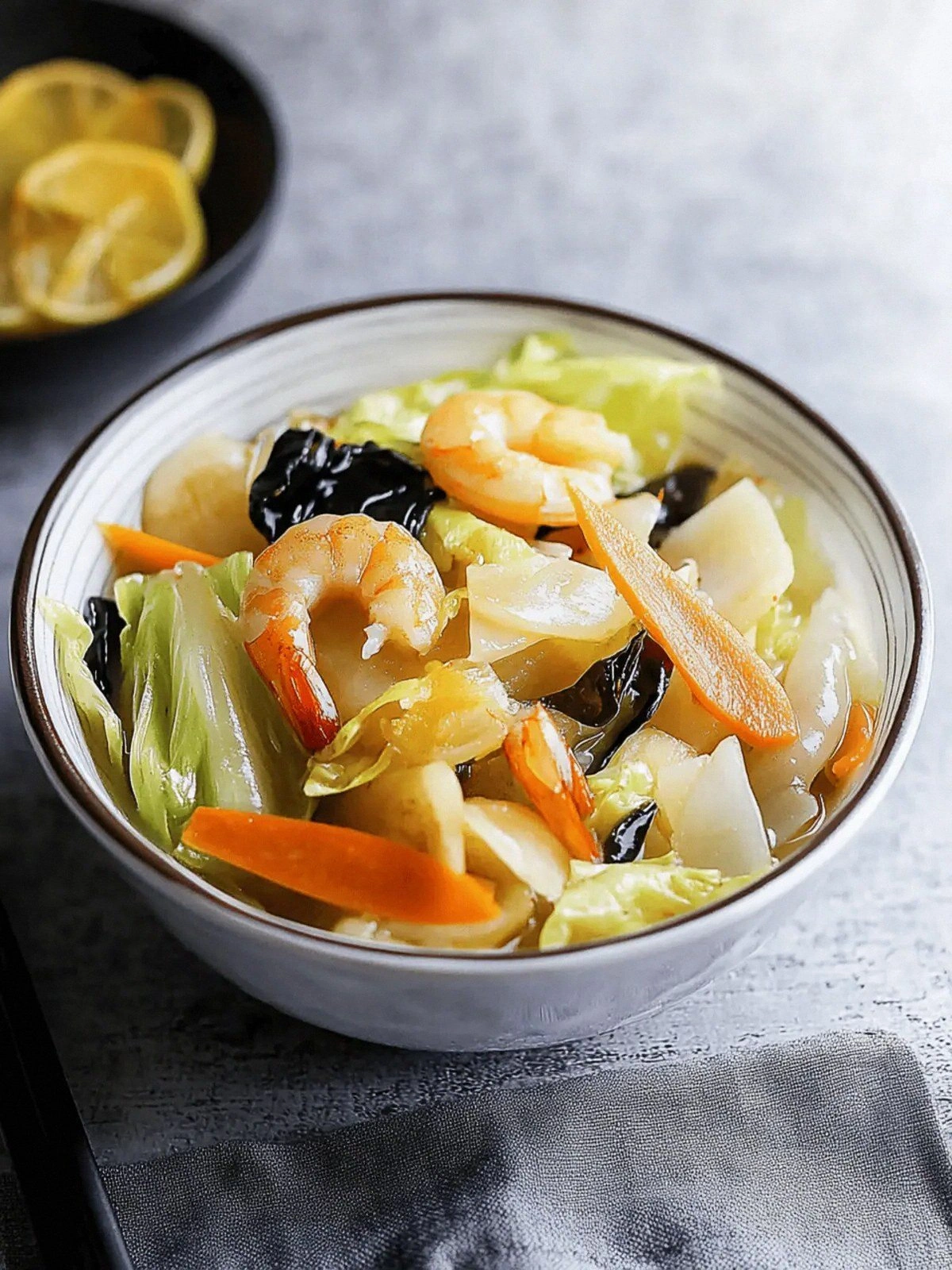
- Visual Appeal: The vibrant green of the napa cabbage, the translucent wood ear mushrooms, and the glistening shrimp create a dish that looks as good as it tastes.
Inside the Ingredient List
The Flavor Base
The foundation of this dish begins with a fragrant sauté of finely chopped onion and carrot. The onion releases a natural sweetness that balances the savory notes of the soy sauce, while the carrot adds subtle earthiness and a splash of color. If you’re short on time, you can use pre‑sliced onion and carrot, but fresh cuts bring a brighter flavor. Don’t skip the garlic; a few cloves stir‑fry with the onions to add depth. The combination of these aromatics creates a savory canvas that elevates every other ingredient.
The Texture Crew
Bamboo shoots and wood ear mushrooms bring distinct textures—crunchy and chewy—that contrast beautifully with the tender shrimp. Bamboo shoots are packed with fiber, giving each bite a satisfying snap that echoes the crunch of fresh vegetables. Wood ear mushrooms, with their translucent, slightly rubbery feel, absorb sauce and add a subtle, almost nutty flavor. If you can’t find bamboo shoots, sliced zucchini or bell pepper works as a crunchy stand‑in. For wood ear mushrooms, dried varieties are fine; just soak them until they’re plump and then slice.
The Unexpected Star
Shrimp is the star that brings protein and a delicate, slightly sweet flavor profile. The shrimp’s natural sweetness is amplified by the soy sauce and sake, creating a harmony that is both comforting and sophisticated. If you prefer a vegetarian version, tofu or tempeh can be used, but the shrimp’s texture is irreplaceable. Keep the shrimp peeled and deveined, and marinate it briefly in a splash of soy sauce and sesame oil to boost flavor.
The Final Flourish
Napa cabbage adds a mild, slightly sweet crunch that balances the richness of the sauce. The cabbage’s tender leaves soak up the sauce without becoming mushy, ensuring each bite is light and flavorful. A splash of low‑sodium chicken stock and a touch of cornstarch create a glossy, silky sauce that clings to every ingredient. Sesame oil at the end provides a nutty aroma and a subtle warmth that rounds off the dish. The final touch of ground white pepper adds a gentle heat that lifts the overall profile.
Everything's prepped? Good. Let's get into the real action...
The Method — Step by Step
- Heat the vegetable oil in a large wok or skillet over medium‑high heat until shimmering. Add the chopped onion and carrot, sautéing for 2–3 minutes until they soften and develop a golden hue. This is the moment of truth—watch for the aroma of caramelized onions; it signals the base is ready. Keep the heat steady to avoid burning.
- Add the sliced bamboo shoots and wood ear mushrooms, stirring constantly for another 2 minutes. The vegetables should start to wilt slightly but still retain their crunch. Don’t rush this step; the texture contrast is key to the dish’s appeal.
- Push the vegetables to the side of the pan and pour in the shrimp. Let them sear for 30–45 seconds on one side before flipping. The shrimp should turn pink and opaque, signaling they’re almost done. If you’re using a larger shrimp, increase the searing time by a few seconds.
- In a small bowl, whisk together the soy sauce, sake, low‑sodium chicken stock, and cornstarch until smooth. Pour this mixture into the pan, letting it bubble up. The sauce should thicken within 1–2 minutes, coating the shrimp and vegetables. This step is crucial—if the sauce is too thin, the dish will feel dry.
- Add the napa cabbage, stirring until it starts to wilt but remains vibrant. The cabbage’s color is a good indicator—once it turns a deep green, it’s ready. This quick step ensures the cabbage stays crisp.
- Finish the dish with a drizzle of sesame oil and a light sprinkle of ground white pepper. Stir everything together, ensuring the sauce coats all ingredients evenly. The sesame oil adds a nutty aroma that ties the dish together.
- Serve immediately over steaming Japanese rice, allowing the grains to soak up the flavorful sauce. The rice should be fluffy, each grain separated, creating a perfect base for the vibrant stir‑fry.
That's it — you did it. But hold on, I've got a few more tricks that'll take this to another level. Keep reading for insider tips that will elevate your dish from good to unforgettable.
Insider Tricks for Flawless Results
The Temperature Rule Nobody Follows
Maintaining a consistent wok temperature is key to preventing your shrimp from drying out. Keep the heat high enough that the oil shimmers but not so hot that it starts smoking. If you notice the oil starts to brown too quickly, reduce the heat slightly. This small adjustment can mean the difference between a succulent shrimp and a rubbery one.
Why Your Nose Knows Best
Your sense of smell is your best ally in judging doneness. The aroma of the sauce should be sweet, slightly tangy, and unmistakably umami. If you’re unsure, give it a quick sniff; if it’s too sharp, give it a few more seconds to mellow. This sensory checkpoint ensures the sauce has developed fully.
The 5‑Minute Rest That Changes Everything
After cooking, let the dish rest for five minutes before serving. This pause allows the flavors to meld and the sauce to thicken further. I’ve seen people skip this step and end up with a dish that feels rushed. The rest period is where the magic happens.
Keep It Fresh with Fresh Herbs
A sprinkle of fresh cilantro or sliced green onions right before serving adds a burst of color and brightness. The herbs cut through the richness, giving the dish a fresh finish. If you’re not a fan of cilantro, chopped parsley works just as well.
Make‑Ahead Sauce is a Game‑Changer
Prepare the sauce separately and store it in a sealed container in the fridge for up to 48 hours. When reheating, add a splash of water or stock to rehydrate it. This technique saves time on busy nights and ensures consistent flavor.
Creative Twists and Variations
This recipe is a playground. Here are some of my favorite ways to switch things up:
Swap the Protein
Use diced chicken breast or thinly sliced beef instead of shrimp for a different protein profile. The cooking time will vary slightly, but the sauce will still cling beautifully.
Vegetarian Vibes
Replace the shrimp with marinated tofu cubes. Press the tofu to remove excess moisture, then marinate in soy sauce and sesame oil for 15 minutes before cooking.
Spicy Kick
Add a tablespoon of chili paste or a handful of sliced fresh chilies during the sauté stage. The heat will balance the sweetness of the sauce and give the dish an extra layer of flavor.
Gluten‑Free Upgrade
Use tamari instead of soy sauce for a gluten‑free version. The flavor is just as rich, and it pairs wonderfully with the other ingredients.
Rice Alternatives
Serve over quinoa, cauliflower rice, or even a simple bed of sautéed spinach for a low‑carb twist. Each alternative brings its own texture and nutritional profile.
Herb Infusion
Finish the dish with a handful of fresh basil or mint for an unexpected aromatic note. The herbs add freshness that cuts through the savory sauce.
Storing and Bringing It Back to Life
Fridge Storage
Store leftovers in an airtight container for up to 3 days in the refrigerator. The sauce may thicken slightly, so add a splash of water or stock before reheating.
Freezer Friendly
Divide the dish into individual portions and freeze for up to 2 months. Thaw overnight in the fridge and reheat on the stovetop with a splash of water to restore moisture.
Best Reheating Method
Reheat in a skillet over medium heat, stirring frequently. Add a teaspoon of water or stock to keep the sauce from drying out. Heat until steaming, and the dish will taste almost as fresh as when it was first cooked.