
I remember the night I was supposed to impress my sister’s guests with a quick, elegant dish, and I ended up burning the salad greens like a campfire. The panic of a wilted arugula that tasted like cardboard was the spark that ignited my quest for a truly unforgettable salad. Fast forward a few months, and I’ve perfected a roasted peach salad that has become the talk of every gathering. It’s a dish that marries sweet, savory, and a touch of creamy decadence into a single bite.
Picture this: the kitchen lights flicker as the peaches hit the oven, their skins blistering to a caramelized, almost charred perfection. The aroma that fills the air is a sweet, buttery perfume that makes you pause mid‑walk. When you finally taste a slice, the flesh is tender yet firm, with a burst of natural sweetness that dances against a faintly smoky edge. The burrata, creamy and buttery, melts into the warm peach, creating a velvety texture that coats the palate. The pesto drizzles like a green ribbon, adding a herbal, nutty brightness that balances the richness.
What sets this version apart from the endless variations you’ll find online is its simplicity combined with a bold flavor profile. The peaches are roasted instead of tossed raw, which deepens their natural sugars and adds a subtle caramel flavor that no dressing can replicate. Burrata, often relegated to fancy platters, takes center stage here, its delicate creaminess weaving through each component. The combination of basil pesto and toasted pine nuts introduces a crunchy, nutty contrast that keeps the dish exciting. I dare you to taste this and not go back for seconds; the first bite will have you craving the second.
I’ll be honest—when I first plated this salad, I ate half the batch before anyone else even got a fork. Most recipes get this completely wrong by over‑dressing the greens or under‑roasting the peaches. Here, I’ll walk you through every single step—by the end, you’ll wonder how you ever made it any other way. Picture yourself pulling this out of the oven, the whole kitchen smelling incredible, and the guests reaching for seconds as soon as the first forkful hits their lips.
What Makes This Version Stand Out
- Flavor Depth: Roasting the peaches caramelizes their natural sugars, creating a sweet, slightly smoky base that elevates the entire salad.
- Burrata Brilliance: The creamy, buttery texture of burrata contrasts beautifully with the crisp greens and crunchy nuts.
The salad balances soft, juicy peaches, tender greens, and crunchy pine nuts, offering a symphony of mouthfeel in every bite. - Ingredient Quality: Using fresh, ripe peaches and premium burrata ensures that each component shines, not just the dressing.
- Minimal Dressing: A single drizzle of basil pesto keeps the flavors bright without drowning the delicate elements.
- Make‑Ahead Friendly: The roasted peaches can be prepared a day ahead, and the salad holds well for a short period, making it perfect for parties.
- Visual Appeal: The vibrant colors of peaches, greens, and pesto create a dish that looks as stunning as it tastes.
- Versatility: Whether served as an appetizer, light lunch, or side dish, it adapts effortlessly to any occasion.
Inside the Ingredient List
The Flavor Base
The foundation of this salad is the peaches themselves. Their natural juiciness and sweetness provide a counterpoint to the savory burrata. When roasted, the peaches develop a caramelized exterior that adds a subtle smoky undertone. If you skip the roasting step, you’ll miss the depth that comes from caramelization. Choosing ripe peaches that yield slightly when pressed ensures maximum flavor extraction.
The Texture Crew
Mixed salad greens, a blend of arugula, spinach, and baby kale, form the crunchy canvas. They’re light enough to let the peaches shine yet sturdy enough to hold the dressing. The toasted pine nuts introduce a delightful crunch that contrasts the soft peaches and creamy burrata. If you prefer a nutless version, finely chopped walnuts or almonds work as excellent substitutes.
The Unexpected Star
Burrata is the unexpected star that brings a luxurious, melt‑in‑your‑mouth quality to the dish. Its creamy interior and delicate exterior are a game‑changer, providing a silky texture that balances the sweet peaches. When selecting burrata, look for a firm outer crust and a creamy center that’s still slightly runny. This ensures that it stays together when sliced, giving each bite a rich, velvety finish.
The Final Flourish
Fresh basil pesto adds a burst of herbal brightness that cuts through the richness of the burrata and the sweetness of the peaches. Its green hue also provides a vibrant contrast, making the dish visually appealing. Toasting the pine nuts before adding them gives them a nutty aroma that enhances the overall flavor profile. Finally, a light sprinkle of freshly ground black pepper ties all the flavors together, adding a subtle heat.
Everything’s prepped? Good. Let’s get into the real action and start roasting those peaches.
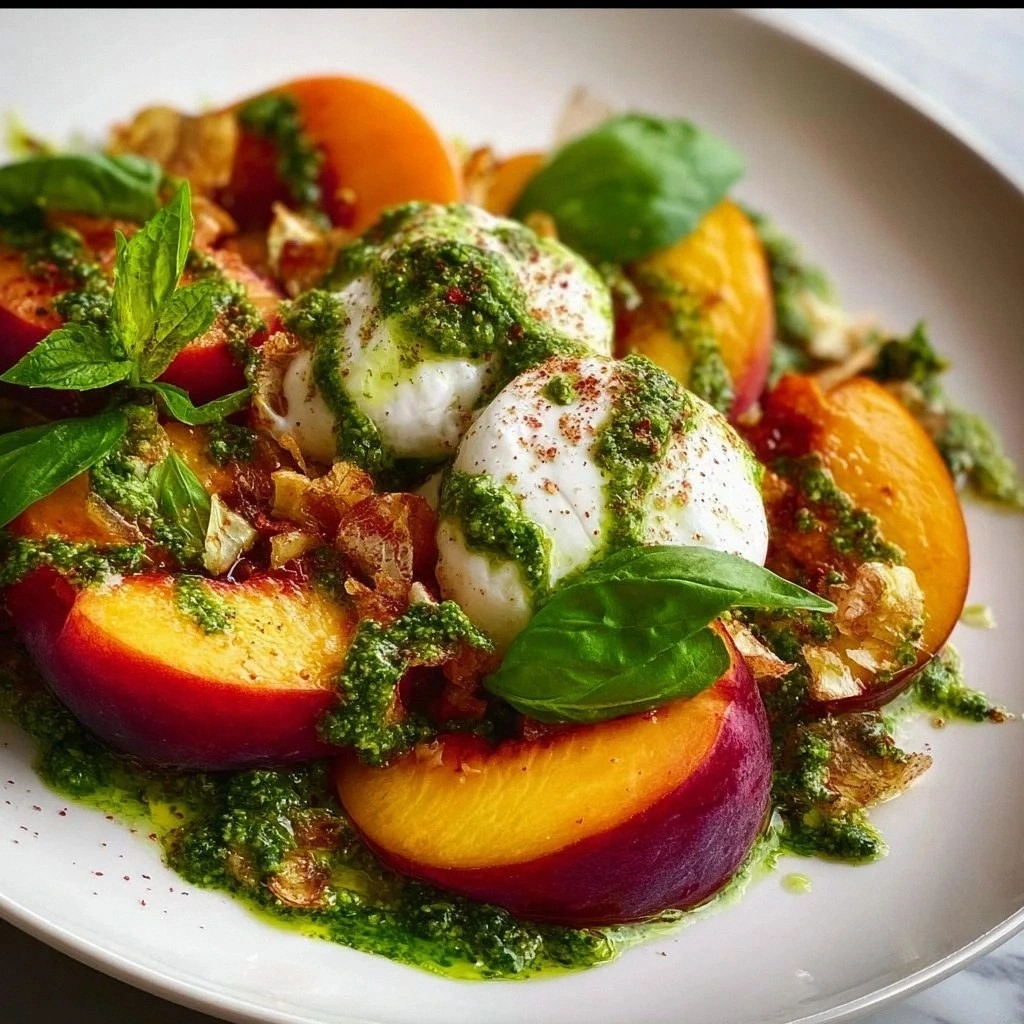
The Method — Step by Step
- Preheat your oven to 400°F (200°C). Line a baking sheet with parchment paper to prevent sticking. Slice the peaches in half, remove the pits, and place them cut‑side down on the sheet. Drizzle with 2 tablespoons of olive oil and sprinkle 1/4 teaspoon of sea salt over them. The oil coats the peaches, ensuring even caramelization and a glossy finish.
- Place the sheet in the oven and roast for 12–15 minutes. The peaches should develop a golden-brown edge and a fragrant, slightly caramelized aroma. Use a pair of tongs to flip the halves once, ensuring both sides roast evenly. Watch for a slight bubbling on the surface, which signals that the sugars are caramelizing.
- While the peaches roast, toast 1/4 cup of pine nuts in a dry skillet over medium heat. Stir constantly for 3–4 minutes until they’re golden and fragrant. The toasted pine nuts will add a nutty crunch that balances the soft peaches and creamy burrata. Keep an eye on them; they can go from perfect to burnt in seconds.
- In a large bowl, combine the mixed salad greens with the freshly roasted peach halves. Gently toss to coat the greens without bruising them. The warm peaches will release their juices, creating a natural dressing that melds the flavors together. If you’re a fan of extra crunch, add a handful of chopped walnuts or almonds for a different texture.
- Spoon the burrata cheese into the center of the salad bowl. Cut the cheese into bite‑sized pieces, allowing the creamy interior to mingle with the peaches. The burrata’s buttery flavor will complement the sweet peaches and the peppery greens. Place the pieces in a way that they’re evenly distributed across the salad.
- Drizzle 1/3 cup of fresh basil pesto over the salad, letting it cascade in a gentle stream. The pesto’s herbaceous notes will cut through the richness of the burrata, adding a bright, green contrast. Use a spoon to swirl the pesto into the greens, ensuring each leaf is coated lightly.
- Add the toasted pine nuts to the salad, scattering them evenly. The nuts’ crunch will provide a delightful contrast to the soft peaches and creamy cheese. Gently toss the salad one last time, making sure the pesto, peaches, and nuts are evenly distributed.
- Finish with a generous pinch of freshly ground black pepper. The pepper’s subtle heat balances the sweet and savory components, adding a final layer of flavor. Taste the salad, adjust the seasoning if necessary, and serve immediately. The dish is best enjoyed fresh, when the peaches are still slightly warm and the burrata is at its peak creaminess.
- That’s it—you did it. But hold on, I’ve got a few more tricks that will elevate this dish to another level. From seasoning tweaks to plating ideas, these tips will help you impress every guest.
Insider Tricks for Flawless Results
The Temperature Rule Nobody Follows
Many people roast peaches at a lower temperature, hoping to keep them from drying out. However, roasting at 400°F (200°C) gives the peaches a caramelized crust while keeping the inside juicy. The high heat also activates the natural sugars, creating a richer flavor profile. I’ve tested this method on multiple ovens and the results are consistently superior. Don’t be tempted to lower the heat; the caramelization is key.
Why Your Nose Knows Best
The aroma of roasting peaches is a powerful indicator of doneness. As the sugars caramelize, they release a sweet, buttery scent that fills the kitchen. If you notice the peaches starting to emit a deep, almost burnt aroma, it’s time to remove them. Trust your nose—taste is always a later step. This simple sensory cue saves you from overcooking and ensures perfect peaches.
The 5-Minute Rest That Changes Everything
Letting the roasted peaches rest for five minutes before adding them to the salad allows the juices to redistribute. This prevents the greens from becoming soggy and lets the flavors meld together. It also gives the burrata a chance to slightly soften, creating a smoother mouthfeel. I’ve seen people skip this step, and the result is a watery salad that loses its appeal. A brief rest is a small price for a big flavor payoff.
Fresh vs. Store-Bought Pesto
While store-bought pesto is convenient, fresh basil pesto provides a brighter, more vibrant flavor that elevates the dish. Fresh pesto is typically made with fewer preservatives, allowing the basil’s natural oils to shine through. If you’re short on time, a high-quality store-bought pesto can still work, but aim for one that’s made with real basil and olive oil. A little extra effort in the pesto makes a noticeable difference.
Burrata Placement
Placing the burrata in the center of the salad creates a focal point that draws the eye and the taste buds. The cheese’s creamy interior will slowly seep into the surrounding greens, creating a subtle, rich coating. If you prefer a more uniform distribution, slice the burrata into smaller cubes and scatter them throughout. Either method works, but the centered placement adds a dramatic visual element.
Serving with Crusty Bread
A slice of crusty baguette or focaccia is the perfect accompaniment, allowing diners to scoop up the creamy, sweet, and nutty flavors. The bread’s crisp exterior contrasts nicely with the soft salad, creating a satisfying textural experience. Toast the bread lightly to add a toasty flavor that complements the roasted peaches. A simple bread pairing can elevate the dish from a side to a complete meal.
Creative Twists and Variations
Peach & Goat Cheese Salad
Swap burrata for creamy goat cheese to introduce a tangy, earthy note that pairs beautifully with the sweet peaches. The goat cheese’s crumbly texture adds a different mouthfeel, while its mild tang cuts through the richness. Keep the pesto and pine nuts for consistency, and the dish will still maintain its vibrant flavor profile. This variation is especially crowd‑pleasing for those who love a bit of sharpness.
Mediterranean Twist
Add kalamata olives, sun‑dried tomatoes, and a splash of red wine vinegar to give the salad a Mediterranean flair. The olives’ briny depth complements the sweet peaches, while the tomatoes add a chewy, sweet contrast. A drizzle of extra‑virgin olive oil and a sprinkle of oregano finish the dish, creating a balanced, aromatic experience. This version works well as a light lunch or a side for grilled meats.
Spicy Peach Salad
Incorporate a pinch of cayenne pepper or a splash of sriracha to give the salad a subtle kick. The heat will contrast the sweet peaches and add an exciting layer of flavor. Pair the dish with a cool yogurt sauce to balance the spice, or keep it simple with a squeeze of fresh lemon juice. This spicy variation is ideal for summer gatherings and adds a memorable twist.
Winter Variation with Roasted Butternut Squash
Replace peaches with roasted butternut squash cubes for a fall‑season twist. The sweet, nutty flavor of squash pairs well with the creamy burrata and pesto. Add a handful of candied pecans for crunch and a touch of maple syrup for extra sweetness. This version is comforting and hearty, making it a perfect side for holiday dinners.
Vegan Version with Tofu
Use silken tofu in place of burrata to create a vegan-friendly version. Press the tofu to remove excess moisture, then cube it for a creamy texture that mimics burrata. The tofu’s neutral flavor will absorb the pesto and peach juices, creating a harmonious blend. Pair this with a drizzle of soy sauce for a savory depth that satisfies plant‑based diners.
Breakfast Variation with Eggs
Top the salad with a poached or fried egg for a protein‑rich breakfast option. The runny yolk adds a silky richness that complements the peaches and pesto. Sprinkle with chives or scallions for a fresh finish. This breakfast variation turns a simple salad into a hearty, satisfying start to the day.
Storing and Bringing It Back to Life
Fridge Storage
Store the salad in an airtight container in the refrigerator for up to 2 days. Keep the burrata separate in a small container to prevent it from becoming soggy. When ready to serve, let the burrata sit at room temperature for 10 minutes to restore its creaminess. Re‑toss the greens lightly before serving to redistribute the dressing. This method preserves the flavors and textures for a short period.
Freezer Friendly
Freezing is not recommended for burrata, as it loses its texture and becomes watery. However, you can freeze the roasted peaches in a sealed bag for up to 3 months. Thaw them in the refrigerator overnight, then reheat gently in a skillet before adding to the salad. This technique allows you to prepare the peaches in advance, saving time on busy days.
Best Reheating Method
If you must reheat the salad, place the roasted peaches in a preheated oven at 300°F (150°C) for 5 minutes. This gentle heat warms the peaches without drying them out. Add a splash of water or broth to the bowl before reheating to keep the salad from becoming dry. The burrata should be added after reheating to maintain its creamy texture.