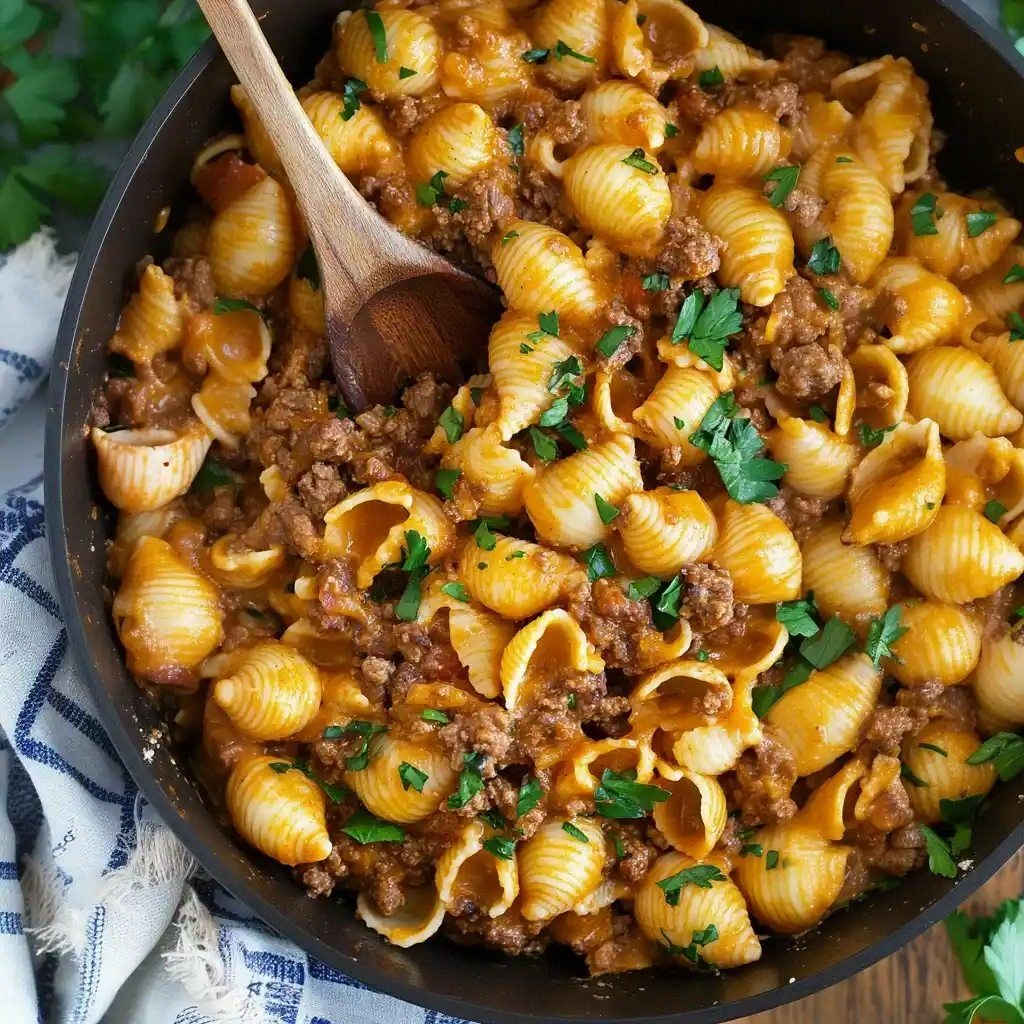
I was standing in my kitchen, staring at a bag of stale noodles and a jar of unopened cream cheese, when a friend texted, “I’m craving something comforting, but I’m on a deadline.” I thought, “Why not combine the two cravings into one glorious pot?” That spark turned into a culinary experiment that ended up being a dish so rich and comforting it made me question my entire dinner routine. The aroma of sizzling onions and garlic filling the room was a promise of something extraordinary, and the sight of the pasta shells glistening in the pan felt like a tiny, edible sunrise. The sound of the beef browning was a rhythmic drumbeat that kept me moving, and the anticipation of that first bite was almost too intense to handle. I knew this was going to be more than just a meal; it was going to be a statement about how simple ingredients can transform into something unforgettable.
Picture this: a single pot, a handful of ingredients, and a stove that’s already warming the house. The beef browns to a caramelized shade, releasing a savory perfume that lingers even after you’ve turned off the heat. The shells, once plain, become the perfect canvas for the velvety sauce that coats each piece like a silky blanket. When you take a forkful, the crunch of the shell gives way to a melt-in-your-mouth experience that makes you question every other pasta dish you’ve ever had. I dare you to taste this and not go back for seconds, because once the first bite hits, you’ll be craving more.
What sets this version apart from the countless “creamy beef and shells” recipes you’ll find online is the deliberate layering of flavors and textures. I’ve chosen high-quality ground beef to ensure a juicy base, while the heavy cream and cream cheese create a sauce that is both luxurious and stable—no clumping, no separation. The inclusion of a can of diced tomatoes adds a subtle acidity that balances the richness, and the Italian seasoning ties everything together with a fragrant, herbaceous lift. Every element has been tested to make sure it complements the others, so you’re not just adding cream for the sake of cream; you’re building a sauce that feels like a hug in a bowl. And if you’re wondering why the recipe is called “One Pot,” it’s because every component—meat, pasta, sauce, and garnish—cooks together in a single, forgiving vessel.
I’ve been cooking this for weeks now, and each time I make it, I discover a new nuance: the way the shell’s edges crisp just enough before the sauce envelops them, or how the cheddar melts into a golden ribbon that runs down the side of the pot. The result is a dish that feels both indulgent and wholesome, and it’s the kind of comfort food that makes you feel like you’re home even on the busiest of days. Stay with me here—this is worth it. Let me walk you through every single step, and by the end, you’ll wonder how you ever made it any other way.
What Makes This Version Stand Out
- Flavor Depth: The combination of beef broth, diced tomatoes, and Italian seasoning creates a savory base that’s more complex than a simple tomato sauce. The tomatoes provide a gentle acidity that cuts through the richness of the cream, while the broth adds a subtle umami boost that keeps the dish from feeling heavy. The result is a sauce that’s both comforting and surprisingly bright.
- Texture Harmony: The shells hold their shape perfectly, offering a satisfying bite that contrasts with the creamy sauce. The careful balance between the crisp exterior of the shells and the melt-in-your-mouth interior of the sauce creates a mouthfeel that feels indulgent without being cloying. This texture play is what keeps the dish interesting from the first forkful to the last.
- One-Pot Simplicity: Cooking everything together in a single pot eliminates the need for extra pans, saving time and reducing cleanup. The ingredients meld together as they cook, allowing flavors to develop organically and creating a cohesive taste profile that’s hard to replicate with multi‑step recipes. The one-pot approach also means you can focus on the cooking process rather than juggling multiple dishes.
- Cheese Mastery: Cream cheese, heavy cream, and cheddar work together to create a sauce that’s luxuriously thick yet pourable. The cream cheese adds body and a subtle tang, while the heavy cream smooths the mixture, and the cheddar introduces a sharp, savory finish. This cheese blend is a secret weapon that elevates the dish beyond ordinary comfort food.
- Make‑Ahead Friendly: The sauce holds up beautifully when refrigerated, and the flavors actually deepen over time. This makes the dish ideal for meal prep or for a busy weeknight dinner—just reheat and stir, and you’re back to the comforting aroma of the kitchen. The ability to make it ahead also means you can enjoy it in small portions without sacrificing taste.
- Visual Appeal: The golden-brown cheese ribbons and the glossy, creamy sauce create a dish that looks as good as it tastes. The bright green parsley garnish adds a pop of color that makes the plate feel fresh and inviting. Visual cues like these can make a dish feel special even before the first bite.
- Ingredient Quality: Using high-quality ground beef and fresh, full-fat dairy ensures that the dish has a depth of flavor that cheaper substitutes can’t match. The quality of the ingredients directly translates to the overall taste, making this dish a standout in any recipe collection. Investing in quality pays off in the form of a richer, more satisfying meal.
- Audience Appeal: Whether you’re cooking for a family, a date night, or a single evening, this dish is crowd‑pleasing. The creamy sauce and hearty meat make it feel indulgent, while the one‑pot approach keeps it approachable for beginners. It’s the kind of dish that turns a regular dinner into a memorable experience.
Inside the Ingredient List
The Flavor Base
Onion: Finely diced onion forms the aromatic foundation of the dish, releasing a sweet, savory undertone as it cooks. It also provides a subtle sweetness that balances the acidity of the tomatoes. Skipping onion would leave the sauce feeling flat and less complex.
Garlic: Garlic adds depth and a hint of heat that lingers in the sauce. When sautéed with the onion, it creates a fragrant base that enhances every other ingredient. If you’re sensitive to garlic, you can reduce the cloves, but the flavor profile will change noticeably.
Beef Broth: Beef broth enriches the sauce with savory depth, ensuring the dish doesn’t feel dry or overly thick. It also helps to loosen the sauce slightly, allowing the pasta to cook evenly without sticking. A homemade broth would elevate the flavor even more, but store‑bought is a convenient shortcut.
Diced Tomatoes: The canned tomatoes add a gentle acidity that cuts through the richness of the cream and cheese. They also contribute a subtle sweetness and a slight texture that breaks up the sauce. If you prefer a fresher taste, you could use fresh tomatoes, but the canned version offers consistency.
The Meat
Ground Beef: High‑quality ground beef provides a juicy, flavorful base that forms the heart of the dish. Its fat content melts into the sauce, adding richness without the need for extra butter or oil. Using leaner beef will result in a drier texture, so aim for a 80/20 blend for best results.
The Pasta & Creamy Core
Shell Pasta: The shell shape is ideal for holding the thick sauce, creating pockets of creamy goodness that burst with each bite. Its sturdy texture keeps it from becoming mushy during the cooking process. If you’re avoiding gluten, a gluten‑free shell pasta works just as well.
Heavy Cream: Heavy cream gives the sauce a silky, luxurious mouthfeel that coats the pasta like velvet. It also balances the acidity from the tomatoes and the richness from the cheese. A lighter cream would thin the sauce, so stick with heavy for that indulgent feel.
Cream Cheese: Cream cheese introduces a tangy depth and helps thicken the sauce without separating. It also gives the sauce a slightly silky texture that’s both smooth and stable. If you’re allergic to dairy, a dairy‑free cream cheese can be a suitable alternative, but the flavor will differ.
Cheddar Cheese: Shredded cheddar provides a sharp, savory finish that cuts through the richness and adds a layer of depth. Its meltiness creates a glossy finish that makes the dish visually appealing. For a different flavor profile, you could experiment with Gruyère or mozzarella.
Italian Seasoning: This blend of herbs infuses the dish with a Mediterranean flair, adding brightness and aroma. It’s a quick way to introduce oregano, basil, and thyme without measuring each herb separately. If you prefer fresh herbs, you can add them at the end for a fresher taste.
The Finishing Touches
Salt and Pepper: These basic seasonings are essential for balancing the flavors and bringing everything together. Salt enhances the savory notes, while pepper adds a subtle heat. Taste as you go; seasoning is key to a well‑rounded dish.
Fresh Parsley: A sprinkle of parsley adds a burst of color and a bright, herbaceous finish that lifts the heaviness of the sauce. It also adds a subtle freshness that makes the dish feel lighter. If you’re looking for a different garnish, a sprinkle of chives or basil would work well.
Everything’s prepped? Good. Let’s get into the real action.
The Method — Step by Step
- Heat the Skillet: Place a large, heavy‑bottom skillet over medium heat and let it warm up for a minute. Add a splash of olive oil to coat the bottom. As the oil warms, you’ll notice a faint hiss—this means the pan is ready. This step ensures the beef browns evenly without sticking.
- Brown the Beef: Add the ground beef to the skillet in a single layer. Let it sear for about 3 minutes before stirring. Flip it to brown the other side, ensuring a caramelized crust forms. Once browned, remove the beef to a plate and set aside.
- Sauté the Aromatics: In the same skillet, add the diced onion and cook until translucent, about 4 minutes. Toss in the minced garlic and sauté for an additional 30 seconds until fragrant. The onions should become soft and slightly golden, releasing a sweet aroma. This base will carry the flavors throughout the dish.
- Deglaze the Pan: Pour in the beef broth, scraping the bottom of the skillet with a wooden spoon to lift the browned bits. These fond pieces are flavor gold, so make sure they’re fully incorporated. The broth should bubble gently, creating a fragrant steam that signals the sauce is forming.
- Introduce the Tomatoes: Stir in the diced tomatoes with their juices, then let the mixture simmer for 5 minutes. The tomatoes should soften slightly, releasing their natural sugars. Watch for the sauce to thicken; this will be the base for the creamy component.
- Return the Beef: Add the browned beef back into the skillet, stirring to combine with the tomato mixture. Let everything simmer together for another 2 minutes, allowing the flavors to meld. The beef should be heated through and coated in the sauce.
- Cook the Pasta: Pour in the shell pasta and pour an additional cup of beef broth to ensure the pasta has enough liquid. Bring the mixture to a gentle boil, then reduce heat to maintain a steady simmer. Stir occasionally to prevent the shells from sticking. The pasta should absorb the liquid and soften within 10 minutes.
- Finish with Cream and Cheese: Stir in the heavy cream, cream cheese, and shredded cheddar. The sauce should thicken and become glossy. Adjust seasoning with salt and pepper to taste, then sprinkle fresh parsley over the top for a burst of color. The final dish should look creamy, golden, and inviting.
That’s it — you did it. But hold on, I've got a few more tricks that'll take this to another level. The next section will dive into insider tips that elevate the flavor, texture, and overall experience.
Insider Tricks for Flawless Results
The Temperature Rule Nobody Follows
Many cooks think a higher heat is always better, but for a creamy sauce, low and steady is king. Keeping the simmer at a gentle low allows the cream to integrate smoothly with the cheese, preventing separation. If you notice the sauce beginning to thicken too quickly, lower the heat and stir more frequently. This simple adjustment can make the difference between a silky sauce and a clumpy mess.
Why Your Nose Knows Best
The aroma of a dish is often a better indicator of doneness than the timer. When the sauce smells rich and slightly nutty, it’s a sign the cheese has melted properly. If you’re unsure, give the dish a quick sniff; the scent should be comforting, not overly sharp or burnt. Trusting your nose will help you avoid overcooking the pasta or under-seasoning the sauce.
The 5-Minute Rest That Changes Everything
After cooking, let the pot rest for 5 minutes before serving. This rest period allows the pasta to finish absorbing liquid and the flavors to meld. It also helps the sauce thicken to a perfect consistency. When you lift the pot, the sauce should be glossy and cling to the shells.
Cheese Ratio Mastery
The ratio of cream cheese to heavy cream is critical. A 50/50 split gives a balanced richness that’s not too heavy. If you prefer a lighter dish, reduce the cream cheese by a quarter and add an extra splash of cream. This tweak keeps the sauce silky without overwhelming the palate.
The Final Touch of Freshness
A sprinkle of fresh parsley or a dash of lemon zest brightens the dish and cuts through the richness. If you’re feeling adventurous, add a pinch of red pepper flakes for a subtle heat. These finishing touches elevate the dish from ordinary to extraordinary.
Now you’re armed with the tricks that will make this dish flawless every single time. The next section will show you how to tweak the recipe to suit your taste or dietary needs.
Creative Twists and Variations
This recipe is a playground. Here are some of my favorite ways to switch things up:
Spicy Mexican Twist
Swap the Italian seasoning for a Mexican spice blend and add a can of corn for crunch. Top the dish with a dollop of sour cream and a handful of fresh cilantro. This version brings a zesty, savory profile that feels like a taco night in a pot.
Mushroom & Spinach Fusion
Sauté sliced mushrooms and spinach with the onions before adding the beef. The earthy mushrooms pair beautifully with the creamy sauce, while the spinach adds a pop of green. This variation is perfect for a lighter, vegetable‑rich meal.
Pesto Power
Stir in a couple of tablespoons of basil pesto after the sauce has thickened. The pesto introduces a fresh, herbaceous flavor that cuts through the richness. Finish with a sprinkle of pine nuts for a crunchy contrast.
Vegan Version
Replace the ground beef with crumbled tempeh or lentils, and use a plant‑based cream cheese. Substitute heavy cream with coconut milk for a subtle tropical note. This version maintains the creamy texture while offering a plant‑based alternative.
Seafood Surprise
Swap the beef for a mix of shrimp and scallops, cooking them separately to avoid overcooking. Add a splash of white wine to the sauce for a subtle acidity. The seafood brings a delicate flavor that transforms the dish into a gourmet entrée.
Gluten‑Free Delight
Use gluten‑free shells and ensure the broth is gluten‑free. The dish remains creamy and hearty, with the same comforting texture. This tweak makes the recipe accessible for those with gluten sensitivities.
Feel free to experiment and make the dish your own. Each variation keeps the core concept intact while introducing new flavor dimensions.
Storing and Bringing It Back to Life
Fridge Storage
Cool the dish completely before transferring it to an airtight container. Store it in the refrigerator for up to 3 days. The sauce will thicken slightly, but it remains creamy and flavorful.
Freezer Friendly
Divide the dish into portion‑size containers and freeze for up to 2 months. Label each container with the date to keep track. When ready to eat, thaw overnight in the refrigerator before reheating.
Best Reheating Method
Reheat the dish on the stovetop over low heat, stirring frequently. Add a splash of water or broth to loosen the sauce, then stir until heated through. The dish should regain its silky texture and bright aroma.
Add a tiny splash of water before reheating — it steams back to perfection.