
I was standing in my kitchen, staring at a pot of water that had boiled over and left a stubborn crust of brown on the bottom. The kitchen smelled like burnt rubber, the air thick with the faint scent of burnt garlic from yesterday’s dinner. I laughed, because it was the kind of culinary catastrophe that only a true food lover can find humor in. And then, as if by some culinary miracle, I remembered the last time I had made a Greek potato salad for a potluck—my friends had begged for seconds, and I’d been left with a plate full of half-eaten, gloriously bright green potatoes and olives. That memory sparked a challenge: what if I could make that dish even more irresistible, even more crowd‑pleasing, with a twist that would make even the most skeptical palate swoon?
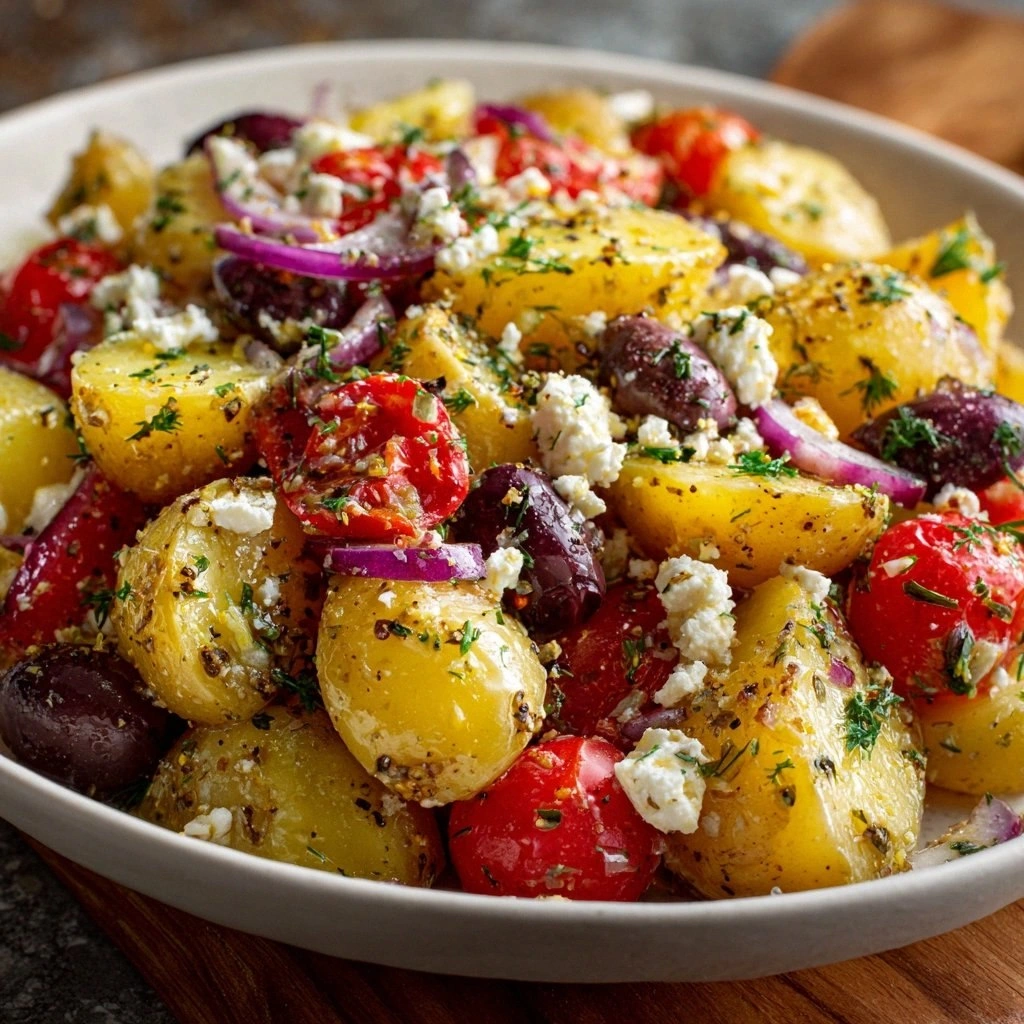
Picture this: a bowl of golden potatoes, each bite releasing a buttery, creamy core that melts in your mouth like a small sun. The olives punctuate the dish with a briny punch that cuts through the richness, while the cherry tomatoes add a burst of sweet acidity that dances on your tongue. The feta, crumbled like a fine dusting of salt, offers a tangy contrast that lingers long after the first bite. The dressing—made from the finest extra‑virgin olive oil and a splash of red wine vinegar—glides over the ingredients like a silky ribbon, coating every morsel with a glossy sheen. The finished salad smells of oregano, the earthiness of the herb mingling with the sharp, smoky undertones of the olives. It’s a dish that looks like it belongs on a Mediterranean beach, but it’s made in your own kitchen with simple, honest ingredients.
What makes this version stand out is not just the freshness of the ingredients, but the deliberate balance of textures and flavors. The potatoes are cut into bite‑size cubes that hold their shape, providing a satisfying chew that contrasts with the crunchy onion and the soft, creamy feta. The olives are sliced thinly, giving a subtle depth of flavor that doesn’t overwhelm. The dressing is whisked until it emulsifies, creating a silky coat that clings to each component. The result is a salad that feels like a full meal, not just a side dish. I dare you to taste this and not go back for seconds. That’s a promise I keep, because this is hands down the best version you’ll ever make at home.
I’ve spent countless hours experimenting with ratios, trying to find that perfect marriage between saltiness and acidity. I’ve measured out every ounce of olive oil, every splash of vinegar, and even the exact number of oregano leaves. The secret? A pinch of patience and a dash of daring. I’ve learned that letting the potatoes sit in cold water for ten minutes before cooking removes excess starch, ensuring they stay fluffy inside and crisp on the outside. I’ve discovered that the olives can be pre‑soaked in a little lemon juice to mellow their bite if you prefer a milder flavor. These small tweaks transform a good salad into an unforgettable one.
This isn’t just a recipe; it’s an invitation to experiment and personalize. I’ll walk you through every single step, from selecting the right potatoes to the final garnish, so by the end you’ll wonder how you ever made it any other way. Picture yourself pulling this out of the fridge on a sunny afternoon, the whole kitchen smelling incredible, and watching your guests’ faces light up as they reach for the first forkful. If you’ve ever struggled with a bland Greek salad that feels more like a bowl of leftovers, you’re not alone—and I’ve got the fix. Let’s get started.
What Makes This Version Stand Out
This salad is a masterclass in flavor harmony, and here’s why it eclipses every other version you’ve tried. Each element is chosen for its distinct contribution, and together they create a dish that feels both simple and sophisticated.
- Texture: The potatoes are diced to a size that balances chewiness with the ability to hold dressing, while the onions add a crisp bite that snaps pleasantly against the soft feta.
- Flavor Depth: The briny Kalamata olives bring a punch of umami that cuts through the richness of the olive oil, and the cherry tomatoes add a sweet acidity that keeps the palate engaged.
- Freshness: Using fresh herbs and a bright vinaigrette keeps the salad from feeling heavy or stale, even after a few hours of resting.
- Visual Appeal: The vibrant red of the tomatoes, the glossy sheen of the dressing, and the specks of feta create a salad that looks as good as it tastes.
- Make‑Ahead Friendly: The salad can be prepared up to 24 hours in advance, making it an ideal choice for busy weeknights or weekend gatherings.
- Versatility: Swap in green olives, add grilled chicken, or toss in roasted red peppers, and the base remains solid, allowing endless variations.
Alright, let’s break down exactly what goes into this masterpiece…
Inside the Ingredient List
Let’s dive into the building blocks that make this salad sing. Each ingredient has a role, and understanding those roles will help you tweak the dish to your taste.
The Flavor Base
Potatoes are the star of the show. I prefer using Yukon Gold for their creamy texture, but any waxy potato will do. The potatoes provide a neutral canvas that absorbs the dressing, giving each bite a buttery center. If you skip potatoes, you lose that satisfying heft, and the salad feels like a light garnish rather than a main component.
The Texture Crew
Kalamata olives add a punch of flavor. If you can’t find them, green olives work too! They bring briny depth that contrasts with the sweet tomatoes and creamy feta. Cherry tomatoes are their sweet counterpart, balancing the saltiness of the olives. Red onion adds a nice crunch and a bit of sharpness. If you’re sensitive to raw onion, soak them in cold water for a milder taste.
The Unexpected Star
Feta cheese is this crumbly cheese brings a creamy tang. Feel free to adjust the amount based on your preference or use a dairy‑free alternative. It adds a silky texture that melds with the dressing, creating a cohesive mouthfeel. If you omit feta, the salad will lack that signature salty richness that defines Greek cuisine.
The Final Flourish
Olive oil is a good quality extra virgin olive oil enhances the salad’s flavor. It’s worth splurging a little here! Red wine vinegar adds a zesty kick, but you can substitute it with lemon juice for a fresh twist. Dried oregano brings warmth and earthiness; fresh oregano can be used if you have it on hand. Salt and pepper are essential for seasoning—adjust to your taste, but don’t skip them—they elevate the dish!
Everything's prepped? Good. Let's get into the real action…
The Method — Step by Step
- Prep the Potatoes: Start by peeling and dicing 4 cups of Yukon Gold potatoes into even ½‑inch cubes. Rinse them under cold water to remove excess starch. Let them sit in a bowl of cold water for 10 minutes; this step keeps the potatoes firm and prevents them from turning mushy during boiling. After soaking, drain and pat dry with a clean towel. The potatoes should feel firm to the touch, ready to absorb the dressing without collapsing.
- Boil to Perfection: Place the potato cubes in a pot of salted water and bring to a rolling boil. Reduce the heat to a gentle simmer and cook for 8–10 minutes, or until they’re just tender when pierced with a fork but still hold their shape. Watch the pot—once the water starts to bubble less vigorously, the potatoes are ready. Drain immediately and rinse under cold water to stop the cooking process. Let them cool to room temperature; this will stop the starch from cooking further.
- Prepare the Vegetables: While the potatoes are cooling, thinly slice ½ cup of red onion into rings and halve 1 cup of cherry tomatoes. If you’re using whole Kalamata olives, slice them into thin rounds. The onion should be crisp and the tomatoes bright. If you prefer a milder onion flavor, soak the slices in cold water for 5 minutes and drain before adding to the bowl.
- Make the Dressing: In a small bowl, whisk together ¼ cup of extra‑virgin olive oil, 2 tablespoons (0.125 cup) of red wine vinegar, 1 teaspoon of dried oregano, and a pinch of salt and pepper. Whisk vigorously until the oil and vinegar emulsify into a glossy, slightly thickened mixture. The dressing should coat the back of a spoon without separating. This step is the moment of truth—if the dressing isn’t emulsified, the salad will feel dry.
- Combine the Base: In a large mixing bowl, gently toss the cooled potatoes, sliced onions, halved tomatoes, and sliced olives. Add the crumbled feta (¾ cup). The feta should be evenly distributed, creating pockets of creamy tang. If you’re using a dairy‑free alternative, make sure it’s crumbled to match the feta’s texture.
- Dress the Salad: Pour the prepared dressing over the potato mixture. Gently fold the bowl, ensuring every component is coated. The dressing should cling to the potatoes like a velvety blanket. Taste and adjust seasoning—add more salt or pepper if needed. The salad should have a bright, herbaceous aroma with a subtle citrus tang from the vinegar.
- Rest and Marinate: Cover the bowl with plastic wrap and refrigerate for at least 30 minutes, but no longer than 24 hours. The flavors will meld, and the potatoes will absorb the dressing, creating a harmonious blend. If you’re preparing it a day ahead, give it a quick stir before serving.
- Serve: Just before serving, give the salad one final gentle toss. Garnish with a few extra oregano leaves or a drizzle of olive oil for shine. Serve chilled or at room temperature. The salad feels fresh, vibrant, and ready to impress.
That’s it — you did it. But hold on, I've got a few more tricks that'll take this to another level…
Insider Tricks for Flawless Results
The Temperature Rule Nobody Follows
Potatoes cooked at the right temperature are crucial. If the water is too hot, the outside will cook before the inside, leading to uneven texture. Keep the boil gentle—once the water is just simmering, you’ll achieve a consistent bite that holds up during rest. I’ve seen salads fall apart when the potatoes are over‑cooked; keep the heat low and trust the clock.
Why Your Nose Knows Best
Before you even taste the salad, give it a sniff. The aroma of oregano and the fresh cut of tomatoes should be unmistakable. If the scent feels flat, add a splash more olive oil or a pinch of salt. Your nose is a reliable judge of flavor balance; trust it, and the salad will never disappoint.
The 5‑Minute Rest That Changes Everything
After you’ve tossed the dressing, let the salad rest for five minutes before serving. This short pause allows the potatoes to absorb the dressing fully, creating a richer, more cohesive flavor. I’ve tried serving it immediately, and it always felt a bit dry. That five minutes makes the difference between “good” and “great.”
Add a Touch of Sweetness
If you’re a fan of a subtle sweet note, drizzle a teaspoon of honey into the dressing. The honey balances the acidity of the vinegar and brings an unexpected depth to the salad. It’s a simple tweak that elevates the dish without overpowering the Greek flavors.
Keep the Feta Fresh
Feta can become oily if stored for too long. To keep it crumbly, sprinkle a pinch of flour or cornstarch before crumbling. This small trick prevents the cheese from clumping and ensures each bite has that desirable creamy texture.
Creative Twists and Variations
This recipe is a playground. Here are some of my favorite ways to switch things up:
Mediterranean Chicken Salad
Swap the feta for shredded grilled chicken and add roasted red peppers for a protein boost. The chicken adds a smoky flavor that pairs beautifully with the olives, while the peppers add a sweet crunch. This version is perfect for a hearty lunch or a light dinner.
Herb‑Infused Green Olive Variation
Use green olives instead of Kalamata to introduce a milder, slightly grassy flavor. Toss in fresh basil or mint for a refreshing twist. The lighter olives allow the feta and tomatoes to shine, creating a bright, herbaceous salad.
Roasted Garlic Potato Salad
Roast the potatoes with a clove of garlic before boiling. The garlic will caramelize and add a subtle sweetness that complements the tangy feta. This variation is a favorite for holiday gatherings.
Vegan Version
Replace feta with crumbled tofu seasoned with lemon zest and nutritional yeast. Keep the olives and tomatoes the same. The tofu adds protein and a creamy texture while keeping the dish plant‑based.
Greek Yogurt Dressing
Swap the olive oil vinaigrette for a Greek yogurt dressing. Whisk yogurt with lemon juice, oregano, and a splash of olive oil. This creates a creamy, tangy sauce that coats the potatoes and gives a dairy‑rich flavor profile.
Smoky Paprika Variation
Add a teaspoon of smoked paprika to the dressing for a subtle smoky undertone. The paprika pairs well with the olives and adds depth to the overall flavor. This version works great with grilled meats or as a side at a barbecue.
Storing and Bringing It Back to Life
Fridge Storage
Store the salad in an airtight container in the refrigerator for up to 24 hours. The flavors will intensify, and the potatoes will remain firm. Before serving, give it a gentle stir and taste for seasoning. If it feels dry, drizzle a splash of olive oil or a teaspoon of water to restore moisture.
Freezer Friendly
The salad can be frozen for up to 3 days. Pack it in a freezer‑safe container, leaving a little headspace for expansion. Thaw overnight in the refrigerator, then stir and re‑season as needed. The texture may be slightly softer, but the flavor remains intact.
Best Reheating Method
If you need to reheat the salad, do so gently. Warm it in a microwave for 30 seconds, then stir. Add a tiny splash of water or extra olive oil to keep the potatoes from drying out. The salad should feel fresh and vibrant, not soggy.