Love this? Pin it for later! 📌
Why This Recipe Works
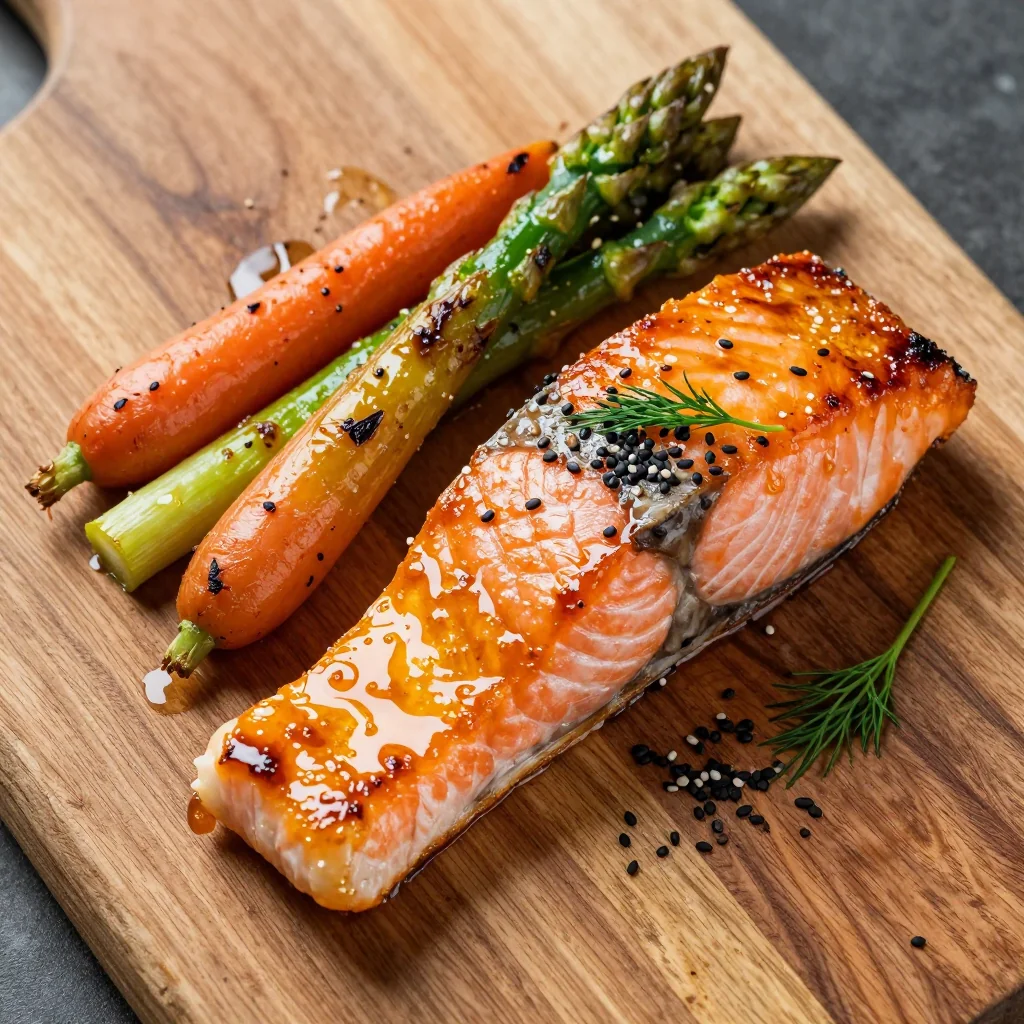
- One Pan, Zero Stress: Everything roasts together—protein, veg, and sauce—so you can binge Netflix instead of scrubbing skillets.
- Balanced in 25 Minutes: Heart-healthy omega-3s, fiber-rich veg, and naturally sweet maple create a complete macro-balanced meal faster than delivery.
- Flavor Layers on Repeat: The glaze does triple duty—marinade, roasting sauce, and finishing drizzle—so every bite tastes caramelized, tangy, and subtly sweet.
- Scalable & Meal-Prep Friendly: Halve it for solo dinners or double for Sunday lunches; leftovers reheat like a dream.
- Kid-Approved Veggies: The maple glaze turns Brussels sprouts and carrots into candy—no negotiations required.
- Gluten-Free & Refined-Sugar-Free: Pure maple syrup keeps it naturally sweet without the crash.
- Restaurant Flair at Home: A final sprinkle of fresh dill and citrus zest makes plates look Michelin-worthy for date night.
Ingredients You'll Need
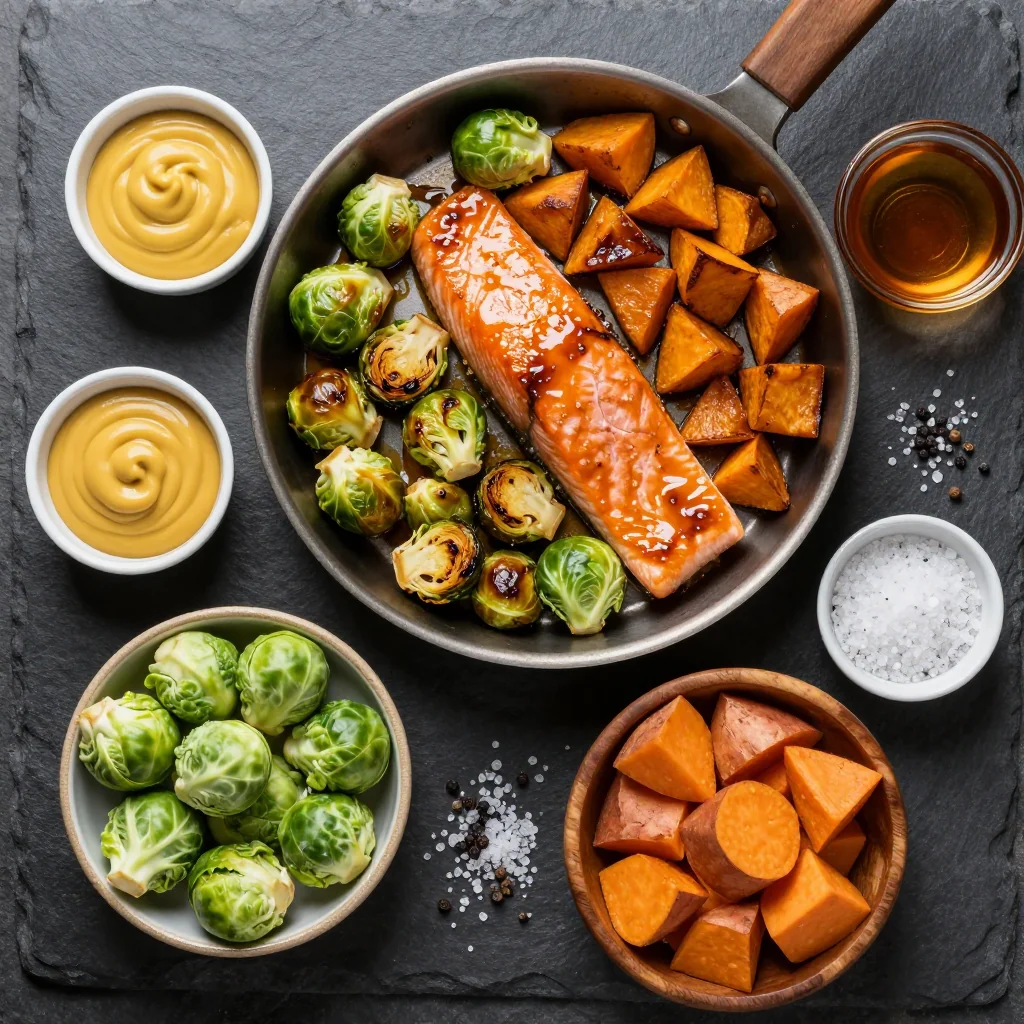
Great sheet-pan cooking starts with strategic shopping. Look for vibrant, firm vegetables and salmon that smells like the ocean breeze—not fishy, just fresh. Below I’ve broken down each component, why it matters, and the swaps I’ve tested so you can cook confidently from pantry staples.
Wild Salmon Fillets (1¼–1½ lb, 4 portions, skin-on): Wild-caught Coho or King delivers richer flavor and firmer texture than farmed. Skin protects the flesh from high heat and peels off effortlessly after roasting. If you can only find skinless, reduce oven temp to 400 °F and check doneness two minutes early.
Pure Maple Syrup (¼ cup): Grade A Dark Color (formerly Grade B) has a robust, almost smoky note that stands up to Dijon. Avoid pancake syrup; it’s mostly corn syrup and will burn. In a pinch, date syrup or honey works, but reduce to 3 Tbsp since both are sweeter.
Whole-Grain Dijon Mustard (2 Tbsp): Those tiny mustard seeds pop like caviar and create little caramelized pockets. Smooth Dijon is fine; add ½ tsp mustard powder for texture.
Apple Cider Vinegar (1 Tbsp): Brightens the glaze and balances maple’s sweetness. Rice vinegar or fresh lemon juice subs nicely.
Fresh Garlic (2 cloves, micro-planed): Micro-planing distributes flavor evenly so you never bite into a chunk. Garlic powder? Use ½ tsp and add with paprika.
Avocado Oil (2 Tbsp + 1 tsp): High smoke point (520 °F) prevents sticky glaze fires. Extra-virgin olive oil works; just keep an eye on browning.
Smoked Paprika (¾ tsp): Adds subtle campfire nuance. Regular paprika is okay, but add a pinch of chipotle powder for smoke.
Sea Salt & Cracked Pepper: Season every layer—vegetables and protein—for restaurant depth.
Broccolini (1 bunch, 6 oz): Slender stalks roast in the same time as salmon. Swap with asparagus or green beans; just trim to similar thickness.
Rainbow Carrots (4 medium, ½-inch coins): Their natural sugars concentrate into candy-like edges. Regular orange carrots are equally delicious.
Brussels Sprouts (12 oz, halved): Outer leaves crisp into kale-chip crunch. Buy them on the stalk for ultimate freshness; they last three weeks in the fridge.
Fresh Dill & Lemon Zest (garnish): The aromatic finish that makes diners ask, “What’s that amazing smell?” Freeze-dried dill keeps months and revives with a quick pinch between fingers.
How to Make Healthy Sheet Pan Maple Dijon Salmon for Dinner
Preheat & Prep Parchment
Position rack in center of oven; heat to 425 °F. Line a rimmed 13×18-inch sheet pan with parchment, letting edges overhang for easy lift-out. (Foil works but parchment prevents glaze sticking and is compostable.) Lightly mist with avocado oil to keep vegetables from welding to the paper.
Whisk the 5-Ingredient Glaze
In a small bowl whisk maple syrup, Dijon, vinegar, garlic, smoked paprika, ½ tsp salt, and ¼ tsp pepper. The mixture should ribbon off the spoon; if it’s too thick, thin with 1 tsp warm water. Reserve 2 Tbsp in a separate cup for finishing—this keeps cross-contamination at bay and gives you glossy drizzle later.
Toss Vegetables with Seasoned Oil
In a large bowl combine broccolini, carrots, and Brussels sprouts with 2 Tbsp avocado oil, ½ tsp salt, and ¼ tsp pepper. Use your hands—yes, chefs do it too—to massage oil into crevices so vegetables roast, not steam.
Stage the Pan Strategically
Spread vegetables in a single layer, placing Brussels cut-side down for maximum caramelization. Nestle broccolini stalks along edges where heat is hottest. Leave a 4×6-inch cleared space in center for salmon—this prevents overcrowding and ensures even airflow.
Glaze & Nestle the Salmon
Pat fillets very dry with paper towels—moisture is the enemy of browning. Brush flesh generously with half of the main glaze (about 3 Tbsp). Place salmon skin-side down in the cleared space, then brush tops with remaining glaze. The glaze will pool slightly; that’s flavor gold.
Roast 12–14 Minutes
Slide pan into oven and roast until salmon reaches 125 °F for medium (slightly translucent center) or 135 °F for well-done. Vegetables should be blistered and tender. Resist opening the door before 10 minutes; consistent heat is critical for caramelization.
Broil for the Grand Finale
Switch oven to high broil. Broil 1–2 minutes, watching like a Netflix cliffhanger, until glaze bubbles and edges char. Rotate pan halfway for even color.
Rest, Drizzle, Garnish
Transfer salmon to a plate and tent loosely with foil; rest 3 minutes (carry-over cooking finishes the center). Drizzle reserved 2 Tbsp glaze over vegetables for mirror-like shine. Shower with dill and lemon zest for color contrast and aromatic lift. Serve straight from the pan for rustic charm or plate on warm dinnerware for date-night elegance.
Expert Tips
Invest in an Instant-Read Thermometer
Salmon moves from silky to chalky in seconds. A $15 digital probe eliminates guesswork and earns you perfectly moist fish every time.
Pat, Pat, Pat Dry
Even 1 tsp surface moisture creates steam and blocks caramelization. Use two paper towels per fillet and press gently.
Rotate Halfway
Most home ovens have hot spots. Give the pan a 180-degree spin after 6 minutes for evenly bronzed vegetables.
Make It a Sheet-Pan Brunch
Swap salmon for thick trout fillets and add sweet-potato cubes. Top with poached eggs and hollandaise for weekend wow-factor.
Freeze Individual Portions
After roasting, flake leftover salmon onto parchment parcels with veg, seal, and freeze. Reheat at 350 °F for 10 minutes for instant lunches.
Maximize Maple Caramel
Brush an extra teaspoon of syrup on salmon during the final 30 seconds of broiling for show-stopping lacquer.
Variations to Try
- Asian Fusion: Swap maple for teriyaki, add sesame oil, and garnish with toasted sesame seeds and scallions. Serve over microwave-ready brown rice.
- Spicy Cajun: Add ½ tsp cayenne and 1 tsp dried oregano to glaze. Use andouille sausage coins instead of salmon for a smoky, budget-friendly twist.
- Mediterranean: Replace maple with honey, stir in 1 tsp za’atar, and roast alongside cherry tomatoes and olives. Finish with crumbled feta.
- Vegan Power Pan: Substitute salmon with marinated tofu steaks and add chickpeas for protein. Keep the same glaze—yes, it’s that versatile.
- Autumn Harvest: Trade broccolini for cubed butternut squash and add fresh sage. Roast 5 extra minutes before adding salmon.
Storage Tips
Refrigerate: Cool completely, transfer to airtight glass containers, and refrigerate up to 3 days. Separate salmon from vegetables to prevent fishy flavors migrating.
Freeze: Place cooled portions on a parchment-lined tray; freeze 1 hour, then transfer to freezer bags. Keeps 2 months. Thaw overnight in fridge.
Reheat: Warm in a 300 °F oven for 8 minutes or microwave at 50 % power in 30-second bursts. Add a splash of water and cover to rehydrate glaze.
Meal Prep: Chop vegetables and whisk glaze on Sunday; store separately. Dinner is then a 5-minute assembly on busy weeknights.
Frequently Asked Questions
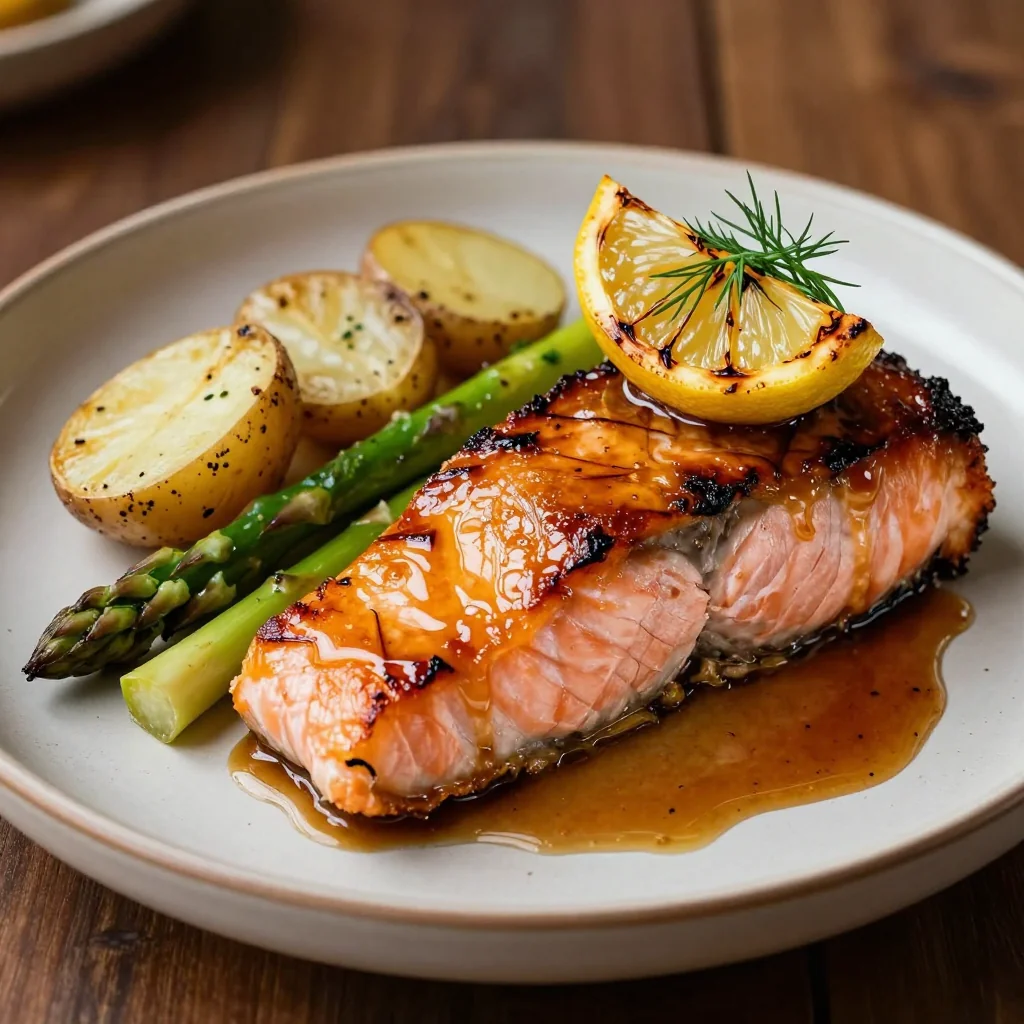
Healthy Sheet Pan Maple Dijon Salmon for Dinner
Ingredients
Instructions
- Preheat oven: Line a rimmed sheet pan with parchment. Heat oven to 425 °F.
- Make glaze: Whisk maple syrup, mustard, vinegar, garlic, paprika, ½ tsp salt, ¼ tsp pepper. Reserve 2 Tbsp separately.
- Season veg: Toss broccolini, carrots, and Brussels with 2 Tbsp oil, ½ tsp salt, ¼ tsp pepper.
- Arrange: Spread vegetables in single layer, leaving center clear. Place salmon skin-side down; brush with glaze.
- Roast: Bake 12–14 min until salmon reaches desired doneness. Broil 1–2 min for caramelized edges.
- Finish: Drizzle reserved glaze, sprinkle dill and zest. Serve hot.
Recipe Notes
For crispier vegetables, preheat the empty sheet pan in the oven for 5 minutes before adding ingredients. Be careful of hot steam when arranging food.