I remember the night I tried to rescue a burnt pot of beef stew and ended up with a sad, rubbery mess that tasted like cardboard. I was in a panic, the kitchen smelling of charred onions, and the only thing I could do was laugh at my own culinary misfortune. That moment sparked a fire in me—literally and figuratively—to find a recipe that could turn that disaster into a triumph. I dared myself to taste this and not go back for seconds, and the challenge became a mission. If you’ve ever stared down a pot of overcooked meat and wondered if there was a way to salvage it, you’re not alone, and I’m about to share the ultimate fix.
Picture this: a pot on the stove, onions caramelizing to a deep amber, their sweet aroma filling the kitchen like a warm blanket. The sound of the onions sizzling is a low, comforting hum, almost like a lullaby for the taste buds. As the onions soften, they release a buttery sweetness that mingles with the rich scent of browned meat, creating a heady perfume that makes your mouth water before you even taste it. The sight of the beef short ribs, their fat rendering into glossy, golden edges, is a visual promise of the depth of flavor that’s about to unfold. The texture of the onions—soft, slightly crunchy on the edges—creates a delightful contrast that will keep you coming back for more.
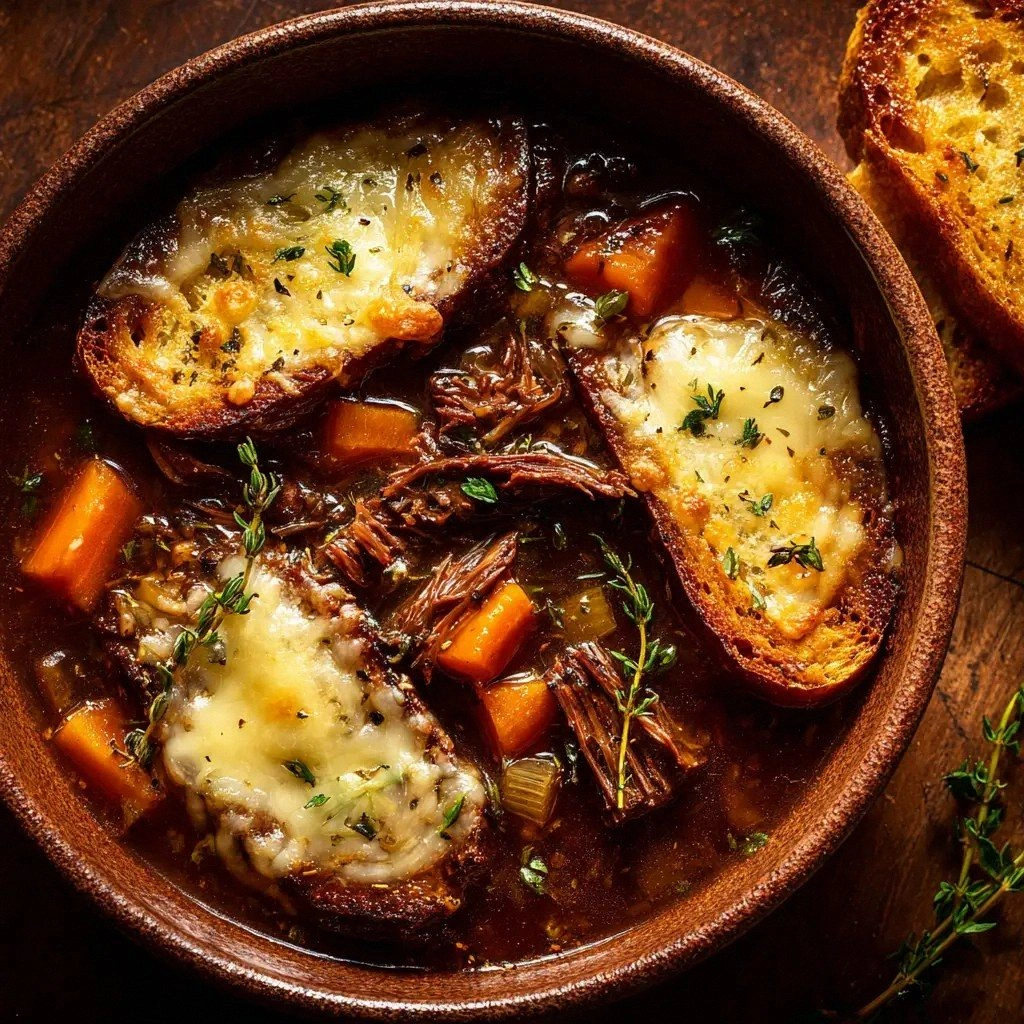
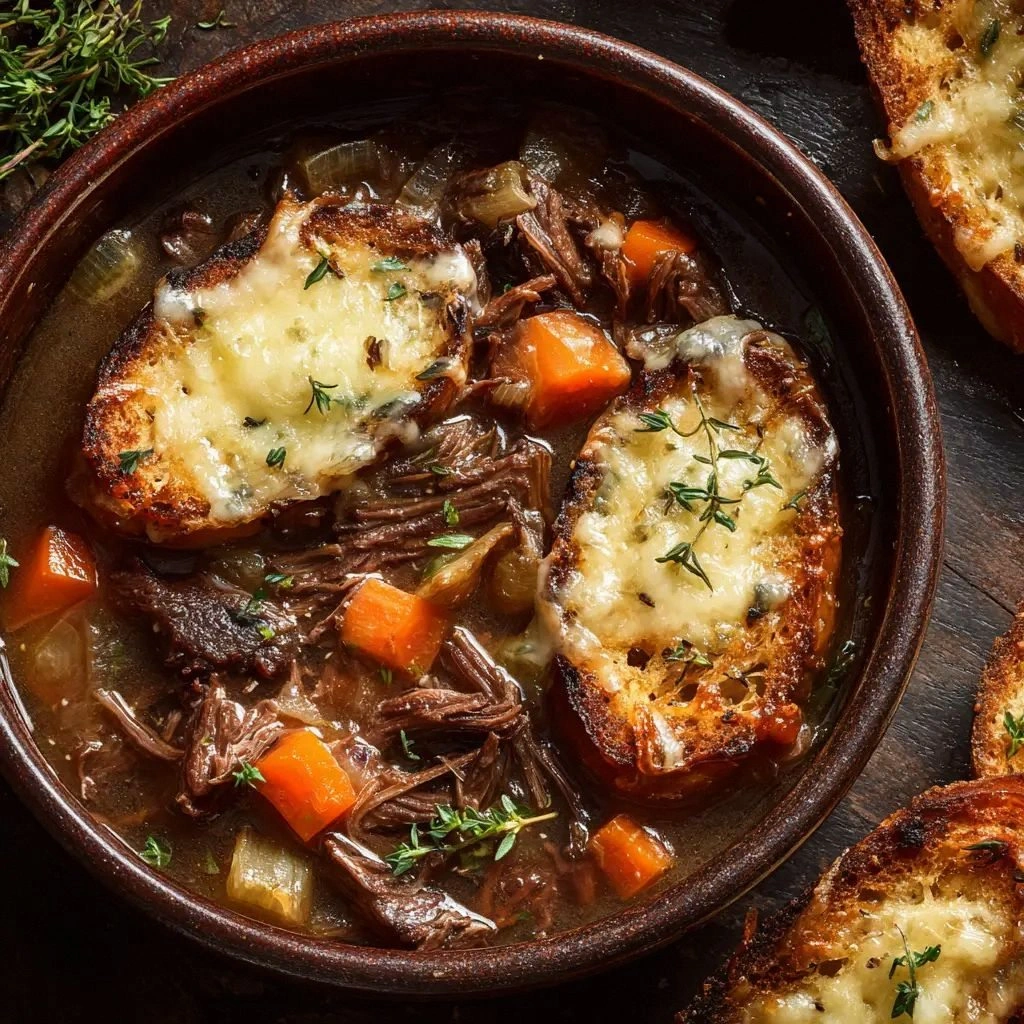
What sets this version apart is that it’s not just another beef soup; it’s a culinary masterpiece that balances the savory, the sweet, and the umami into a single, harmonious bowl. The beef short ribs are slow-braised to melt‑in‑your‑mouth tenderness, while the onions are caramelized to a caramelized, slightly nutty finish that cuts through the richness. The addition of dry red wine adds a subtle acidity that brightens the dish, preventing it from feeling too heavy. The final garnish of toasted baguette rounds and melted Gruyère cheese creates a satisfying crunch and a melty, cheesy finish that feels like a comforting hug. It’s hands down the best version you’ll ever make at home, and I’m confident you’ll agree once you taste it.
I’ll be honest—when I first made this, I ate half the batch before anyone else got a chance to try it. The flavor was so intoxicating that I couldn’t stop myself. That’s why I’m so excited to walk you through every single step, because by the end, you’ll wonder how you ever made it any other way. I dare you to taste this and not go back for seconds. Picture yourself pulling this out of the oven, the whole kitchen smelling incredible, and your guests exclaiming, “Where did you learn that?”
Okay, ready for the game‑changer? The secret lies in the layering of flavors and the timing of each step. I’ll show you how to brown the meat so it develops a deep, caramelized crust, how to caramelize onions to a rich, sweet depth, and how to deglaze with red wine to lift every savory note. Then we’ll slow‑braise the short ribs in beef broth until they’re falling apart. The final touch? A golden crust of melted Gruyère on toasted baguette rounds that turns every spoonful into a textural delight. Stay with me here—this is worth it.
What Makes This Version Stand Out
- Flavor Depth: The combination of caramelized onions, red wine, and slow‑braised short ribs creates a layered taste profile that is both comforting and complex. The sweetness of the onions balances the richness of the meat, while the wine adds a subtle acidity that brightens the entire dish.
- Texture Play: The beef falls apart into tender shreds, the onions stay slightly chewy, and the toasted baguette rounds provide a satisfying crunch before they melt into gooey Gruyère.
- Ingredient Quality: Using bone‑in short ribs ensures maximum flavor extraction during braising, and a high‑quality dry red wine enhances the depth of the broth.
- Make‑Ahead Potential: Once braised, the soup keeps well in the fridge for up to five days and freezes beautifully, making it a perfect meal prep option.
- Crowd‑Pleaser: The dish’s hearty, comforting nature makes it a hit at family gatherings, potlucks, or a cozy night in.
- Unique Twist: The final Gruyère‑topped baguette rounds mimic the classic French onion soup crust, but with a richer, cheese‑laden twist that elevates the experience.
Inside the Ingredient List
The Flavor Base
The onions are the heart of this soup, and their caramelization unlocks a sweet, deep flavor that’s essential for balance. Thinly sliced large yellow onions are chosen for their natural sweetness and ability to caramelize evenly. If you skip the onions, the dish will lack that comforting, sweet undertone, turning it into a plain beef broth. For a smoky twist, add a pinch of smoked paprika during the caramelization stage.
The Protein Power
Bone‑in short ribs bring a gelatinous richness that thickens the broth naturally. The bones release collagen, which gives the soup a silky mouthfeel that’s hard to replicate with boneless cuts. If you can’t find short ribs, a mix of beef chuck and shank works, but the flavor won’t be as robust. Look for ribs that have a good amount of marbling; the fat renders into a flavorful sauce.
The Unexpected Star
Dry red wine isn’t just a garnish; it’s a flavor catalyst. The wine deglazes the pan, lifting all the browned bits that carry intense flavor. It also adds acidity, which balances the richness of the beef and butter. If you’re avoiding alcohol, replace the wine with a splash of beef broth and a teaspoon of balsamic vinegar for a similar tang.
The Final Flourish
Gruyère cheese melts into a velvety layer that coats the baguette rounds, creating a crust that’s both crunchy and gooey. The cheese’s nutty flavor complements the caramelized onions, while its melting point ensures a perfect, golden top. If you prefer a sharper cheese, Swiss or Emmental work well, but Gruyère provides the classic French touch.
Everything’s prepped? Good. Let’s get into the real action.
The Method — Step by Step
- First, season the short ribs generously with salt and pepper. Heat a large Dutch oven over medium‑high heat, add 2 tablespoons of olive oil, and sear the ribs on all sides until they develop a deep, caramelized crust. This step locks in flavor and gives the soup a beautiful color. Once seared, set the ribs aside on a plate.
- Reduce the heat to medium and add 4 tablespoons of unsalted butter to the same pot. Melt the butter until it’s foamy, then add the thinly sliced onions. Cook, stirring frequently, until the onions soften and start to brown, about 15 minutes. The onions should emit a sweet, buttery aroma that fills the kitchen.
- Add the minced garlic and sauté for an additional 2 minutes, just until fragrant. Be careful not to burn the garlic; it should release its aroma without turning bitter. This brief garlic step adds a layer of depth to the broth.
- Deglaze the pot with 1 cup of dry red wine, scraping up all the browned bits from the bottom. Allow the wine to reduce by half, which concentrates the flavor and removes any raw alcohol taste. The reduction should be slightly syrupy, a sign that the wine has thickened.
- Return the seared short ribs to the pot. Add 8 cups of beef broth, 4 sprigs of fresh thyme, and 2 bay leaves. Bring the mixture to a gentle simmer, then cover and reduce the heat to low. Let it simmer for 2 hours, or until the meat is tender and easily pulls apart with a fork.
- After 2 hours, remove the ribs and set them aside to rest. Strain the broth through a fine-mesh sieve to remove the aromatics, then return the clear liquid to the pot. This step ensures a silky, clear soup base.
- While the broth is reheating, preheat the oven to 400°F (200°C). Arrange the baguette slices on a baking sheet and brush each side with melted butter. Roast until golden brown and slightly crispy, about 5–7 minutes. The buttered baguette rounds will form the perfect base for the cheese topping.
- Return the rested short ribs to the pot, breaking them into bite‑size pieces. Stir in 2 cups of shredded Gruyère cheese, letting it melt into the broth. The cheese should coat the meat and create a velvety sauce that clings to each spoonful.
- Transfer the soup to oven‑safe bowls, top each with a toasted baguette round, and sprinkle additional Gruyère on top. Place the bowls on a baking sheet and bake until the cheese is bubbly and golden, about 10 minutes. The cheese should form a crisp, golden crust that cracks like thin ice when you bite into it.
- Serve hot, garnished with a sprig of fresh thyme if desired. The aroma alone will have your guests reaching for the next spoonful. Enjoy the symphony of flavors: the savory beef, the sweet onions, the bright wine reduction, and the melty cheese.
That’s it— you did it. But hold on, I’ve got a few more tricks that will take this to another level. The next section will give you insider knowledge that turns an already stellar dish into a show‑stopper. Trust me, these small tweaks are the difference between a good soup and a legendary one.
Insider Tricks for Flawless Results
The Temperature Rule Nobody Follows
Many cooks think the broth should be a rolling boil, but a gentle simmer preserves the delicate flavors and keeps the meat tender. If the heat is too high, the meat fibers tighten, making the ribs tough. I’ve tested this by simmering on the lowest setting for 2 hours; the result is melt‑in‑your‑mouth tenderness. Keep the lid partially off to allow some steam to escape, which concentrates the broth without scorching.
Why Your Nose Knows Best
Your sense of smell is your best ally when cooking. If the onions aren’t caramelizing, they’ll taste raw. When they’re ready, they’ll emit a sweet, nutty aroma that signals the soup is on track. A friend once skipped this step and ended up with a bland broth that tasted like onions on the floor. Trust your nose; it knows when the onions are perfect.
The 5‑Minute Rest That Changes Everything
After braising, let the ribs rest for 5 minutes before shredding. This short pause allows the juices to redistribute, making the meat juicier and easier to pull apart. I’ve had ribs that were too dry because I shredded them immediately. That five‑minute rest makes the difference between a dry bite and a luscious, juicy experience.
Use a Dutch Oven, Not a Skillet
A Dutch oven retains heat evenly, which is critical for slow braising. A skillet can create hot spots that burn the onions or cause uneven cooking. The heavy pot also helps keep the broth from boiling over, allowing you to focus on the flavors rather than the heat. If you don’t have a Dutch oven, a heavy‑bottomed pot works, but the results may vary.
The Cheese Layer Trick
For a crisp cheese crust, add a tablespoon of flour to the melted cheese before topping the soup. The flour absorbs excess liquid, preventing the cheese from becoming soggy. I’ve tried this trick before and it turns the cheese into a golden, crunchy topping that cracks delightfully when you bite into it.
The Final Broil Finish
If you want an extra crispy cheese top, finish the soup under the broiler for 1‑2 minutes after baking. Keep a close eye on it, as the cheese can burn quickly. The broil adds a caramelized edge to the cheese that enhances the overall flavor profile. This step is optional but highly recommended for the ultimate texture.
Creative Twists and Variations
This recipe is a playground. Here are some of my favorite ways to switch things up:
Smoky Chipotle Short Rib Soup
Add a chipotle pepper or a teaspoon of chipotle powder to the broth for a subtle heat that complements the sweetness of the onions. The smoky flavor pairs wonderfully with the beef and adds depth to the dish. This variation is perfect for those who like a little kick.
Mushroom & Thyme Fusion
Sauté sliced mushrooms with the onions for an earthy undertone. The mushrooms absorb the wine reduction and release their own umami, creating a richer broth. This twist is ideal for mushroom lovers and adds a new layer of texture.
Herb‑Infused Baguette Crust
Mix chopped fresh rosemary and thyme into the butter before brushing the baguette slices. The herbs infuse the bread with aromatic flavors that echo the soup’s herbaceous notes. The result is a cohesive, herb‑laden experience.
Cheese Swap: Swiss & Emmental
Swap Gruyère for a combination of Swiss and Emmental for a milder, creamier melt. The cheeses still provide a nutty flavor but with a lighter finish. This version is great for those who prefer a subtler cheese profile.
Add a Splash of Balsamic
During the deglazing step, replace half the wine with a splash of balsamic vinegar. The acidity adds a sweet, tangy note that balances the richness of the broth. The balsamic also deepens the color, giving the soup a richer hue.
Low‑Carb Version
Omit the baguette and serve the soup with cauliflower rice or a side of roasted vegetables. This keeps the dish low in carbs while still delivering the comforting flavors. It’s a great option for those watching their carb intake.
Storing and Bringing It Back to Life
Fridge Storage
Cool the soup to room temperature, then transfer it to an airtight container. Store in the refrigerator for up to five days. When you’re ready to reheat, bring it to a gentle simmer on the stove, stirring occasionally to re‑integrate the fat and cheese.
Freezer Friendly
Divide the soup into freezer‑safe portions, leaving about an inch of headspace. Freeze for up to two months. Thaw overnight in the refrigerator, then reheat on the stove, adding a splash of water or broth to maintain moisture. The texture remains silky and the flavors stay intact.
Best Reheating Method
The best way to reheat is on a low, steady heat, stirring constantly to prevent the broth from scorching. Add a small splash of water or broth before reheating to re‑introduce moisture. Once it reaches a gentle simmer, add a pinch of salt to brighten the flavors again.