I was halfway through a week of bland takeout when the kitchen lights flickered and a single, stubborn zucchini sat on the counter like a green, slightly bruised gem. I stared at it, thinking, “What am I going to do with this?” The answer, in a voice that sounded like a friend’s daring challenge, was simple: “Turn it into a dish that’s so flavorful you’ll swear you’ve never cooked before.” That moment, that spark of culinary curiosity, set the stage for what would become the easiest, most herby, chickpea‑laden zucchini skillet you’ll ever make.
Picture this: the aroma of garlic sizzling in olive oil fills the air, the bright green of zucchini slices glistening with a hint of lemon, and the faint crackle of onions caramelizing. The sound of the pan is a low, comforting rumble, like a campfire at dusk. The sight is a colorful mosaic of greens and whites, and the touch—each slice of zucchini crisped to a perfect golden edge—creates a satisfying contrast that feels almost like a culinary handshake. That sensory symphony is what makes this dish not just a meal but an experience, and I’m here to walk you through every single step so that you’ll wonder how you ever made it any other way.
This isn’t just another chickpea recipe. It’s a flavor-packed, herb‑infused, zucchini‑rich adventure that turns ordinary pantry staples into a dish that sings. The combination of chickpeas for protein, zucchini for freshness, and a medley of herbs for depth creates a balance that satisfies both the palate and the soul. And the best part? It’s so quick that even the busiest of you can whip it up in under an hour. I dare you to taste this and not go back for seconds.
I’ll be honest—when I first tried this recipe, I ate half the batch before anyone else got a bite. The moment the first spoon hit my tongue, I knew I had stumbled upon something special. The crunch of the zucchini, the nutty bite of chickpeas, and the bright burst of lemon all mingle like a well‑orchestrated jazz solo. This is hands down the best version you’ll ever make at home, and I’m excited to share every secret that makes it shine.
Most recipes get this completely wrong by over‑cooking the vegetables or under‑seasoning the chickpeas. Here’s what actually works: a quick sauté, a splash of lemon, and a generous dash of herbs. Picture yourself pulling this out of the skillet, the whole kitchen smelling incredible, and knowing that the next time you’re hungry, you’ll have the exact steps in mind. Stay with me here—this is worth it.
What Makes This Version Stand Out
- Flavor: The combination of fresh parsley, thyme, and oregano gives the dish a herby punch that’s both aromatic and comforting. Each herb adds its own personality—thyme brings earthiness, oregano offers a subtle bite, and parsley injects brightness. Together, they elevate the humble chickpeas into a savory masterpiece.
- Texture: The zucchini is sautéed until just tender, preserving a satisfying bite that contrasts with the creamy chickpeas. The slight crispness of the edges creates a delightful crunch that keeps the dish from becoming mushy. This texture play is what makes every bite interesting.
- Ease: With only a handful of ingredients and a single skillet, this dish is a one‑pan wonder. No extra pots or pans mean less cleanup and more time to enjoy the meal. It’s ideal for busy weeknights or when you’re short on time.
- Versatility: The recipe’s simplicity allows for endless variations—swap the zucchini for bell peppers, add a splash of tomato sauce, or sprinkle feta on top. The base flavor stays intact, but the dish can adapt to whatever you have on hand.
- Nutrition: Chickpeas provide plant‑based protein, while zucchini offers fiber and vitamins. Olive oil adds healthy fats, and the herbs keep the calorie count low. It’s a balanced meal that satisfies without compromising health.
- Crowd‑Pleaser: Even the pickiest eaters will be won over by the vibrant colors and fresh flavors. The dish’s versatility means you can add or omit ingredients to suit individual tastes, making it perfect for family dinners.
- Ingredient Quality: Using fresh herbs and a good olive oil transforms the dish from ordinary to extraordinary. Freshness is key; it amplifies the flavors and keeps the dish bright.
- Make‑Ahead Potential: The dish can be prepared ahead of time and reheated without losing flavor. The herbs and lemon juice can be added fresh before serving to keep the dish lively.
Inside the Ingredient List
The Flavor Base
The onion and garlic are the aromatic foundation of this dish. They release a sweet, savory profile that permeates every bite. If you skip the onion, the dish loses its depth, becoming a thin, one‑dimensional flavor. For a subtle twist, try using shallots instead; they add a gentle sweetness that complements the herbs.
The Texture Crew
Zucchini is the star of the texture department. Its natural moisture creates a light, refreshing bite while the sautéing process caramelizes the edges for a satisfying crunch. Chickpeas add a hearty, slightly nutty chew that balances the soft zucchini. If you prefer a firmer texture, lightly crush the chickpeas with the back of a spoon before adding them to the pan.
The Unexpected Star
Olive oil isn’t just a cooking medium; it’s a flavor carrier. It brings the herbs to life and gives the dish a silky finish. Using a high‑quality extra‑virgin olive oil will enhance the overall taste. If you’re on a budget, a light olive oil still works, but the flavor depth will be slightly less pronounced.
The Final Flourish
The fresh herbs and lemon juice finish the dish with brightness and vibrancy. Parsley, thyme, and oregano provide a layered herbaceous profile that cuts through the richness of the olive oil. The lemon juice adds acidity that balances the dish and brightens every bite. If you’re not a fan of lemon, a splash of vinegar or a squeeze of lime can work as a substitute.
Everything's prepped? Good. Let's get into the real action...
The Method — Step by Step
- Prep the Veggies: Wash the zucchini and cut it into half‑moon slices about 1/4 inch thick. Peel the onion and slice it into thin half‑rings. Mince the garlic cloves finely so they release their aroma quickly. The goal is to have everything ready so you can keep the heat steady.
- Heat the Skillet: Place a large skillet over medium heat and add the olive oil. Let it warm until it shimmers but isn’t smoking—about 30 seconds. This is the moment when the oil coats the pan and the foundation for flavor begins to build.
- Sauté the Onion: Add the sliced onion to the pan and cook for 3–4 minutes, stirring occasionally, until it turns translucent and starts to brown slightly. The onions should develop a sweet, caramelized aroma that signals they’re ready to pair with garlic.
- Introduce Garlic: Toss in the minced garlic and cook for 30 seconds. Watch the sizzle; it’s a sign the garlic is releasing its essential oils. Be careful not to burn it—burnt garlic turns bitter and ruins the dish.
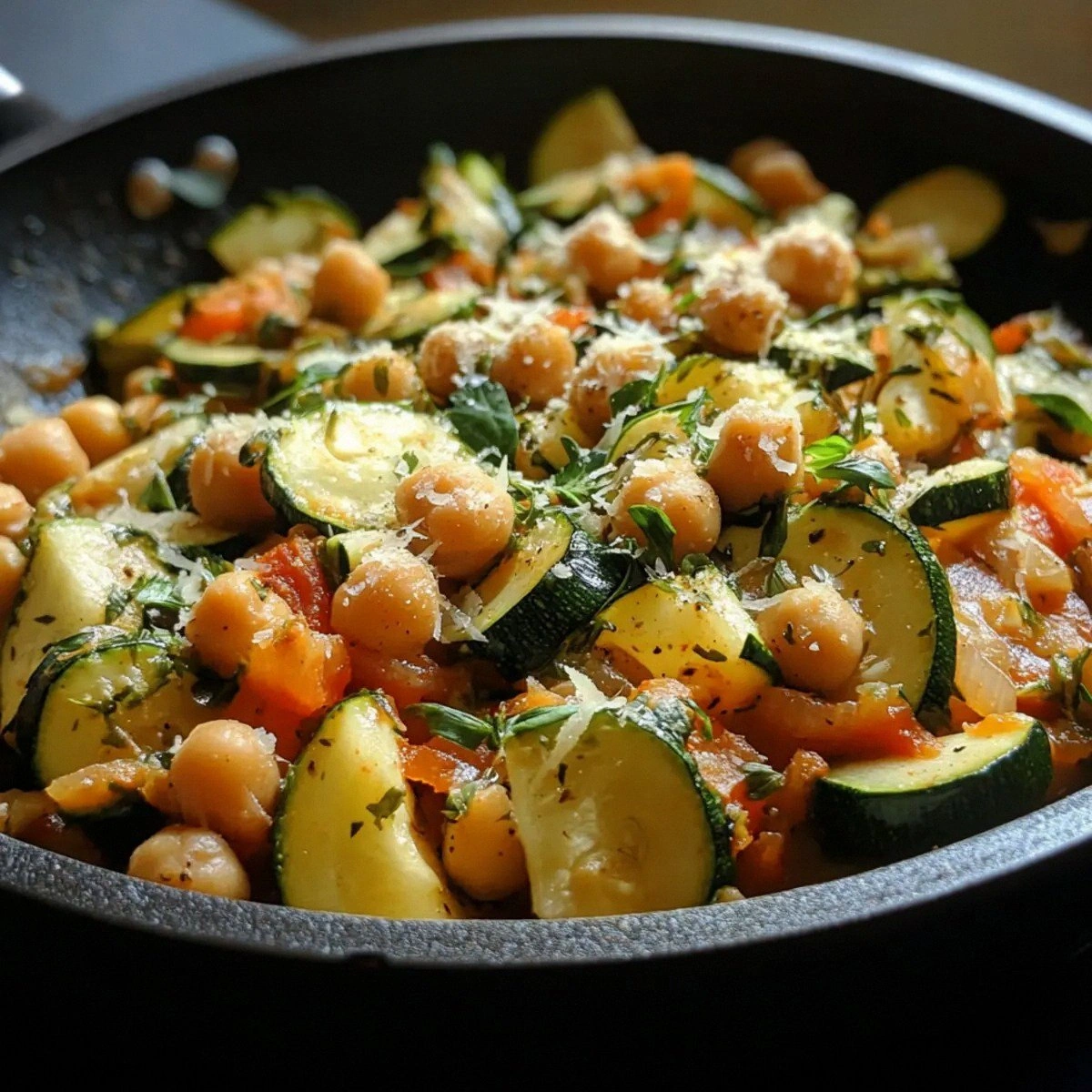
- Add Zucchini: Stir in the zucchini slices. Cook for 5–6 minutes, turning occasionally, until the edges are golden and the zucchini is just tender. The zucchini should still hold its shape; you want a bite, not a mush.
- Incorporate Chickpeas: Drain and rinse the chickpeas. Add them to the skillet, stirring to coat them in the oil and aromatics. Cook for 3–4 minutes, letting them warm through and pick up the flavors of the herbs.
- Season and Finish: Sprinkle in the fresh parsley, thyme, oregano, salt, black pepper, and red pepper flakes. Add the lemon juice and stir everything together. Let it simmer for 2 minutes, allowing the herbs to bloom and the lemon to brighten the dish.
- Final Touches: Taste and adjust seasoning if needed. If you prefer a bit more heat, add a pinch more red pepper flakes. If you want extra brightness, squeeze a little more lemon juice. The dish should feel vibrant, herbaceous, and perfectly balanced.
- Serve: Plate the skillet directly onto a serving dish or individual plates. The dish is best enjoyed hot, with a sprinkle of extra parsley for garnish if desired. The sizzling heat will carry the aroma, making the dining experience complete.
That’s it—you did it. But hold on, I’ve got a few more tricks that’ll take this to another level…
Insider Tricks for Flawless Results
The Temperature Rule Nobody Follows
Maintaining a medium heat throughout the cooking process is crucial. Too high, and the zucchini will steam; too low, and you’ll lose that caramelized edge. I’ve learned that a steady medium heat keeps the vegetables crisp and the flavors concentrated. If you’re using a gas stove, aim for a flame that’s about the size of a candle’s wick.
Why Your Nose Knows Best
Before you add the final seasoning, pause and sniff the dish. The aroma will tell you if the herbs need more depth or if the lemon has been undercooked. A strong, fresh herb scent is a sign of a good sauté. If it smells flat, give it another minute on the heat.
The 5‑Minute Rest That Changes Everything
Letting the skillet rest for 5 minutes after cooking allows the flavors to meld. During this time, the chickpeas absorb the herbs, and the zucchini’s juices redistribute. This brief pause can transform a good dish into a great one. When you’re ready to serve, give it a gentle stir before plating.
The Quick Lemon Boost
If you’re short on time, squeeze a fresh lemon half an hour before cooking. The oils from the peel will carry a bright citrus note that enhances the dish’s overall freshness. A quick squeeze of lemon juice right before serving can also brighten the flavors dramatically.
The Red Pepper Flake Balance
Red pepper flakes should be added in moderation. A small pinch can add warmth without overpowering the herbs. If you’re sensitive to heat, start with a quarter teaspoon and taste before adding more. The key is subtlety.
Creative Twists and Variations
This recipe is a playground. Here are some of my favorite ways to switch things up:
Spicy Tomato Kick
Add a handful of cherry tomatoes during the zucchini sauté stage. Their burst of sweetness and acidity complements the herbs. A splash of tomato paste at the end adds depth. This variation works great for those who love a tomato‑based flavor.
Mediterranean Feta Finish
Sprinkle crumbled feta cheese over the finished dish. The creamy saltiness balances the herbs and lemon. A few olives on top add a briny contrast. This version turns the skillet into a quick Mediterranean bowl.
Curry‑Infused Delight
Swap the thyme and oregano for a teaspoon of curry powder. Add a splash of coconut milk in the final simmer. The warm spices pair beautifully with the chickpeas. Serve over rice for a satisfying meal.
Roasted Sweet Potato Swap
Replace zucchini with diced sweet potatoes. Roast them in the skillet until tender, then follow the rest of the recipe. The natural sweetness of the sweet potatoes complements the herbs. It’s a hearty, comforting twist.
Pesto Power
Stir in a couple of tablespoons of basil pesto during the final seasoning stage. The pesto adds a rich, garlicky depth. A squeeze of lemon brightens it up. This version is perfect for pesto lovers.
Grilled Chicken Upgrade
Add pre‑cooked grilled chicken strips for protein. The smoky chicken pairs well with the herbs. Toss the chicken in with the chickpeas during the final simmer. This turns the dish into a protein‑rich main course.
Storing and Bringing It Back to Life
Fridge Storage
Cool the skillet to room temperature, then transfer the contents to an airtight container. Store in the refrigerator for up to 3 days. The flavors will deepen, making it even more delicious the next day. Just reheat gently.
Freezer Friendly
For longer storage, divide the dish into single‑serving portions and wrap tightly with plastic wrap. Freeze for up to 2 months. When ready to eat, thaw overnight in the fridge and reheat on the stove.
Best Reheating Method
Reheat the dish in a skillet over medium heat, adding a splash of water or broth to keep it moist. Stir frequently to prevent sticking. Add a tiny splash of lemon juice before serving to revive the brightness. This technique restores the dish’s fresh, vibrant flavor.