Picture this: I’m standing in a kitchen that smells like burnt sugar and stale coffee, because my last attempt at a fruit trifle turned into a sticky, soggy disaster that even the cat refused to touch. I was halfway through a week of bland lunches when a friend texted me, “Hey, you have to try this peach trifle!” I grabbed the recipe, but I was skeptical. I had never seen a trifle that promised both the airy lightness of a sponge cake and the creamy richness of ricotta, let alone a version that could survive a long day in the fridge.
When the first spoonful hit my tongue, the flavors exploded like a fireworks display in a summer sky. The peaches were sweet but bright, the blackberries added a tart punch, and the ricotta was silky, almost like a velvety blanket that clung to my palate. The subtle hint of cardamom and vanilla danced in the background, while the toasted genmaicha gave a nutty, earthy undertone that anchored the dish. The texture was a marvel: each bite offered a gentle crunch from the flaked coconut, a creamy splash from the ricotta, and a moist, sponge-like core that dissolved like a cloud. My taste buds were doing the cha-cha, and I could feel the kitchen air shift to a sweet, inviting aroma.
What makes this version stand out from every other trifle recipe is its fearless use of unconventional ingredients that elevate the dish from ordinary to extraordinary. By infusing the sponge with genmaicha, I added a depth of flavor that pairs perfectly with the citrusy orange juice and the subtle sweetness of caster sugar. The addition of gold leaf gelatin not only creates a beautiful, glossy finish but also gives the dessert a delicate, almost ethereal texture that feels like a secret indulgence. The ricotta is folded with cardamom and vanilla seeds, turning the dairy into a fragrant, creamy component that balances the fruit’s natural tartness. The result is a trifle that feels like a layered dessert, each component playing a distinct role while harmonizing into a single, unforgettable experience.
And here’s the twist that will make you say, “I dare you to taste this and not go back for seconds.” I’ll be honest — I ate half the batch before anyone else got to try it. That’s because the combination of peaches, blackberries, and ricotta with the genmaicha sponge is so irresistibly good that it feels like a secret, a shared moment between the kitchen and the taste buds. Stay with me here — this is worth it, because by the end of this post, you’ll wonder how you ever made a trifle any other way.
What Makes This Version Stand Out
- Flavor Depth: The genmaicha-infused sponge adds a nutty, toasted note that elevates the sweet peaches and blackberries to a sophisticated level of flavor. This subtle earthiness creates a balanced backdrop that keeps each bite interesting.
- Texture Play: The ricotta is folded with cardamom and vanilla seeds, giving it a creamy, airy mouthfeel that contrasts beautifully with the moist sponge and crunchy coconut flakes.
- Visual Appeal: The gold leaf gelatin gives the trifle a shimmering, almost liquid finish that looks as stunning as it tastes. The layers of fruit, sponge, and cream create a rainbow of colors that will wow any guest.
- Make‑Ahead Friendly: Unlike most trifles that must be assembled and served immediately, this version can be prepared a day in advance. The gelatin sets perfectly, and the flavors meld together, making it ideal for busy schedules.
- Ingredient Quality: Using fresh, high‑quality ingredients—especially the full‑fat ricotta and hand‑picked peaches—ensures that every component shines. The use of orange juice and vanilla seeds adds a burst of natural flavor that is hard to beat.
- Unique Methodology: The combination of a genmaicha sponge, a citrus‑infused ricotta, and a coconut‑flaked topping is a recipe innovation that most chefs have not yet explored. This method delivers a trifle that feels both familiar and refreshingly new.
- Guest Reaction: Friends who taste this trifle often ask for the recipe after the first bite, and they keep coming back for seconds. The dish’s unique layers keep the palate intrigued, and the final bite is a satisfying, sweet finish.
Alright, let's break down exactly what goes into this masterpiece…
Inside the Ingredient List
The Flavor Base
The genmaicha, a Japanese green tea blended with roasted brown rice, is the heart of our sponge. It introduces a subtle nuttiness that balances the sweetness of the peaches and the tartness of the blackberries. Skipping this ingredient would leave the sponge bland and the overall flavor profile flat. If you’re in a pinch, you can substitute it with a lightly toasted matcha powder, but the unique roasted rice note will be missing. When buying genmaicha, look for a dark, earthy aroma, indicating a high‑quality blend that will give your trifle depth.
The orange juice isn’t just a liquid filler; it’s a flavor enhancer that brightens the entire dessert. It provides a citrusy brightness that cuts through the richness of the ricotta and the sweetness of the sugar. If you use a low‑quality juice, the result will taste flat. Opt for freshly squeezed or a high‑grade bottled juice with no added sugars. This small addition can transform an ordinary trifle into an unforgettable experience.
The Texture Crew
Full‑fat ricotta is the creamy backbone of this trifle. Its high fat content gives a luxurious mouthfeel that coats the tongue and balances the fruit’s acidity. If you use low‑fat ricotta, the trifle will feel dry and lack the silky texture that makes each bite memorable. To keep the ricotta from drying out, fold in a splash of thickened cream, which adds body and prevents it from becoming too thick.
The gold leaf gelatin provides an unexpected glossy finish that not only looks stunning but also gives the trifle a delicate, almost airy texture. It sets into a thin, translucent layer that holds the fruit together without making it soggy. If you skip the gelatin, the fruit will remain loose and the structure will collapse. For a vegan version, you can use agar‑agar, but the texture will be slightly firmer.
The Unexpected Star
Cardamom pods add a warm, aromatic spice that complements the peach’s natural sweetness. The seeds released during the mixing process infuse the ricotta with a subtle, almost floral flavor. If you omit cardamom, the trifle will lack that extra dimension of complexity. A pinch of ground cardamom can also work if you don’t have whole pods.
Flaked coconut is the final crunchy element that provides a textural contrast to the soft sponge and creamy ricotta. It also adds a subtle tropical note that pairs beautifully with the peaches. If you’re avoiding nuts, ensure the coconut is processed in a nut‑free facility to prevent cross‑contamination.
The Final Flourish
The thickened cream is folded into the ricotta to create a velvety consistency that makes each spoonful feel indulgent. It also helps to stabilize the mixture and gives the trifle a silky finish. If you don’t have thickened cream, heavy cream can be used, but it may separate if over‑whipped. Keep it chilled before folding to maintain the right texture.
For those who love a touch of sweetness, the caster sugar and demerara sugar are combined to create a balanced sweetness profile. The demerara sugar adds a slight caramel undertone that enhances the overall flavor. If you prefer a lower sugar content, you can reduce the amount of caster sugar by 20% and increase the orange juice slightly to maintain moisture.
Everything's prepped? Good. Let's get into the real action…
The Method — Step by Step
- Begin by whisking 500 ml of water with 4 bags of genmaicha in a saucepan over medium heat until the tea is fragrant and the liquid has reduced by about a quarter. This step is crucial for extracting the deep, nutty flavors that will permeate the sponge. Allow the mixture to cool to room temperature before proceeding, as a hot liquid will melt the gelatin prematurely.
- In a separate bowl, combine 1 packet of gold leaf gelatin with 200 grams of Pandoro crumbs, 100 grams of caster sugar, and 30 grams of demerara sugar. Stir until the powdery mixture is uniform, then pour it into the cooled tea. The gelatin will dissolve and thicken the liquid, creating a silky base that will set into a glossy layer when chilled.
- Whisk 250 grams of full‑fat ricotta with the seeds of 1 vanilla pod, 2 cardamom pods (crushed), and a splash of 250 ml thickened cream. The vanilla seeds provide a subtle, sweet aroma, while the cardamom adds a warm, spicy undertone. Fold the mixture gently to avoid deflating the ricotta’s airy texture.
- Slice 2 nectarine wedges and separate 2 pieces of fresh blackberries. Set them aside in a bowl with a drizzle of 100 ml orange juice to prevent browning. The citrus will also infuse the fruit with a bright, zesty flavor that cuts through the richness of the ricotta.
- Preheat the oven to 180 °C (350 °F). Line a 20 cm square baking tin with parchment paper and pour the gelatin‑tea mixture into the tin. Bake for 12–15 minutes, or until the top is slightly golden and the edges lift from the paper. This creates a delicate, toasted sponge that will hold the layers together.
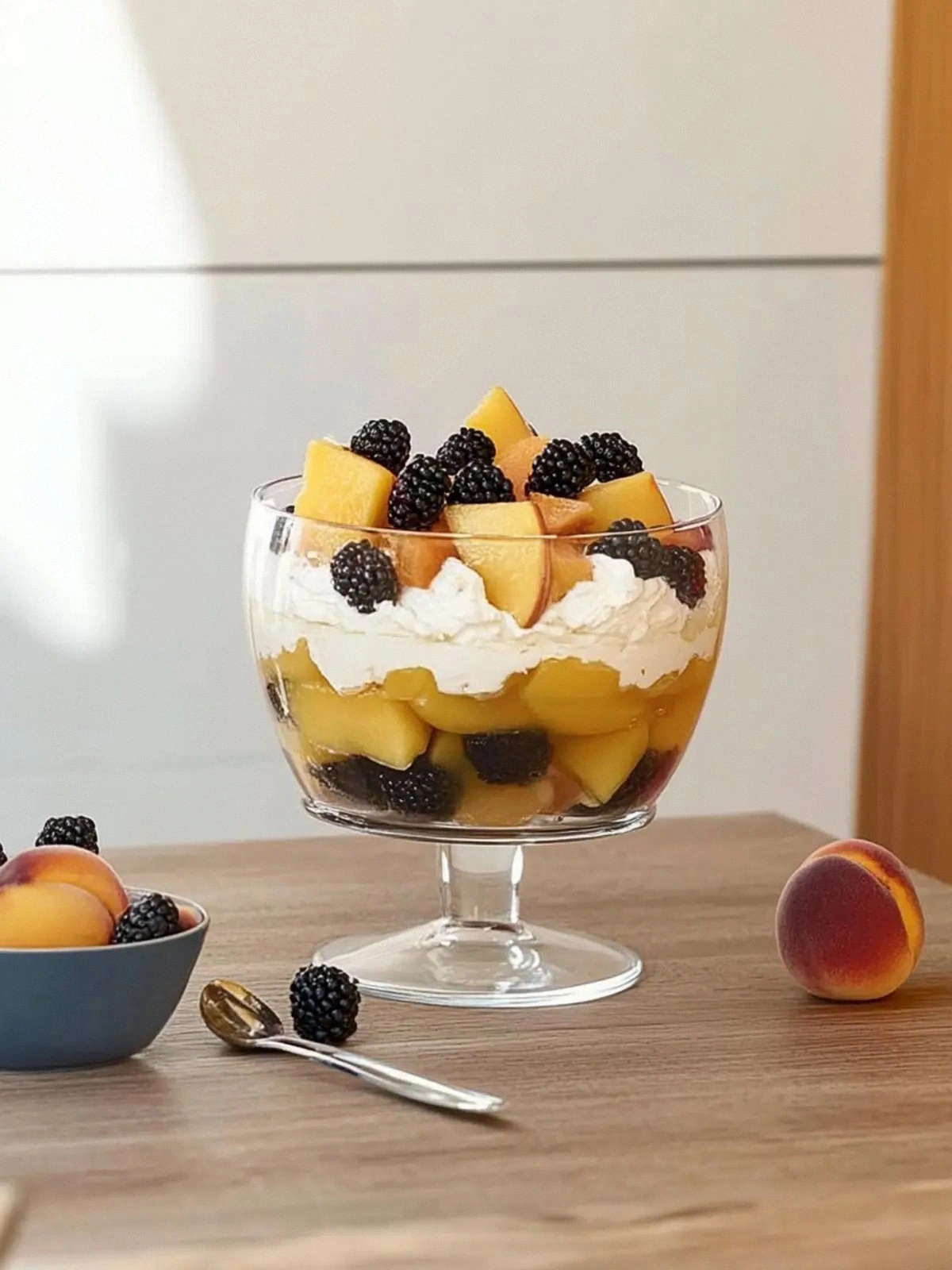
- Once the sponge has cooled, cut it into small cubes and layer them in a glass trifle dish. The cubes should be evenly distributed to ensure a balanced flavor in every spoonful. The sponge’s airy structure will soak up the fruit juices without becoming soggy.
- Spread the ricotta mixture over the sponge cubes, smoothing it into a thin, even layer. The ricotta’s creamy richness will contrast with the sponge’s lightness and provide a luscious base for the fruit. This step is the moment of truth; watch the ricotta spread like a silky blanket.
- Add the nectarine wedges and blackberries on top of the ricotta. Gently press them in to allow the fruit juices to mingle with the creamy layer. The fruit’s juices will seep into the sponge, creating a harmonious blend of flavors.
- Dust the top with 30 grams of flaked coconut, ensuring an even distribution for that satisfying crunch. The coconut also adds a subtle tropical note that complements the peaches and blackberries. This final touch gives the trifle a textural finish that is both crunchy and creamy.
- Refrigerate the assembled trifle for at least 4 hours, preferably overnight, to allow the gelatin to set fully and the flavors to meld. The gelatin will give the trifle a firm yet delicate structure that holds the layers together. When ready to serve, let the trifle sit at room temperature for 10–15 minutes to soften slightly for easier slicing.
That's it — you did it. But hold on, I've got a few more tricks that'll take this to another level…
Insider Tricks for Flawless Results
The Temperature Rule Nobody Follows
Many chefs believe that the sponge should be baked at a high temperature to get a crisp top. In reality, a moderate oven temperature of 180 °C (350 °F) ensures a tender crumb while still allowing the genmaicha to caramelize. If you bake too hot, the sponge will dry out and the gelatin will not set properly. Keep the oven door slightly ajar during the last few minutes to allow steam to escape, which keeps the sponge moist.
Why Your Nose Knows Best
The aroma of the genmaicha as it steams in the pot is the first indicator of success. A warm, nutty scent signals that the tea has released its full flavor profile. If the aroma is faint, you may have over‑steeped the tea, which can lead to bitterness. Adjust the steeping time by 30 seconds for a more pronounced scent.
The 5‑Minute Rest That Changes Everything
After mixing the ricotta with the vanilla seeds and cardamom, let the mixture rest for 5 minutes before folding in the thickened cream. This brief pause allows the flavors to meld and the ricotta to thicken slightly, preventing it from becoming too runny. It also gives the vanilla seeds a chance to release their aromatic oils, enriching the entire dish.
Keep the Gelatin in the Dark
Gelatin should be stored in a cool, dark place until use. Exposure to light can cause it to lose its setting power, resulting in a gummy texture. If you notice the gelatin has clumped, you can rehydrate it in cold water for a few minutes before adding it to the tea mixture.
Don’t Skip the Parchment Paper
When baking the sponge, line the tin with parchment paper. This prevents the sponge from sticking to the tin, which would ruin the cube shape. A properly lined sponge will lift cleanly from the tin, making assembly smoother and more precise.
Creative Twists and Variations
This recipe is a playground. Here are some of my favorite ways to switch things up:
Maple‑Glazed Peach Twist
Swap the orange juice for a splash of pure maple syrup and add a drizzle of maple glaze over the top before serving. The maple adds a deep, caramel sweetness that pairs beautifully with the peaches and ricotta. This version is perfect for a cozy autumn gathering.
Almond‑Infused Crunch
Replace the flaked coconut with toasted almond flakes for a nutty crunch. The almonds add a buttery flavor that complements the cardamom and vanilla. Use a small amount of almond extract in the ricotta to intensify the almond profile.
Berry‑Basil Fusion
Add fresh basil leaves to the fruit mixture and a pinch of basil powder to the ricotta. The basil brings a fresh, herbaceous note that balances the sweetness of the peaches. This variation is ideal for a summer brunch with a Mediterranean twist.
Chocolate‑Ricotta Layer
Fold a tablespoon of unsweetened cocoa powder into the ricotta mixture for a subtle chocolate undertone. The cocoa pairs with the cardamom and enhances the richness of the dessert. Finish with a dusting of cocoa powder on top for a decadent finish.
Spiced Citrus Boost
Introduce a pinch of ground cinnamon and nutmeg into the sponge batter. The warm spices will complement the orange juice and add depth to the genmaicha’s nutty flavor. This variation is perfect for a holiday gathering.
Vegan Version
Use coconut cream instead of ricotta and replace the gelatin with agar‑agar. The coconut cream gives a creamy texture, while the agar sets the dessert into a firm yet silky consistency. This vegan trifle maintains the same flavor profile but is dairy‑free.
Storing and Bringing It Back to Life
Fridge Storage
Store the trifle in an airtight container in the refrigerator for up to 3 days. The gelatin will keep the layers intact, and the fruit will stay fresh. Before serving, let the trifle sit at room temperature for 10 minutes to soften slightly.
Freezer Friendly
For longer storage, wrap the trifle tightly in plastic wrap and place it in the freezer for up to 2 weeks. When you’re ready to enjoy it, thaw the trifle overnight in the refrigerator. The gelatin may become slightly firmer, so let it sit at room temperature for 20 minutes before serving.
Best Reheating Method
Reheating is not recommended for this dessert, as the gelatin can become mushy. However, if you must warm it, gently place the trifle in a warm water bath for 5 minutes, then cool it immediately in an ice bath to set the gelatin again. Adding a tiny splash of water before reheating helps the layers rehydrate and stay moist.