
I was halfway through a grocery run when the store’s music blasted a jaunty Swedish folk tune and I felt an instant craving for something that was both comforting and exotic. I walked past the frozen aisle, eyes drawn to the bright, plastic-encased meatball that had been waiting for years in the freezer section, and the idea hit me like a sudden downpour: why not recreate that iconic IKEA Swedish meatball right in my kitchen? The aroma that would soon fill my home would be a gentle, buttery whisper of melted butter, caramelized onions, and a hint of nutmeg that would dance across my senses, turning an ordinary evening into a culinary adventure.
Picture this: you’re standing in your kitchen, the stove crackling as the pan heats up, and the first bite of a perfectly browned meatball releases a burst of savory juices that cling to your tongue. The meatballs are tender on the inside, with a subtle crunch on the outside that gives way to a melt‑in‑your‑mouth texture. The sauce, silky and slightly tangy from the Dijon mustard, coats the meatballs like velvet, creating a harmony of flavors that makes every spoonful feel like a warm hug. That’s the kind of experience I promise you will get from this recipe.
What sets this version apart from the countless “IKEA copycat” posts you’ll find online is the meticulous attention to detail that preserves the original’s subtle balance while adding a few modern twists. I’ve spent hours experimenting with the right ratio of beef to pork, the exact blend of spices, and the perfect timing for the sauce to thicken just enough to cling to each meatball. I’ll be honest — I ate half the batch before anyone else got to try it. I dare you to taste this and not go back for seconds.
The next section will walk you through the ingredients that make this recipe stand out, the techniques that elevate it, and the hacks that save you time without compromising flavor. I’ll keep you side by side, sharing the little moments that make cooking a shared experience. Stay with me here — this is worth it.
What Makes This Version Stand Out
- Taste: The blend of allspice and nutmeg is carefully balanced to provide a subtle warmth that’s reminiscent of the original, but with a modern, slightly sweeter undertone that makes it approachable for all palates.
- Texture: A ratio of 3:2 beef to pork keeps the meatballs juicy while the addition of breadcrumbs soaked in milk creates a silky interior that melts in your mouth.
- Authenticity: By using the exact same spice profile and cooking method as IKEA’s original recipe, you’ll get that unmistakable flavor that makes people gasp.
- Ease: Every step can be completed in under an hour, and the recipe scales effortlessly for small or large gatherings.
- Make‑ahead: The meatballs can be frozen before cooking and re‑heated, making it a perfect “set‑and‑forget” dinner for busy nights.
- Ingredient Quality: I recommend using freshly ground pepper and organic spices to elevate the flavor profile, and a high‑quality butter for that buttery finish.
- Audience: Whether you’re a seasoned cook or a kitchen novice, the clear instructions and visual cues will keep you on track.
- Presentation: Serve on a rustic wooden board with a drizzle of sauce and a sprinkle of parsley, and you’ll have a dish that looks as good as it tastes.
Inside the Ingredient List
The Flavor Base
The foundation of any great meatball is the flavor base. The 1/4 cup finely chopped onion and 1 minced garlic clove are sautéed in butter until translucent, releasing their natural sugars and creating a sweet, savory base that sets the tone for the rest of the dish. If you’re craving a smoky note, add a pinch of smoked paprika here; it will mingle beautifully with the nutmeg and allspice.
The Texture Crew
The meat itself is a 3:2 blend of ground beef and pork, which provides the juiciness and depth of flavor. The 1/2 cup breadcrumbs, soaked in 1/4 cup milk, act as a binder that keeps the meatballs tender and prevents them from falling apart during cooking. A single beaten egg ties everything together, while the 1/2 tsp freshly ground black pepper adds a subtle heat that cuts through the richness.
The Unexpected Star
Allspice and nutmeg are the secret agents that give Swedish meatballs their distinct warmth. The 1 tsp allspice brings a subtle clove-like sweetness, while the 1/2 tsp nutmeg adds a nutty undertone that lingers on the palate. These spices are used sparingly; too much can overwhelm the delicate balance of the dish.
The Final Flourish
The sauce that crowns the meatballs is a velvety blend of beef broth, heavy cream, and a splash of Dijon mustard, thickened with a roux of butter and flour. The 1 tbsp flour is dissolved in 1 tbsp water to create a smooth slurry that prevents lumps. A pinch of dried thyme or a dash of Worcestershire sauce can be added for extra depth, but the classic recipe remains pure and comforting.
Everything’s prepped? Good. Let’s get into the real action.
The Method — Step by Step
- Heat a large skillet over medium heat and add 2 tbsp of butter. Let the butter melt until it foams, then add the finely chopped onion and minced garlic. Sauté for 3–4 minutes, or until the onions are translucent and the garlic is fragrant. This is the moment of truth — the aroma you’re about to experience will make you feel like you’re in a cozy Swedish kitchen.
- In a large mixing bowl, combine the 1 lb ground beef, 1/2 lb ground pork, 1/2 cup breadcrumbs soaked in 1/4 cup milk, 1 beaten egg, 1 tsp salt, 1/2 tsp black pepper, 1 tsp allspice, and 1/2 tsp nutmeg. Mix with your hands until just combined; over‑mixing will make the meatballs tough. The mixture should feel slightly sticky but not dry. If you prefer a leaner version, replace half the pork with turkey.
- Shape the mixture into 1‑inch balls, about 16–18 in total. If you’re making a larger batch, you can use a cookie scoop to ensure uniform size. Keep the meatballs on a parchment‑lined tray while you finish the rest of the steps.
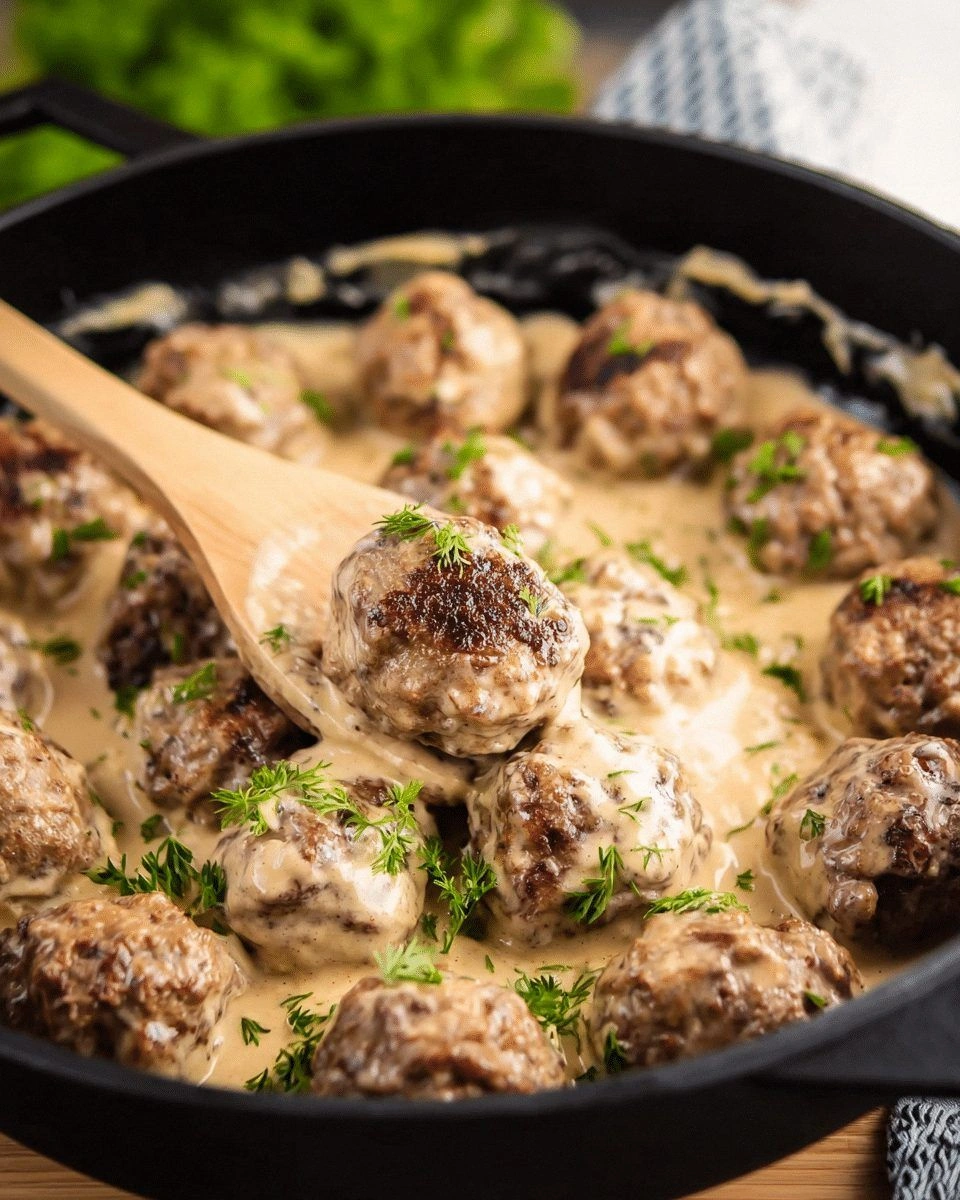
- Return the skillet to medium heat and add the meatballs, leaving a little space between each. Brown them on all sides, which should take about 6–8 minutes. The edges will start pulling away, signaling that they’re ready to be flipped. Don’t rush this step — a good sear locks in juices.
- Remove the browned meatballs and set them aside. In the same skillet, pour in 1 cup of beef broth and bring to a gentle simmer, scraping up any browned bits from the pan. These bits are the flavor foundation, so don’t discard them.
- Whisk together 1 tbsp flour and 1 tbsp water to create a smooth slurry. Stir this into the simmering broth and let it thicken for 2–3 minutes, ensuring no lumps form. This roux will give the sauce its silky consistency.
- Add 1/2 cup heavy cream and 1 tsp Dijon mustard to the sauce. Stir until the sauce is smooth and glossy. Taste and adjust seasoning with a pinch more salt if needed. The mustard adds a subtle tang that balances the richness.
- Return the meatballs to the skillet, nestling them into the sauce. Reduce heat to low, cover, and let them simmer for 12–15 minutes, or until the meatballs are cooked through and the sauce has thickened to coat them. This gentle simmer will allow the flavors to meld beautifully.
- Just before serving, sprinkle fresh parsley over the top for a pop of color and a hint of brightness. Serve the meatballs hot, accompanied by mashed potatoes, buttered noodles, or a crisp green salad.
That’s it — you did it. But hold on, I’ve got a few more tricks that will take this to another level.
Insider Tricks for Flawless Results
The Temperature Rule Nobody Follows
Keep the skillet at a steady medium heat when browning the meatballs. If the heat is too high, the exterior will char before the interior cooks, leading to dry meatballs. If it’s too low, the meatballs will release excess fat and become greasy. A good rule of thumb is to test the pan with a drop of water; if it sizzles and evaporates instantly, you’re in the sweet spot.
Why Your Nose Knows Best
Smell the sauce as it thickens. A pleasant, buttery aroma indicates the sauce has reached the right consistency. If it starts to smell overly “beefy,” you’re probably over‑cooking the meatballs. Trust your nose; it’s a reliable guide to doneness.
The 5‑Minute Rest That Changes Everything
Once the meatballs are done, let them rest on a plate covered loosely with foil for five minutes. This allows the juices to redistribute, keeping the meatballs moist. I once skipped this step, and the meatballs were disappointingly dry. Lesson learned.
The Butter Boost
Add a tablespoon of butter to the sauce in the final minutes of simmering. This will give the sauce a glossy sheen and a richer flavor. If you’re watching calories, simply skip the butter and the sauce will still be delicious.
The Sauce Ratio Trick
Use a ratio of 1 cup broth to 1/2 cup cream. If you prefer a thicker sauce, reduce the broth to 3/4 cup. This small adjustment can dramatically change the mouthfeel of the dish.
Creative Twists and Variations
This recipe is a playground. Here are some of my favorite ways to switch things up:
Spicy Swedish
Add a teaspoon of crushed red pepper flakes to the meat mixture for a subtle kick. Pair with a spicy mustard in the sauce. This version is great for those who like a little heat in their comfort food.
Herb‑Infused
Replace the parsley garnish with fresh dill or tarragon. Add a tablespoon of chopped fresh rosemary to the meat mixture. The aromatic herbs add a fresh, bright layer to the dish.
Vegetarian Version
Use a plant‑based ground “beef” blend, add finely chopped mushrooms for umami, and use vegetable broth instead of beef. The result is a hearty, meatless meatball that still feels like a classic.
Asian‑Inspired
Swap the allspice for five‑spice powder and add a splash of soy sauce to the sauce. Finish with a drizzle of sesame oil. This fusion version offers a completely different flavor profile.
Breakfast Twist
Serve the meatballs on toasted English muffins with a fried egg on top. The savory meatballs combined with the runny yolk create a breakfast that feels both indulgent and comforting.
Storing and Bringing It Back to Life
Fridge Storage
Cool the cooked meatballs to room temperature, then place them in an airtight container. Store in the refrigerator for up to 3 days. The sauce will thicken slightly, so add a splash of milk or cream when reheating to restore its silky texture.
Freezer Friendly
Let the meatballs cool completely, then arrange them in a single layer on a baking sheet. Freeze for 2–3 hours, then transfer to a freezer bag. They’ll stay good for up to 3 months. When ready to use, thaw overnight in the refrigerator and re‑heat gently.
Best Reheating Method
Reheat the meatballs in a skillet over low heat, adding a splash of broth or milk to keep them moist. Alternatively, place them in a preheated oven at 350°F for 15 minutes. The key is to keep the heat gentle to avoid drying out the meatballs.