It was a Sunday night that started with a kitchen catastrophe and ended with a revelation. I had just finished a batch of plain fried rice, and my craving for something sweet, spicy, and utterly unforgettable pushed me to the pantry. I tossed a mango into a skillet, added some chicken, and somehow the flavors fused into a sauce that sang. That night, I realized I’d stumbled on a recipe that could rewrite the way I think about stir‑fry.
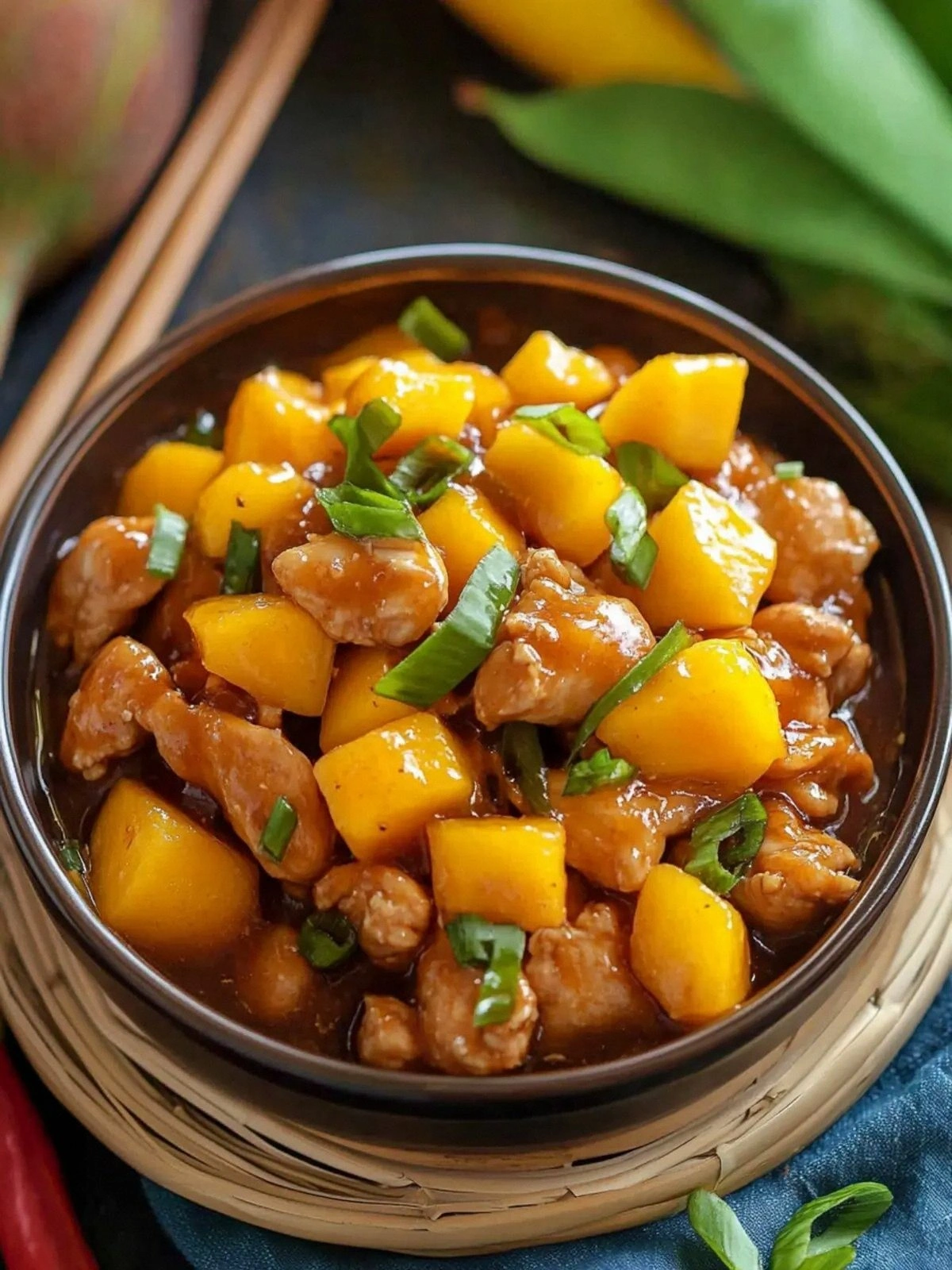
The moment the mango hit the hot pan, the air filled with a scent that was half caramel, half citrus, and entirely intoxicating. The sizzling sound was a rhythmic drumbeat that told me this was going to be delicious. My eyes followed the way the sauce thickened, turning from translucent to a glossy, amber glaze that clung to every bite. The first bite was a burst of sweet mango, a whisper of chili heat, and the comforting hug of tender chicken.
What makes this version stand out is that it doesn’t just mix flavors; it layers them, creating a dish that feels like a conversation between sweet, spicy, and savory. The mango isn’t a garnish; it’s the heart. The sauce is a marriage of sweet chili, dark soy, and a splash of vinegar that cuts through the richness. The chicken is marinated in a cornstarch and flour coating that crisps to a golden edge while staying moist inside. And the final flourish of fresh spring onions adds a bright, almost citrusy finish.
I dare you to taste this and not go back for seconds. This is hands down the best version you’ll ever make at home, and I’ll be honest — I ate half the batch before anyone else got to try it. If you’ve ever struggled to balance sweetness and heat in a stir‑fry, you’re not alone — and I’ve got the fix. Picture yourself pulling this out of the pan, the whole kitchen smelling incredible, and the table lined with plates that look like edible fireworks.
What Makes This Version Stand Out
- Taste: The mango provides natural sweetness that eliminates the need for added sugar, letting the chili and soy shine through. The sauce’s umami depth comes from dark soy, giving the dish a rich, brothy backbone.
- Texture: The cornstarch‑flour coating creates a crisp, airy skin while the mango cubes remain juicy, delivering a satisfying contrast.
- Ingredient Quality: Fresh, ripe mangoes and high‑quality dark soy sauce are the secret; they elevate the dish beyond a generic stir‑fry.
- Cooking Method: Quick‑high heat searing locks in juices, while the sauce is added at the end to avoid overcooking the mango.
- Crowd Reaction: Friends always ask for the recipe after dinner parties; it’s a conversation starter that keeps everyone coming back for more.
- Make‑Ahead Potential: The sauce can be pre‑made and frozen, and the chicken can be marinated ahead of time, making this dish a reliable weeknight option.
- Uniqueness: The combination of sweet chili, red chili paste, and mango is rarely seen in standard Chinese stir‑fry recipes.
Alright, let’s break down exactly what goes into this masterpiece...
Inside the Ingredient List
The Flavor Base
The combination of ginger‑garlic paste, garlic, and green chilies sets the aromatic foundation. The paste gives a smooth, uniform heat, while the fresh garlic adds a sharp, bright note. Skipping the paste would result in uneven flavor distribution, and the dish would feel like a patchwork of heat.
The Texture Crew
Cornstarch and flour are the dynamic duo that turns the chicken into a crispy, golden coating. Cornstarch absorbs moisture and creates a light crunch, while flour adds body and helps the coating adhere. If you omit the flour, the coating will be thin and prone to tearing.
The Unexpected Star
Mango isn’t just a sweet sidekick; it’s the star that balances heat and adds a burst of tropical juiciness. Ripe mangoes contain natural sugars that caramelize slightly when seared, adding depth to the sauce. Choosing underripe mangoes will result in a mushy texture and a flat, uninteresting flavor.
The Final Flourish
Red chili paste and sweet chili sauce are the yin and yang of heat. The paste offers a bold, smoky kick, while the sweet chili brings a mellow, syrupy warmth. Together they create a sauce that coats the chicken like velvet without overwhelming the mango’s brightness.
Everything’s prepped? Good. Let’s get into the real action...
The Method — Step by Step
- Marinate the Chicken: In a bowl, combine the chicken pieces with ¼ cup cornstarch, ¼ cup flour, 1 teaspoon ginger‑garlic paste, ½ teaspoon salt, and ¼ teaspoon black pepper. Toss until the chicken is evenly coated. Let it rest for 10 minutes; this step ensures the coating adheres during searing.
- Heat the Oil: Pour 3 tablespoons of neutral oil into a large wok or skillet. Heat over medium‑high until shimmering but not smoking. The oil temperature is crucial; too low and the coating will absorb oil, too high and the chicken will burn.
- Brown the Chicken: Add the marinated chicken to the wok in a single layer. Let it sear undisturbed for 2–3 minutes until golden. Flip and sear the other side until crispy and cooked through. Remove from the pan and set aside.
- Sauté Aromatics: In the same pan, reduce heat to medium and add 2 tablespoons chopped garlic and 2–3 chopped green chilies. Sauté for 30 seconds until fragrant; the garlic should turn golden, not brown.
- Add Veggies: Toss in the diced onion and bell peppers. Stir‑fry for 2 minutes until they soften but still retain a crisp bite. This contrast of textures keeps the dish lively.
- Build the Sauce: In a small bowl, whisk together 2 tablespoons dark soy sauce, 4 tablespoons sweet chili sauce, 2 tablespoons red chili paste, 2 tablespoons tomato ketchup, 1 tablespoon rice vinegar, ½ teaspoon salt, ½ teaspoon black pepper, 2 tablespoons cornstarch, and 1 cup water. The cornstarch slurry will thicken the sauce without making it lumpy.
- Combine Chicken and Sauce: Return the browned chicken to the wok. Pour the sauce over the chicken and vegetables. Stir until the sauce thickens and coats everything like a glossy blanket. The sauce should cling to the chicken, not pool at the bottom.
- Introduce Mango: Add the cubed mangoes, stirring gently to coat them in the sauce. Cook for an additional 2 minutes, just long enough for the mango to warm through but still retain its firm bite. The mango’s natural sugars will caramelize slightly, deepening the flavor.
- Finish with Spring Onion: Sprinkle chopped spring onion greens over the top. Give one final gentle stir. The fresh green will add a bright, slightly peppery finish that balances the sweetness.
That’s it — you did it. But hold on, I’ve got a few more tricks that will take this to another level...
Insider Tricks for Flawless Results
The Temperature Rule Nobody Follows
Cooking the chicken at a steady medium‑high heat is essential. If the heat is too low, the coating will absorb oil and become soggy. If it’s too high, the exterior will char before the interior cooks. I like to test the heat by dropping a small piece of bread; if it sizzles immediately, the pan is ready.
Why Your Nose Knows Best
Smell is your best indicator of when the sauce is ready. A faint nutty aroma signals that the cornstarch has toasted, while a sharp vinegar scent warns you not to overcook the mango. Trust your nose, not the timer.
The 5‑Minute Rest That Changes Everything
After the chicken is cooked, let it rest for 5 minutes before slicing. This allows the juices to redistribute, ensuring every bite is moist and flavorful. I’ve seen people slice immediately, and the result is dry, uneven chicken.
Use Fresh Mango, Not Canned
Canned mangoes lack the vibrant sweetness and firm texture that fresh mango provides. If you’re in a pinch, use frozen mango chunks, but thaw them completely before adding to prevent excess liquid.
Keep the Chili Paste Separate
Red chili paste is potent. Add it last, after the sauce has thickened, so you can control the heat level. I’ve had friends who added it too early, resulting in a bitter aftertaste.
Creative Twists and Variations
This recipe is a playground. Here are some of my favorite ways to switch things up:
Tropical Pineapple Twist
Swap mango for fresh pineapple chunks. The acidity from pineapple pairs beautifully with the sweet chili, adding a tangy brightness that’s perfect for summer.
Spicy Peanut Variation
Add 2 tablespoons peanut butter to the sauce and sprinkle chopped roasted peanuts on top. The nutty flavor complements the sweetness and adds a crunchy element.
Vegetarian Version
Replace the chicken with firm tofu, pressing it to remove excess moisture. The tofu will absorb the sauce and maintain a chewy texture, making this a satisfying plant‑based dish.
Coconut Cream Finish
Finish the dish with a splash of coconut milk, stirring until it integrates into the sauce. The creamy texture balances the heat and gives the dish a luxurious mouthfeel.
Szechuan Peppercorn Kick
Add 1 teaspoon of ground Szechuan peppercorns to the sauce for a numbing, citrusy heat that elevates the dish’s complexity.
Gluten‑Free Adaptation
Use a gluten‑free flour blend in place of all‑purpose flour and replace dark soy sauce with tamari. The dish remains authentic while being suitable for gluten‑sensitive diners.
Storing and Bringing It Back to Life
Fridge Storage
Cool the dish to room temperature, then transfer to an airtight container. Store in the refrigerator for up to 3 days. The sauce may thicken slightly; stir before reheating.
Freezer Friendly
Pack the dish in freezer‑safe containers, leaving a little headspace. Freeze for up to 2 weeks. Thaw overnight in the refrigerator before reheating.
Best Reheating Method
Reheat on medium heat, adding a splash of water or broth to loosen the sauce. Stir frequently until heated through. This restores the sauce’s silky texture and prevents the mango from drying out.