

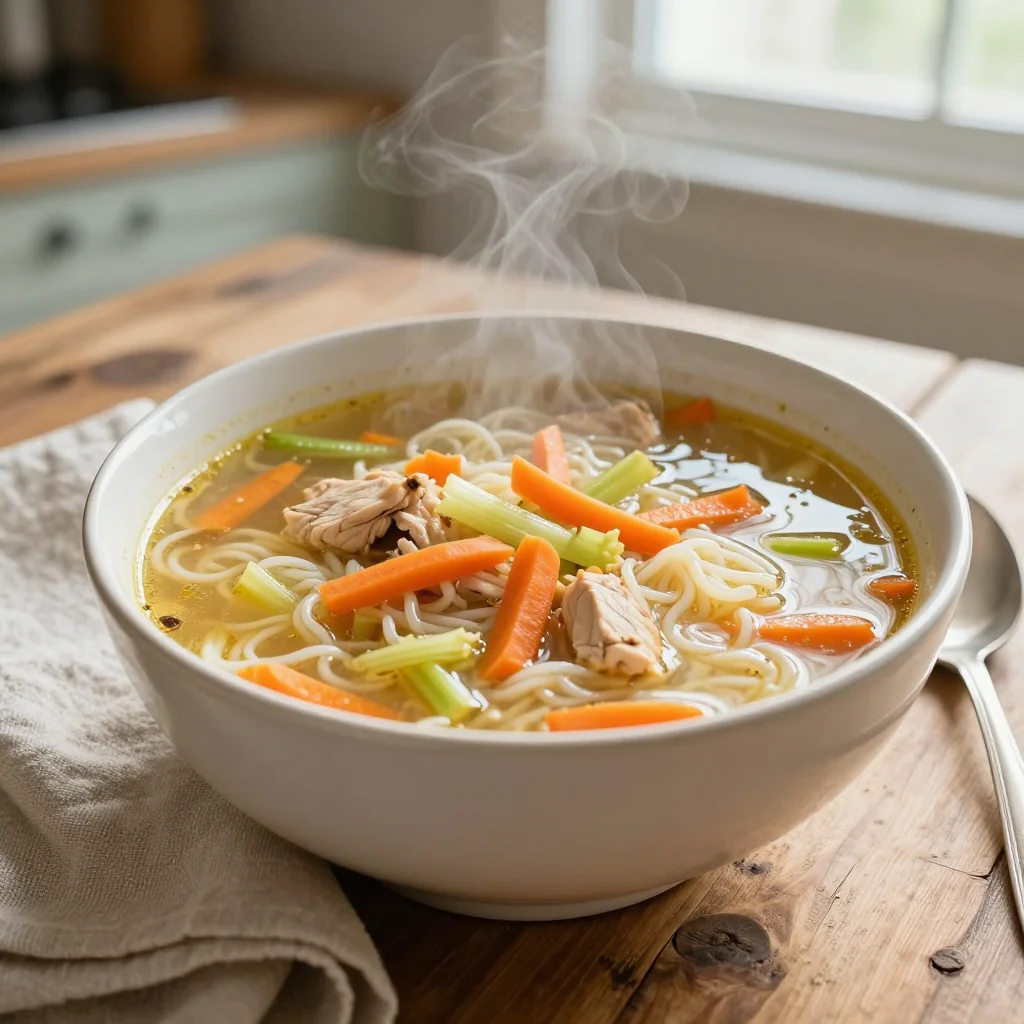
A comforting classic that warms the soul and fills the kitchen with aromatic bliss.
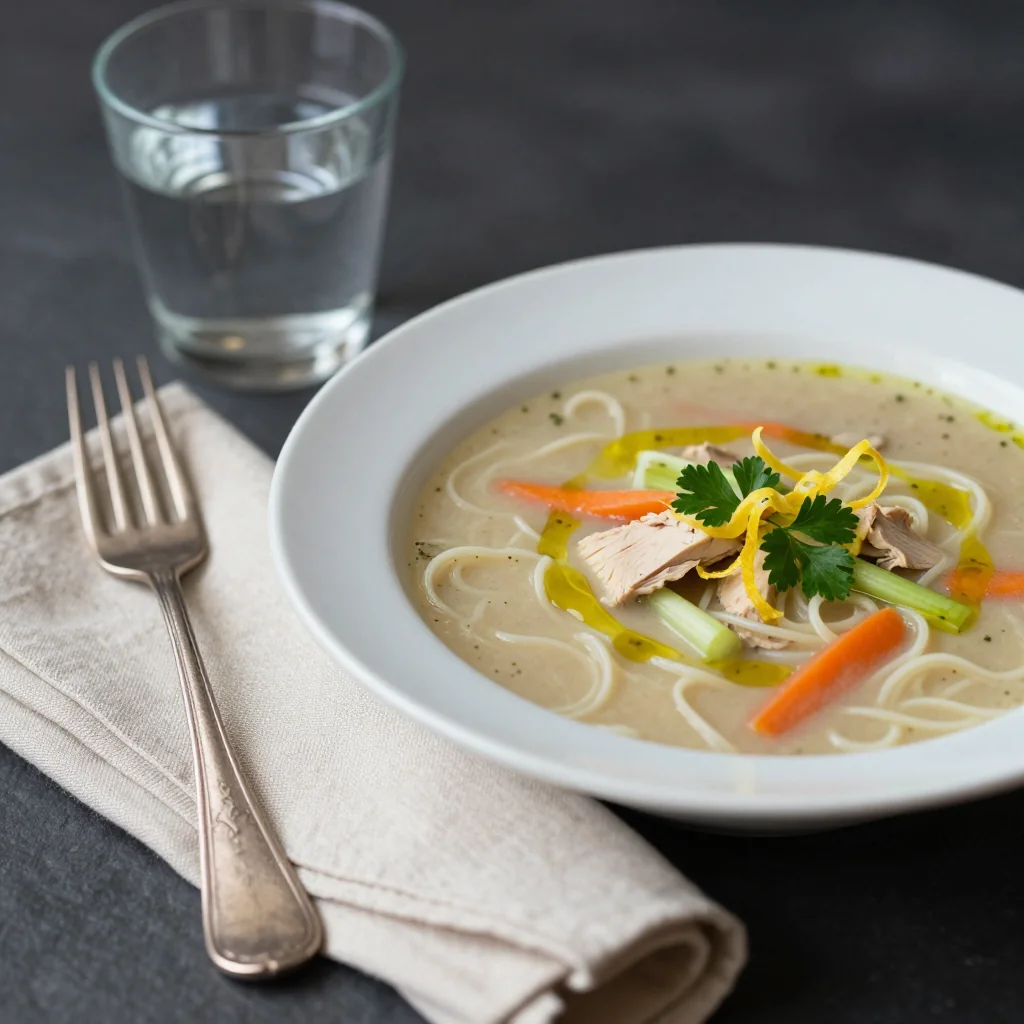
When I was a child, the scent of simmering chicken broth drifting from my grandmother’s kitchen was the very definition of home. She would stir the pot with a wooden spoon, humming softly, while the carrots and celery softened into sweet, fragrant ribbons. Those moments taught me that a good soup is more than just ingredients—it’s a memory, a hug in a bowl, and a promise of comfort on any rainy day.
Chicken noodle soup is a timeless classic that spans continents, from the humble American kitchen to the bustling streets of Seoul, each culture adding its own twist. The version I’m sharing today stays true to the comforting roots while incorporating bright, fresh vegetables that add both color and nutrition. It’s perfect for a quick weeknight dinner or a soothing lunch on a chilly afternoon.
In this article, you’ll discover the precise technique for achieving perfectly tender chicken, al dente noodles, and a broth that sings with the natural sweetness of carrots and the aromatic bite of celery. I’ll walk you through every step, from selecting the best ingredients to plating the soup with a garnish that elevates the whole experience.
So grab your ladle, roll up your sleeves, and let’s bring this soul‑warming soup to life together.
🌟 Why This Recipe Will Captivate You
Whether you’re a seasoned cook or a kitchen novice, this chicken noodle soup offers a harmonious blend of flavor, nutrition, and simplicity that makes it a go‑to dish for any occasion.
- ✨ Balanced Nutrition: Lean chicken provides high‑quality protein, while carrots and celery deliver essential vitamins and antioxidants, creating a wholesome meal in a single bowl.
- ✨ Comforting Aromatics: The combination of onion, garlic, thyme, and bay leaf creates a fragrant broth that soothes the senses and invites you to linger over every spoonful.
- ✨ Quick & Easy: With a total cooking time of just 60 minutes and straightforward steps, you can have a restaurant‑quality soup on the table without spending the whole day cooking.
- ✨ Customizable Texture: The recipe allows you to choose between egg noodles, rice noodles, or even gluten‑free pasta, tailoring the mouthfeel to your preference.
- ✨ Budget‑Friendly: Using everyday pantry staples and affordable produce, this soup delivers gourmet flavor without breaking the bank.
- ✨ Perfect for Meal Prep: Make a large batch, store it, and enjoy a nourishing, reheatable meal throughout the week—ideal for busy professionals and families alike.
🥗 Ingredients
📝 Complete Ingredient List
For the Broth:
For the Noodles:
For the Garnish:
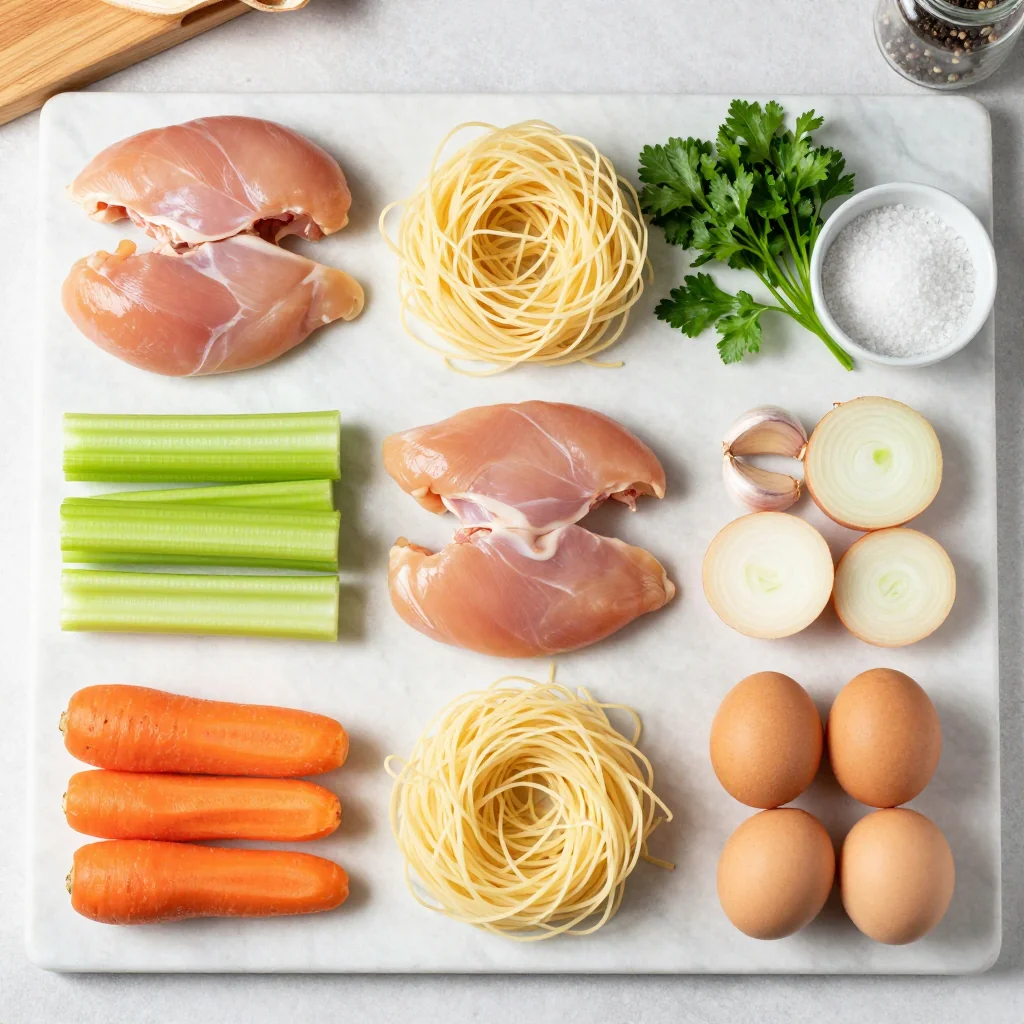
🔍 Focus on Key Ingredients
Chicken Breasts
The chicken provides lean protein and a delicate flavor that infuses the broth. For the most succulent result, choose free‑range or organic chicken; the meat tends to be more tender and flavorful. If you prefer a richer broth, you can substitute bone‑in pieces, which will also add collagen for a silkier texture.
Egg Noodles
Egg noodles are traditional in many American chicken soups because they hold up well during simmering and have a pleasant bite. Look for fresh or high‑quality dried noodles. If you’re gluten‑intolerant, swap them for rice noodles or gluten‑free pasta without sacrificing the comforting chew.
Carrots and Celery
These vegetables are the backbone of the classic mirepoix, delivering sweetness, earthiness, and a subtle crunch. Choose carrots that are firm and bright orange, and celery that snaps when bent. Their natural sugars caramelize slightly during cooking, deepening the broth’s flavor profile.
🔄 Quick Substitutions
| If you don’t have... | Use instead... |
|---|---|
| Chicken breasts | Bone‑in chicken thighs |
| Egg noodles | Rice noodles or gluten‑free pasta |
| Fresh parsley | Dried parsley (½ tsp) or fresh dill |
👨🍳 Step‑by‑Step Instructions
Follow these detailed steps to create a soup that’s both hearty and elegant. Each phase builds flavor, texture, and visual appeal, ensuring a perfect bowl every time.
📋 Phase 1: Preparation & Mise en Place
Start by gathering and prepping all components so the cooking process flows smoothly.
Prepare the Vegetables
Wash the carrots, celery, and onion under cold running water. Peel the carrots and slice them into thin, uniform rounds—about ¼ inch thick—to ensure even cooking. Trim the celery stalks, discarding any wilted leaves, and slice them on a diagonal for a slightly larger surface area, which helps release their aromatic oils. Dice the onion finely; this will melt into the broth, adding a subtle sweetness without leaving noticeable pieces.
Trim and Cube the Chicken
Pat the chicken breasts dry with paper towels. Trim any excess fat, then cut each breast into bite‑size cubes, roughly 1½ inches. Uniform pieces cook evenly and make the soup easier to eat. If you prefer shredded chicken, you can poach the breasts whole and pull them apart later, but cubed chicken yields a more texturally interesting soup.
🔥 Phase 2: Cooking & Assembly
This phase builds the flavorful broth, cooks the noodles, and brings everything together.
Sauté Aromatics
In a large stockpot, heat 1 tbsp of olive oil over medium heat. Add the diced onion and sauté for 3‑4 minutes until translucent. Add the minced garlic and cook another 30 seconds, being careful not to let it brown. This brief sauté releases the natural sugars in the onion and the pungent aroma of garlic, forming the flavor base of the soup.
Build the Broth
Pour 1500 ml of water into the pot, then add the chicken cubes, sliced carrots, celery, bay leaf, and dried thyme. Stir gently to combine. Bring the mixture to a gentle boil, then reduce to a low simmer. Skim any foam that rises to the surface with a slotted spoon—this keeps the broth clear and clean‑tasting.
Simmer the Soup
Allow the broth to simmer uncovered for 20‑25 minutes. This time lets the chicken cook through, the vegetables soften, and the herbs infuse their flavors. Taste the broth midway and season with salt and freshly ground black pepper to your preference. Remember, the noodles will also absorb some salt, so err on the side of mild seasoning at this stage.
✨ Phase 3: Finishing & Plating
Finalize the soup with noodles, garnish, and a final taste check.
Cook the Noodles
In a separate pot, bring a small amount of salted water to a boil. Add the egg noodles and cook according to package instructions—usually 6‑8 minutes—until al dente. Drain and rinse briefly under warm water to stop cooking. This prevents the noodles from becoming mushy when added to the hot broth.
Combine Noodles and Soup
Transfer the cooked noodles into the simmering broth. Stir gently and let the soup return to a low simmer for an additional 2‑3 minutes. This allows the noodles to absorb a bit of the broth, marrying the flavors while keeping their texture intact.
Final Seasoning & Garnish
Remove the bay leaf. Taste the soup once more and adjust salt or pepper if needed. Ladle the soup into bowls, sprinkle each serving with 2 tbsp of freshly chopped parsley, and add a lemon wedge on the side for a bright, citrusy finish that cuts through the richness.
Serve Immediately
Present the soup hot, with a crusty piece of bread or a light salad if desired. The steam rising from the bowl is a visual cue that the soup is ready to be enjoyed.
💡 Expert Tips & Tricks
🛒 Choosing the Right Ingredients
When shopping, look for chicken breasts that are pink with a slight sheen—this indicates freshness. Avoid any meat that has a grayish tint or a strong odor. For vegetables, select carrots that are firm, without cracks, and celery that snaps when bent. Fresh herbs should have vibrant green leaves; wilted or yellowing parsley can diminish the soup’s freshness.
🔪 Preparation Techniques
Uniform cuts are crucial. Slice carrots and celery to the same thickness to ensure they finish cooking at the same time. This prevents over‑cooked carrots that become mushy while the celery remains crunchy. Use a sharp knife to avoid bruising, which can release unwanted bitter compounds.
🌡️ Mastering the Cooking Process
Maintain a gentle simmer rather than a rolling boil. A low, steady bubble extracts flavor without breaking down the chicken fibers, resulting in tender meat. Skim foam early; it contains proteins that can cloud the broth. If you prefer a clearer soup, strain the broth through a fine‑mesh sieve before adding noodles.
🍽️ Presentation & Service
Serve the soup in wide‑bowl soup plates to showcase the colorful vegetables and noodles. Garnish with a bright green parsley sprinkle and a lemon wedge for visual contrast. For an extra touch, drizzle a tiny drizzle of sesame oil or a few drops of chili oil for a subtle depth of flavor.
🏆 Pro Tips
Professional chefs rely on precision and technique to elevate a humble soup into a culinary masterpiece.
- 🎯 Use a Stock Base Instead of Water: Replace plain water with homemade chicken stock or low‑sodium broth. The gelatin from bones adds body, while the umami depth reduces the need for excess salt.
- 🎯 Layer Flavors with a Bouquet Garni: Tie thyme, parsley stems, and a bay leaf together with kitchen twine. This allows easy removal and ensures the herbs infuse evenly without leaving stray leaves.
- 🎯 Finish with a Touch of Acid: A splash of freshly squeezed lemon juice or a teaspoon of apple cider vinegar brightens the palate, balancing the richness of the chicken and noodles.
- 🎯 Control Noodle Texture: Add noodles at the very end of cooking and keep the soup just below boiling. Over‑cooking leads to soggy noodles that absorb too much broth, turning the soup watery.
- 🎯 Enhance Mouthfeel with a Small Fat Drop: Stir in a teaspoon of butter or a drizzle of extra‑virgin olive oil right before serving. This creates a silkier mouthfeel and rounds out the flavor profile.
- 🎯 Freeze in Portion‑Sized Bags: For future meals, cool the soup completely, then ladle into freezer‑safe zip‑top bags. This speeds up reheating and maintains flavor integrity.
"A great soup is a symphony of simple ingredients played in perfect harmony." — Thomas Keller
🔄 Variations & Adaptations
The core of this recipe is flexible, allowing you to tailor it to dietary needs, flavor preferences, and cultural twists.
🥬 Vegetarian / Vegan Version
Replace the chicken with firm tofu cubes or chickpeas for protein. Use vegetable broth instead of chicken stock, and swap egg noodles for rice noodles or gluten‑free pasta. Add a splash of soy sauce or miso paste for umami depth.
- Tofu: Press and cube 400 g firm tofu, then lightly pan‑sear before adding to the broth.
- Chickpeas: Use one 15‑oz can, rinsed and drained, added during the simmering stage.
🌶️ Flavor Variations
Play with spices and herbs to give the soup a new personality.
Spicy Version:
Add ½ tsp of crushed red pepper flakes or a sliced jalapeño when sautéing the aromatics. Finish with a drizzle of sriracha for an extra kick.
Mediterranean Version:
Incorporate 1 tsp of dried oregano, a handful of olives, and a splash of white wine. Garnish with crumbled feta and fresh basil.
Asian Inspired Version:
Swap thyme for ginger (1 tbsp freshly grated) and add 2 tbsp soy sauce, 1 tsp sesame oil, and a handful of sliced shiitake mushrooms. Finish with chopped green onions and a sprinkle of toasted sesame seeds.
⚠️ Dietary Adaptations
Gluten‑Free:
Use gluten‑free pasta or rice noodles. Ensure the broth is labeled gluten‑free, as some commercial stocks contain wheat‑based thickeners.
Lactose‑Free:
This recipe is naturally lactose‑free. If you add butter for richness, substitute with a plant‑based spread.
Low‑Calorie:
Reduce the oil to a light spray, use skinless chicken breast, and increase the proportion of vegetables while decreasing noodles to 100 g.
👶 Family / Kids Version
Kids often prefer milder flavors. Omit the thyme and bay leaf, and use small pasta shapes like alphabet noodles. Add a pinch of mild paprika for color without heat. Serve with a side of apple slices for a balanced meal.
📦 Storage & Reheating
🧊 Conservation
In the Refrigerator:
- Duration: 4 days
- Recommended container: airtight glass or BPA‑free plastic container
- Tip: Store noodles separately to maintain texture.
In the Freezer:
- Duration: 3 months
- Method: Cool soup completely, portion into freezer bags, leaving 1 cm headspace.
- Defrost: Thaw overnight in the refrigerator or use the microwave’s defrost setting.
💡 For best flavor, reheat only the portion you’ll eat and add fresh noodles after reheating.
♨️ Reheating
🔥 In the Oven (Recommended):
- Preheat to 180 °C (350 °F).
- Cover the soup with foil to prevent drying.
- Heat for 15‑20 minutes, stirring halfway.
- Remove foil, add fresh noodles if desired, and heat an additional 5 minutes.
⚡ In the Microwave (Quick):
- Place soup in a microwave‑safe bowl, cover with a vented lid.
- Heat on medium power for 2‑3 minutes, stir, then continue in 1‑minute intervals.
- Stir again and check temperature before serving.
🍳 On the Stovetop:
Transfer soup to a saucepan, bring to a gentle simmer over medium heat, and add fresh noodles for the last 5 minutes. This method preserves the broth’s clarity.
🍷 Perfect Pairings
🥗 Side Dishes
- Simple Green Salad: A crisp mix of arugula, cucumber, and lemon vinaigrette adds freshness that balances the soup’s richness.
- Garlic Bread: Toasted baguette slices brushed with garlic‑infused olive oil provide a satisfying crunch.
- Roasted Brussels Sprouts: Their caramelized flavor complements the sweet carrots and savory broth.
🍷 Wine / Beverage Pairings
- Chardonnay (unoaked): Its subtle buttery notes echo the soup’s comfort without overwhelming it.
- Pinot Noir: Light red wine with soft tannins enhances the chicken’s flavor and works well with the herbs.
- Non‑Alcoholic: Sparkling apple cider or a chilled herbal iced tea (e.g., mint) offers a refreshing contrast.
🍰 To Complete the Meal
Begin with a light starter such as a tomato bruschetta, follow the soup with a crisp Caesar salad, and finish with a modest lemon tart. The citrus in the dessert mirrors the lemon wedge garnish, creating a harmonious culinary journey.
❓ Frequently Asked Questions
Q: Can I use bone‑in chicken instead of breasts?
A: Absolutely. Bone‑in chicken thighs or drumsticks add extra gelatin, resulting in a richer, silkier broth. Just increase the simmer time by 10‑15 minutes to ensure the meat becomes tender and the bones release their flavor.
Q: How do I prevent the noodles from becoming mushy?
A: Cook the noodles separately until al dente, then add them to the hot broth just before serving. If you must cook them directly in the soup, add them in the last 5‑7 minutes of simmering and monitor closely.
Q: Is it okay to add other vegetables?
A: Yes! Feel free to incorporate peas, corn, or diced potatoes. Add them during the simmering stage so they cook through without turning mushy. Adjust seasoning accordingly.
Q: What’s the best way to store leftovers without losing flavor?
A: Store broth and noodles in separate containers. This prevents the noodles from soaking up too much liquid and becoming soggy. Reheat the broth first, then stir in freshly cooked noodles.
Q: Can I make this soup in a pressure cooker?
A: Yes. Use the sauté function for aromatics, then add all ingredients (except noodles) and cook on high pressure for 10 minutes. Quick‑release, add cooked noodles, and adjust seasoning.
Q: How far in advance can I prep the ingredients?
A: Vegetables can be washed, peeled, and sliced up to 24 hours ahead, stored in airtight containers. Chicken can be cubed and kept refrigerated for the same period. This prep reduces active cooking time to under 30 minutes.
🎉 To Your Kitchen!
This Chicken Noodle Soup with Carrots and Celery embodies the perfect balance of comfort, nutrition, and flavor. By following the detailed steps, you’ll achieve a broth that’s clear yet deeply savory, noodles that hold their bite, and vegetables that add a sweet crunch. Whether you’re feeding a family, preparing meals for the week, or simply craving a warm bowl on a rainy day, this recipe delivers consistency and joy.
Don’t hesitate to experiment with the variations—add a dash of spice, swap the noodles, or make it vegetarian. Share your creations, ask questions in the comments, and let us know how you’ve made this soup your own. Your feedback helps the community grow and inspires new twists on classic dishes.
Have you tried this recipe?
Leave a comment and rating below! Share your photos on Instagram with #SoupSeason for a chance to be featured on our homepage.
Chicken Noodle Soup with Carrots and Celery
A comforting classic that warms the soul and fills the kitchen with aromatic bliss.
📝 Ingredients
Broth
Noodles
Garnish
👨🍳 Instructions
- Prepare aromatics: Sauté onion and garlic in olive oil until fragrant.
- Add broth components: Pour water, add chicken, carrots, celery, bay leaf, and thyme. Bring to a boil then simmer.
- Season: Skim foam, season with salt and pepper, and let simmer 20‑25 minutes.
- Cook noodles: In a separate pot, boil noodles until al dente, then drain.
- Combine: Add noodles to the broth, simmer 2‑3 minutes.
- Garnish: Sprinkle parsley, add lemon wedge if desired.
- Serve: Ladle into bowls, enjoy hot.
- Store: Cool and refrigerate or freeze as instructed.
- Reheat: Use stovetop, oven, or microwave following storage guidelines.
- Final touch: Adjust seasoning, add a drizzle of olive oil if needed, and serve with your favorite side.
🥗 Nutrition (per serving)
*Values are approximate and based on standard ingredient brands.
📚 You Might Also Like
Classic Tomato Basil Soup
Thai Coconut Curry Soup
Minestrone Soup








💬 Comments & Reviews
Leave a Comment
No comments yet. Be the first to share your thoughts!