I still remember the first time I attempted to make chicken alfredo lasagna. It was a rainy Thursday evening, my in-laws were coming over in exactly three hours, and I had this wild idea that I could casually whip up something "restaurant-quality" while also helping my kid with math homework and fielding work emails. Spoiler: the first version emerged from my oven looking like a dairy tsunami had crashed over a pasta reef—tasty, sure, but structurally it had the integrity of a sandcastle at high tide. My father-in-law, ever the diplomat, took a bite and declared, "Well, this is... creative." Translation: back to the drawing board.
That kitchen flop became an obsession. I spent the next six months testing, tweaking, and yes, stress-eating my way through more alfredo-soaked noodles than any human should admit. I tried every trick in the blogosphere: béchamel bases, cornstarch slurries, evaporated milk hacks, even that viral cottage-cheese stunt (trust me, don't go there). What I finally landed on is the recipe you're about to meet—layers of feather-light pasta, juicy chicken, and a silk-blanket alfredo that stays creamy even on day three. Picture molten mozzarella bubbling through golden ridges, the faint nuttiness of real Parm, and garlic that whispers rather than shouts. This is comfort food that tucks you in at night.
Here's the kicker: most copycat recipes treat alfredo like a basic white sauce, but real alfredo is an emulsion—butter, cream, and cheese waltzing in perfect balance. Get that dance wrong and you end up with oily puddles or a gluey brick. I'll show you the precise moment to pull the pan off the heat so the emulsion holds, plus a tiny, unexpected ingredient that keeps the sauce fluid even after refrigeration. If you've ever struggled with grainy or broken alfredo, you're not alone—and I've got the fool-proof fix.
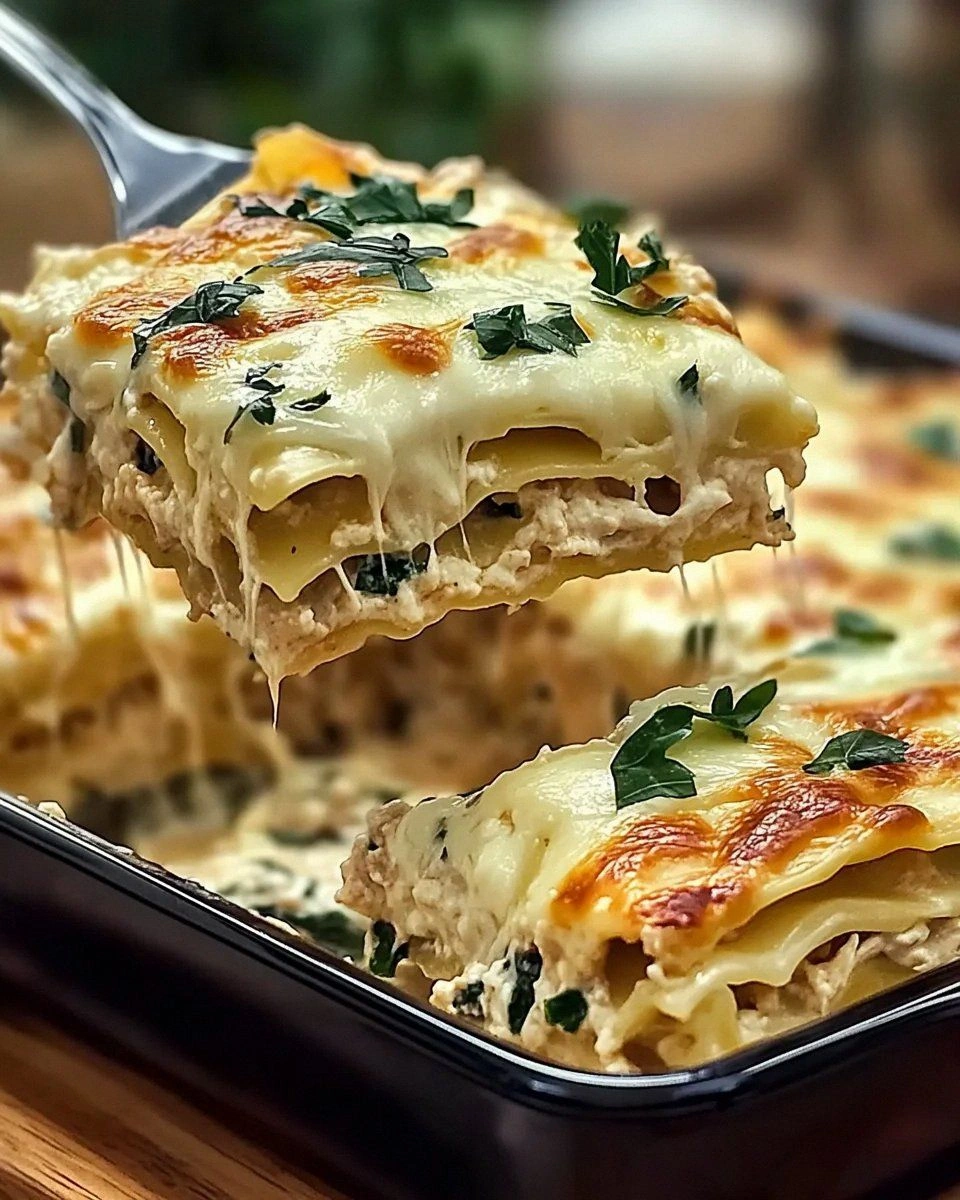
Future pacing moment: imagine yourself pulling a bubbling casserole from the oven, the aroma of roasted garlic and nutty Parm curling through the kitchen, your people hovering like moths to a porch light. You slice through those layers and the sauce oozes—not watery, not stodgy—just slow, lava-like perfection. I dare you to taste a corner piece, with its lacy, crispy cheese skirt, and not go back for seconds. Okay, ready for the game-changer? Let me walk you through every single step—by the end, you'll wonder how you ever made it any other way.
What Makes This Version Stand Out
Ultra-Stable Emulsion: Instead of simply melting cheese into cream, we create a glossy emulsion that refuses to break, even when you reheat leftovers in the microwave. The secret is a quick cornstarch slurry plus a shot of pasta water—think of it as culinary insurance.
Three-Cheese Complexity: Mozzarella for stretch, Parmigiano-Reggiano for umami punch, and a whisper of cream cheese for extra silkiness. Most recipes stop at two cheeses and end up one-note; the trio harmonizes like a boy band where every member can actually sing.
Sheet-Pan Chicken Hack: We roast diced chicken on a sheet pan with garlic butter so it browns beautifully while the lasagna noodles parboil. Those caramelized edges infuse every bite with roasty depth you can't get from poached bird.
No-Boil Noodle Workaround: Instead of fighting with brittle no-boil noodles or slippery pre-cooked sheets, we soak regular noodles in hot salted water while the sauce comes together. They finish cooking in the oven, absorbing flavor rather than turning gummy.
Make-Ahead Magic: Build it tonight, refrigerate up to 24 hours, then bake tomorrow. The resting time lets the pasta hydrate and the flavors mingle, meaning your Saturday dinner party just became stress-free.
Reheat Revelation: The leftover squares reheat like a dream thanks to a splash of broth and a low oven. Say goodbye to rubbery microwave disasters; this lasagna stays creamy for days.
One-Pot Sauce: Everything—garlic, cream, seasonings—happens in a single pot, so you aren't juggling pans like a short-order cook during the dinner rush.
Crispy Edge Guarantee: We bake uncovered at a higher temp for the first 20 minutes, then foil it to finish. The result: bubbling centers and caramelized, chewy edges that shatter like thin ice—my favorite part and, secretly, everyone else's.
Alright, let's break down exactly what goes into this masterpiece...
Inside the Ingredient List
The Flavor Base
Garlic is the opening act, and size matters here. Go with plump, fresh cloves—no bottled stuff. I mince rather than press because pressed garlic can turn bitter in the hot cream. Butter should be unsalted so you control the seasoning; salted butter varies wildly by brand and will hijack your carefully balanced sauce. Heavy cream forms the luxurious backbone, and yes, it has to be heavy. Light cream or half-and-half lack the fat content to keep the emulsion stable, so don't try to skinny this up or you'll end up with soup.
The Texture Crew
Whole-milk ricotta lightens the cheese layer, preventing that gut-bomb density you get from straight cream cheese. If ricotta feels too grainy for you, blitz it in a food processor for 30 seconds—suddenly it's cloud-like. Low-moisture mozzarella shreds melt evenly and won't weep puddles into your lasagna. Save the fresh mozz for caprese; you want the dry stuff here. Parmesan needs to be the real deal, aged at least 24 months. The older stuff has tyrosine crystals that pop with a delightful crunch and add nutty complexity you can't fake with a green can.
The Unexpected Star
Enter cream cheese, just two measly ounces. It acts like edible Velcro, keeping the sauce homogeneous even after refrigeration. Skip it and the alfredo separates faster than celebrity couples. For the chicken, I use boneless skinless thighs. Dark meat stays juicy through a second bake, unlike breast meat which dries out and becomes stringy. If you're a die-hard white-meat fan, swap in half-and-half chicken and mushrooms so you still get that tender bite.
The Final Flourish
Nutmex—that whisper of nutmeg—is the kicker. You want barely a pinch; think fairy dust, not pumpkin spice. It amplifies the dairy sweetness without announcing itself. Parsley should be flat-leaf (Italian) for a cleaner finish, and don't add it until serving or it turns swamp-colored. A crack of white pepper gives subtle heat without black specks marring the pale sauce.
Everything's prepped? Good. Let's get into the real action...
The Method — Step by Step
- Position a rack in the center and preheat your oven to 425°F. While it heats, fill your largest pot with 4 quarts of water, add ¼ cup kosher salt (yes, that much), and bring to a boil. The water should taste like the ocean; under-salted pasta water is the silent killer of flavor. Once boiling, submerge your lasagna sheets and let them soften for 7 minutes—just until pliable but not fully cooked. They'll finish later, so think al dente with a backbone.
- Meanwhile, line a sheet pan with parchment for easy cleanup. Dice 1½ pounds chicken thighs into ¾-inch pieces; go any smaller and they'll dry out. Melt 2 tablespoons butter with 1 tablespoon olive oil in the microwave, stir in ½ teaspoon each garlic powder and smoked paprika, plus plenty of salt and pepper. Toss the chicken in this glossy mixture, spread it in a single layer, and slide the pan into that screaming-hot oven for 12 minutes. You're looking for lightly golden edges and juices that run clear. That sizzle when it hits the pan? Absolute perfection.
- Now stay with me here—this next part is worth it. In a heavy 4-quart pot, melt 4 tablespoons unsalted butter over medium heat. Add 3 minced garlic cloves and cook until they perfume the kitchen but haven't browned, about 90 seconds. Browned garlic tastes bitter in cream sauces, so keep the heat gentle. Whisk in 3 tablespoons flour to form a smooth paste. You're making a quick roux, which thickens the sauce without eggs that can scramble.
- Gradually whisk in 3 cups cold heavy cream, 1 cup whole milk, and 1 cup of that starchy pasta water. Cold dairy prevents lumps; warm dairy plus hot roux equals cement. Bring to a bare simmer, stirring constantly, until it thickens enough to coat the back of a spoon. You'll know it's ready when you can draw a finger across the spoon and the line holds. Drop the heat to low and stir in ½ cup grated Parm, 2 ounces cream cheese, 1 teaspoon Dijon, and a pinch of nutmeg. The Dijon disappears but sharpens everything else—trust me.
- Drain the par-cooked noodles and lay them on a kitchen-towel-lined cutting board. Pat the tops dry too; excess water dilutes flavor and causes soupy layers. In a bowl, combine 15 ounces ricotta, 1 beaten egg, ½ cup Parm, a handful of parsley, salt, and plenty of cracked white pepper. Stir until creamy; this layer keeps the lasagna lofty.
- Assembly time—the fun part. Ladle ½ cup alfredo into a 9×13-inch baking dish to prevent sticking. Add your first noodle layer, overlapping slightly. Spread one-third of the ricotta mixture, then half the chicken, then mozzarella, then sauce. Repeat, finishing with noodles, sauce, and a final snowdrift of mozzarella and Parm. Press gently so sauce creeps up the sides; dry edges are sad edges.
- Cover with foil that's been lightly greased (so cheese doesn't stick) and bake 25 minutes. Remove foil, crank the oven up to 450°F, and bake another 10-12 minutes until the top is freckled gold and the sauce is percolating around the edges. Let it rest 15 minutes—yes, it's torture, but the layers set and the molten cheese won't scorch tongues. Sprinkle fresh parsley, slice into hefty squares, and bask in the applause.
That's it—you did it. But hold on, I've got a few more tricks that'll take this to another level...
Insider Tricks for Flawless Results
The Temperature Rule Nobody Follows
Most recipes say "bake until bubbly," but here's the nuance: pull the lasagna when the internal temp hits 165°F. Anything higher and the proteins in dairy tighten, squeezing out moisture and leaving rubbery layers. An instant-read thermometer costs ten bucks and eliminates guesswork. Insert it dead center, avoiding the baking dish which conducts heat faster. Once you hit the magic number, yank that beauty out, tent loosely with foil, and let carry-over heat finish the job.
Why Your Nose Knows Best
Your kitchen will smell incredible midway through, but wait for the aroma to shift from milky-sweet to lightly nutty before removing the foil. That whiff signals the Maillard reaction is happening on top, creating deep, toasted flavors. If you foil too early, you'll steam the cheese instead of browning it. Conversely, if it already smells like caramel when you uncover, you've got 5 minutes max before over-browning. Think of your nose as a built-in kitchen timer.
The 5-Minute Rest That Changes Everything
I know, I know—everyone's starving and the game is on. But cutting too soon equals lava flows and collapsed squares. Five minutes tented with foil lets starches set, so layers hold when you serve. For potluck transport, underbake by 5 minutes; the residual heat finishes cooking without drying. A friend tried skipping this step once—let's just say it didn't end well, and she still hears about "pasta soup" at family reunions.
Creative Twists and Variations
This recipe is a playground. Here are some of my favorite ways to switch things up:
Spinach & Sun-Dried Tomato
Fold 5 ounces thawed, squeezed-dry spinach and ½ cup chopped sun-dried tomatoes into the ricotta layer. The spinach adds earthiness and color; tomatoes give tangy pops that cut through richness. Swap mozzarella for fontina if you want funkier melt.
Bacon Ranch Mash-Up
Replace half the chicken with crumbled, crispy bacon. Stir 1 tablespoon ranch seasoning into the alfredo base. Top with chopped chives instead of parsley. It's like your favorite pizza joint and steakhouse had a delicious baby.
Mushroom Truffle Dream
Sauté 12 ounces creminis until deeply browned, then layer them in place of chicken. Finish the baked lasagna with a whisper of white truffle oil. Vegetarians rejoice, and carnivores won't miss the meat.
Buffalo Heatwave
Toss the cooked chicken with ¼ cup buffalo sauce, then proceed as written. Add a sprinkle of crumbled blue cheese on top for the final 5 minutes of baking. Perfect for game-day cravings.
Seafood Supreme (Weekend Indulgence)
Substitute shrimp and lump crab for chicken, folding them in raw—they'll cook gently in the oven. Add lemon zest to the ricotta and swap parsley for dill. Pricey, yes, but you'll feel like you're dining dockside in Maine.
Mac-n-Chee-Meets-Lasagna
Use elbow macaroni par-cooked 3 minutes instead of lasagna sheets. Layer as directed, but finish with a topping of buttered panko for crunch. Kids lose their minds over this hybrid.
Storing and Bringing It Back to Life
Fridge Storage
Cool the lasagna to room temp, then cover tightly with foil or transfer to an airtight container. It keeps 4 days refrigerated. Pro tip: slice into squares first; they stack like cheesy building blocks and reheat faster than a whole casserole.
Freezer Friendly
Wrap individual slices in plastic, then foil, and freeze up to 2 months. For a whole pan, line it with parchment overhang before assembling. Once frozen solid, lift out the block, wrap, and slide back into the dish when ready to bake. Thaw overnight in the fridge, then bake 25 minutes at 375°F until center is 165°F.
Best Reheating Method
Place a slice in a small baking dish, splash with 2 tablespoons chicken broth, cover with foil, and warm 15 minutes at 350°F. The broth creates steam, returning that just-baked creaminess. Microwave works in a pinch: set at 60% power, cover with a damp paper towel, and heat 90 seconds, rotating halfway.