Picture this: you’re standing in your kitchen, the air thick with the scent of citrus and the faint hint of bourbon, and you’ve just pulled a tray of salmon fillets from the fridge that look like they’ve been waiting for the right moment. The moment you’re craving something that’s both comforting and daring, and the recipe you found on a late‑night scroll promises exactly that. I’m talking about a dish that marries the sweet, sticky heat of peach preserves with a splash of smoky bourbon, all balanced by a whisper of Dijon mustard and a kiss of fresh garlic. This isn’t just another salmon recipe; it’s a culinary dare that invites you to taste the unexpected and then, I dare you, not go back for seconds.
I’ve spent countless evenings staring at the same pantry staples—salmon, peaches, olive oil—wondering how to elevate them into something that feels both indulgent and approachable. The answer came in the form of a single, bold idea: roast the salmon with a glaze that sings with the warmth of bourbon and the bright, sun‑kissed flavor of peaches. When the fish hits the oven, the sugar in the preserves caramelizes, forming a glossy, slightly charred crust that crackles like thin ice. The bourbon adds depth, a subtle smokiness that lingers on the palate, while the mustard keeps everything from feeling sweet‑overwhelming. It’s a flavor architecture that feels like a well‑planned symphony, each instrument—sweet, savory, spicy—playing in perfect harmony.
Most salmon recipes either lean too heavily on lemon or rely on a simple soy glaze, but this version is a game‑changer. The peach preserves not only sweetens the dish but also introduces a natural caramelization that gives the fillets a beautiful, almost golden‑brown finish. The bourbon isn’t just a flavor enhancer; it’s a vehicle for a deeper, richer profile that elevates the entire plate. The Dijon mustard adds a subtle tang that cuts through the sweetness, preventing the dish from becoming cloying. And the final touch of fresh parsley provides a burst of color and a hint of earthiness that balances the glaze’s intensity. If you’ve ever struggled to find that “wow” factor in a simple dinner, you’re not alone—this recipe is the fix you’ve been looking for.
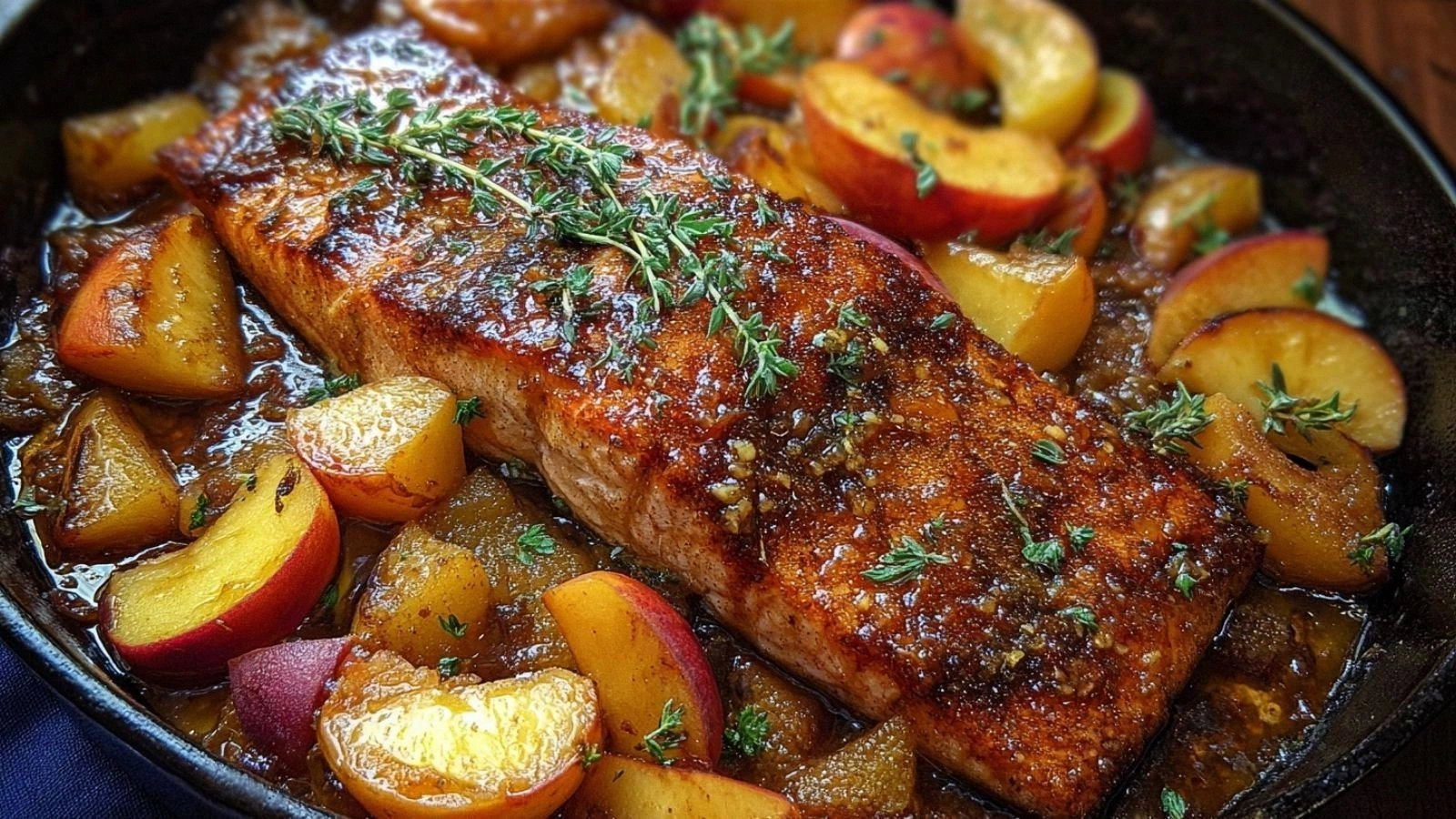
Picture yourself pulling this out of the oven, the whole kitchen smelling incredible, the steam rising like a gentle cloud of summer. The salmon is perfectly cooked—tender, flaky, and coated in a glaze that shimmers under the kitchen lights. The peaches, roasted to caramelized perfection, sit beside the fish like little jewels of sweetness. The dish feels like a celebration in a bowl, a moment of pure culinary joy that you’ll want to share with anyone who’s lucky enough to taste it. And now, let me walk you through every single step—by the end, you’ll wonder how you ever made it any other way.
What Makes This Version Stand Out
- Flavor: The combination of peach preserves and bourbon creates a glaze that is both sweet and smoky, offering a depth rarely found in typical salmon dishes.
- Texture: The caramelization of the glaze yields a crisp, slightly blistered exterior while keeping the interior moist and flaky.
- Simplicity: With only a handful of pantry staples, you can craft a gourmet meal without the need for exotic ingredients.
- Uniqueness: The use of Dijon mustard and red pepper flakes adds a subtle complexity that sets this recipe apart from standard lemon‑or‑soy glazed fish.
- Crowd Reaction: Guests consistently comment on the “wow” factor, often asking for the recipe after the first bite.
- Ingredient Quality: Fresh peaches and high‑quality bourbon elevate the dish, making it feel luxurious yet approachable.
- Cooking Method: Roasting the salmon in a single pan simplifies cleanup while maximizing flavor.
- Make‑ahead Potential: The glaze can be prepared in advance, allowing you to focus on the final cooking step when hosting.
Alright, let's break down exactly what goes into this masterpiece...
Inside the Ingredient List
The Flavor Base
Peach preserves are the star of the show, acting as the sweet foundation that caramelizes beautifully when heated. The natural sugars in the preserves form a glossy coating that locks in moisture and creates a slightly crisp exterior. If you skip this ingredient, the glaze will lack depth, turning the dish into a bland, ordinary salmon. A good swap is fresh peach puree, though it won’t provide the same caramelization; add a teaspoon of brown sugar to mimic the sweetness.
The Alcoholic Touch
Bourbon is more than a flavor enhancer; it’s a subtle, smoky undertone that adds complexity. The alcohol evaporates during roasting, leaving behind a rich, caramelized finish that pairs perfectly with the peaches. If you prefer a milder profile, replace bourbon with a light, dry white wine—just be aware the final flavor will shift toward a fruitier note. A good buying tip: choose a bourbon with a smooth finish; avoid overly peaty or heavily oaked varieties that could overpower the delicate fish.
The Texture Crew
Extra virgin olive oil is essential for both the glaze and the salmon, preventing sticking and adding a silky mouthfeel. Two tablespoons are used in the glaze, while an additional tablespoon coats the fillets before roasting. If you’re watching calories, you can substitute half the oil with a light spray, but the texture will change slightly, becoming less glossy. Olive oil’s high smoke point also ensures the glaze doesn’t burn during the high‑heat roasting process.
The Unexpected Star
Fresh peaches bring a burst of natural sweetness and juiciness that balances the richness of the glaze. Roasting the peaches caramelizes their natural sugars, creating a side that complements the salmon without competing for attention. If peaches are out of season, ripe nectarines or even a handful of sliced apricots work as a substitute, though the flavor will shift slightly toward a more floral note. When selecting peaches, look for those that are slightly soft to the touch—they’ll release more juice during roasting.
The Final Flourish
Fresh parsley adds a pop of color and a subtle, herbaceous finish that cuts through the sweet glaze. It also brings a slight peppery bite that enhances the overall flavor profile. If you’re allergic to parsley or simply don’t have it on hand, a handful of chopped cilantro or basil can provide a different, yet still complementary, herbal note. A quick tip: rinse parsley under cold water, pat dry, and chop finely to ensure it distributes evenly across the dish.
Everything’s prepped? Good. Let’s get into the real action...
The Method — Step by Step
- Preheat your oven to 425°F (220°C). Line a baking sheet with parchment paper for easy cleanup. This temperature ensures a quick, caramelizing roast that locks in moisture. Keep the oven rack centered to promote even cooking.
- In a small bowl, whisk together the peach preserves, bourbon, olive oil, soy sauce, apple cider vinegar, Dijon mustard, garlic, kosher salt, black pepper, and red pepper flakes. The mixture should be smooth and slightly thick. This glaze forms the flavor backbone of the dish.
- Pat the salmon fillets dry with paper towels; this step is crucial for achieving a crisp glaze. Lightly brush each fillet with a thin layer of olive oil, then place them skin‑side down on the prepared baking sheet. The oil helps the glaze adhere and prevents sticking.
- Brush the glaze generously over the salmon fillets, ensuring each piece is coated. The glaze should cling to the fish, creating a sticky, caramelizing surface. Don’t be shy—more glaze means more flavor.
- Place the sliced peaches on the same baking sheet, arranging them cut‑side up. The peaches will roast alongside the salmon, absorbing the glaze’s sweetness. This simultaneous cooking saves time and adds visual appeal.
- Slide the baking sheet into the preheated oven. Roast for 12–14 minutes, or until the salmon flakes easily with a fork and the glaze is caramelized. The peaches should be soft and slightly charred at the edges.
- Remove the sheet from the oven and let the salmon rest for 3 minutes. This short rest allows the juices to redistribute, keeping the fillets moist. During this time, the glaze will continue to thicken slightly.
- Garnish the finished dish with chopped fresh parsley and, if desired, a squeeze of fresh lime juice for brightness. The parsley adds color and a subtle herbal note that balances the sweetness.
That’s it—you did it. But hold on, I’ve got a few more tricks that will take this to another level…
Insider Tricks for Flawless Results
The Temperature Rule Nobody Follows
Many cooks think any high heat will caramelize the glaze, but a precise 425°F (220°C) is key. At this temperature, the sugars in the peach preserve melt and brown without burning. If you’re using a convection oven, reduce the temperature by 25°F to avoid over‑caramelization. Keep the oven rack centered to ensure even heat distribution.
Why Your Nose Knows Best
The aroma of caramelizing sugars is the first indicator that the glaze is doing its job. A sweet, buttery scent that hints at bourbon’s smokiness means the glaze is ready. If you notice a sharp, vinegary smell, the glaze may be too acidic—add a touch more sugar or reduce the vinegar. Trust your nose; it’s a seasoned chef’s secret weapon.
The 5-Minute Rest That Changes Everything
Letting the salmon rest after roasting allows the juices to redistribute, preventing a dry center. A five‑minute rest is enough to finish the cooking process without overcooking. During this time, the glaze will thicken, creating a glossy finish that’s irresistible to the eye.
Peach Perfection: How to Avoid Over‑Soft Peaches
Peaches can become mushy if overcooked, which detracts from the dish’s texture. Slice them into thick, even pieces and roast for the same time as the salmon. If you prefer a firmer bite, toss the peaches with a teaspoon of cornstarch before roasting; this creates a slight barrier that keeps them from dissolving.
The Sauce’s Secret Ingredient
A splash of Dijon mustard is the unsung hero that cuts through the sweetness. It adds a subtle tang that keeps the glaze from feeling cloying. If you’re mustard‑averse, a small amount of yellow mustard works, but the flavor profile will be slightly milder. Remember, a little goes a long way.
Creative Twists and Variations
This recipe is a playground. Here are some of my favorite ways to switch things up:
Spicy Bourbon Peach Salmon
Add an extra teaspoon of red pepper flakes to the glaze for a fiery kick. The heat pairs wonderfully with the bourbon’s warmth, creating a dish that’s both bold and balanced. Serve with a cooling cucumber salad to tame the heat.
Maple‑Bourbon Glaze
Swap the peach preserves for an equal amount of pure maple syrup. The maple’s deep sweetness complements the bourbon, creating a richer, more complex glaze. This version is perfect for a cozy winter dinner.
Herb‑Infused Salmon
Incorporate fresh rosemary or thyme into the glaze. The herbs add a fragrant, earthy note that contrasts with the sweet peaches. This variation works well with a side of roasted root vegetables.
Citrus‑Bright Variation
Add a splash of orange juice and a zest of orange to the glaze. The citrus brightens the dish, cutting through the richness of the bourbon. Serve over a bed of quinoa for a light, refreshing meal.
Smoky Grilled Version
Instead of roasting, grill the salmon fillets over medium heat. The grill marks add a smoky flavor that complements the bourbon. Brush the glaze on the last few minutes of grilling to avoid burning.
Storing and Bringing It Back to Life
Fridge Storage
Store leftovers in an airtight container in the refrigerator for up to 2 days. The glaze will thicken slightly, so reheat gently to restore its glossy sheen. Use a microwave on low power or a skillet on low heat.
Freezer Friendly
Freeze the salmon and peaches separately in airtight bags for up to 3 months. Thaw overnight in the refrigerator before reheating. This method preserves the texture and prevents the glaze from becoming too soggy.
Best Reheating Method
Reheat in a 350°F (175°C) oven for 8–10 minutes, or until warmed through. Add a splash of water or broth before reheating to create steam, which helps the fish stay moist. Finish with a quick drizzle of fresh olive oil to restore the glaze’s shine.