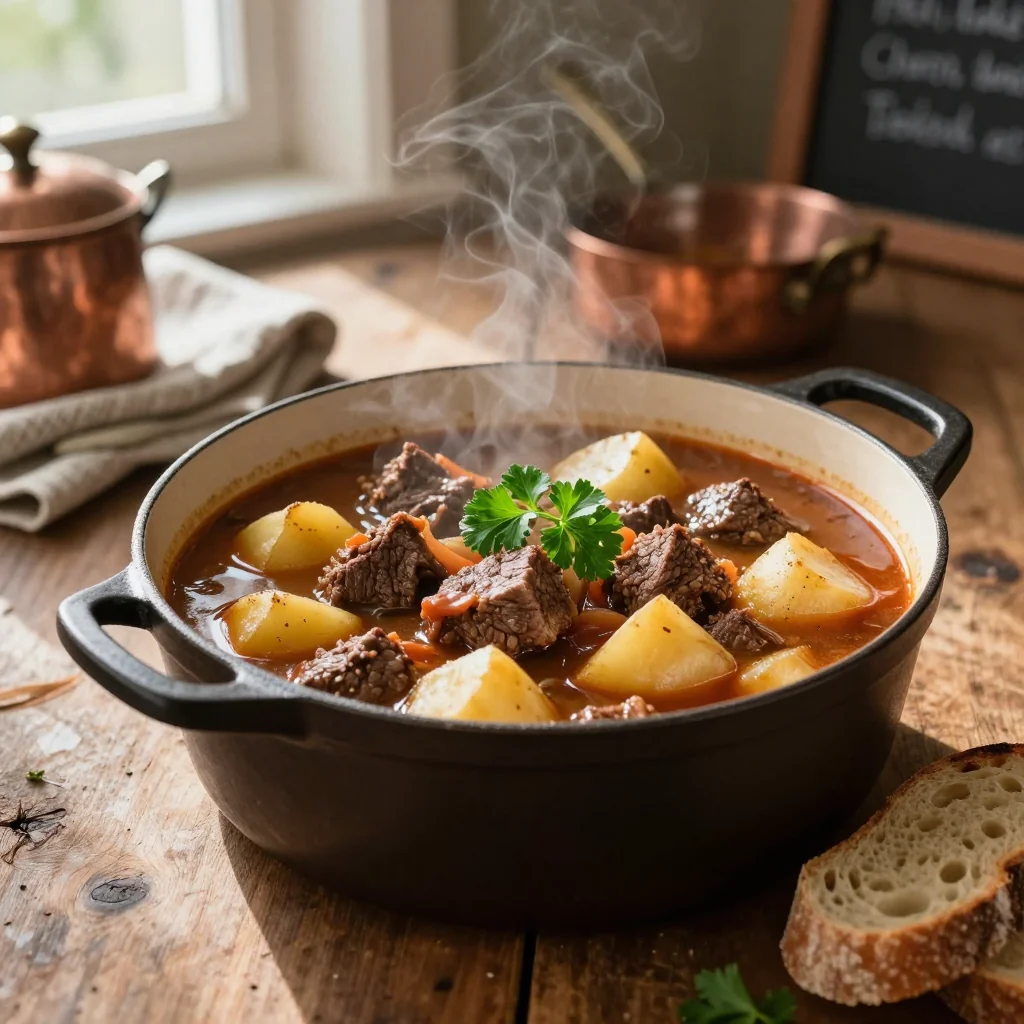
A timeless, slow‑cooked comfort dish that brings together tender beef, buttery potatoes, and aromatic vegetables in a rich, savory broth.
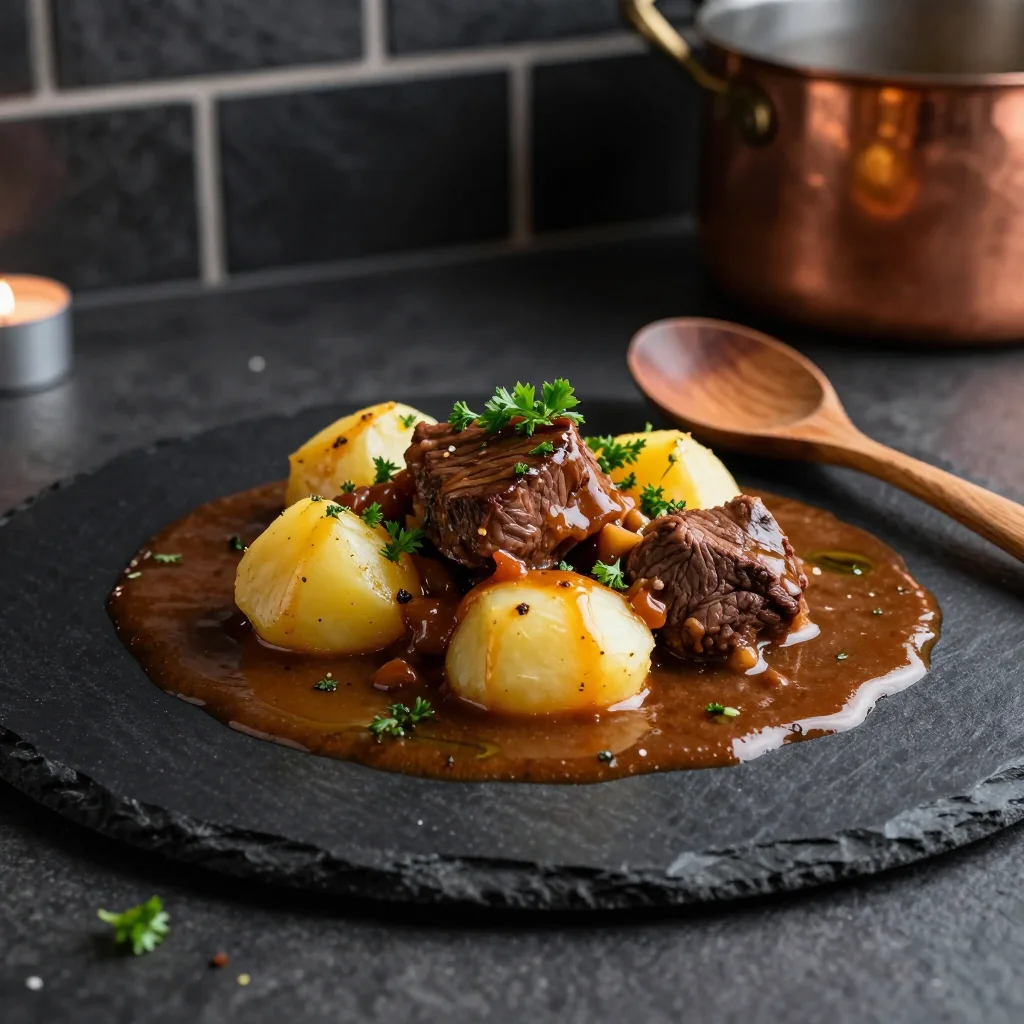
When I was a child, the scent of simmering beef and potatoes drifting from my grandmother’s kitchen was the very definition of home. I remember perched on a wooden stool, watching her gently stir the pot, the steam curling like soft whispers around the copper lid. That memory has become the heart of every stew I create, especially this Beef Stew with Potatoes, which captures the warmth of those winter evenings and the bright promise of a hearty meal any time of year.
This dish hails from the classic French countryside, where slow‑cooked stews have long been a staple for feeding families after a day’s hard work. The combination of robust beef, earthy root vegetables, and a broth enriched with red wine and herbs makes it both rustic and refined. It’s a dish that honors tradition while offering the flexibility to adapt to modern kitchens.
In this article, you’ll discover the step‑by‑step method that guarantees melt‑in‑your‑mouth beef, perfectly creamy potatoes, and a broth that clings lovingly to every bite. I’ll share the science behind browning meat, the importance of layering flavors, and tips for adjusting the recipe to suit your own palate.
So tie on your apron, preheat your pot, and let’s embark on a culinary journey that will fill your home with aroma, comfort, and unforgettable taste.
🌟 Why This Recipe Will Captivate You
From the first spoonful to the last, this stew delivers depth, balance, and a comforting heartiness that makes it perfect for any season.
- ✨ Unmatched Depth of Flavor : The slow caramelization of beef creates a rich, umami base that deepens with each hour of simmering.
- ✨ Perfectly Tender Beef : By searing before braising, the meat retains its juices while becoming melt‑soft, eliminating any toughness.
- ✨ Creamy, Yet Firm Potatoes : Our technique of adding potatoes midway ensures they absorb the broth without disintegrating.
- ✨ Balanced Nutrition : Packed with protein, fiber, and essential vitamins, this stew nourishes both body and soul.
- ✨ Versatile Pairings : Whether you serve it with crusty bread, a side of polenta, or a fresh green salad, it elevates any accompaniment.
- ✨ Family‑Friendly Appeal : The comforting aromas and familiar textures make it a hit for children and adults alike.
🥗 Ingredients
📝 Complete Ingredient List
For the Stew Base:
For the Vegetables:
For Seasoning:
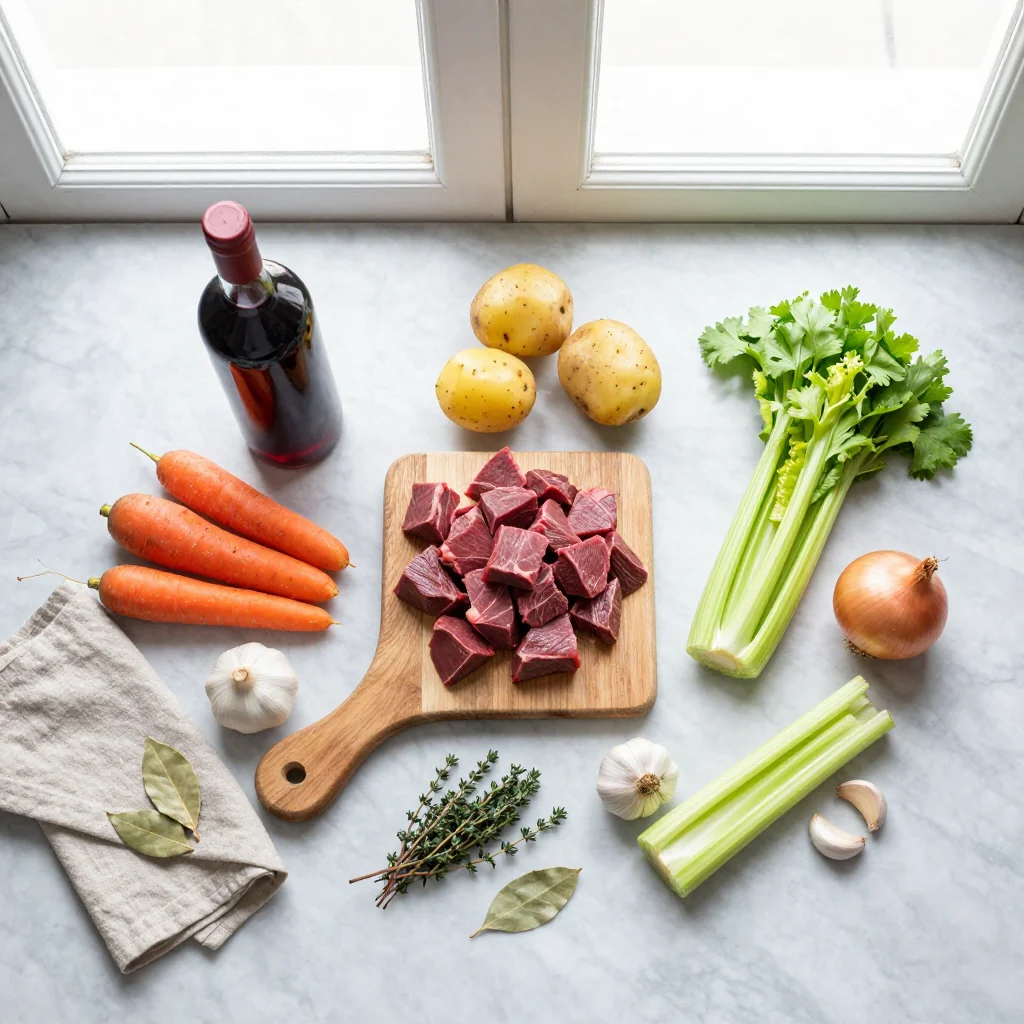
🔍 Focus on Key Ingredients
Beef Chuck
Beef chuck is prized for its balance of meat and connective tissue. When braised slowly, the collagen dissolves into gelatin, giving the broth a silky mouthfeel. Look for a cut with visible marbling; the fat renders into the sauce, enriching the flavor without overwhelming the dish.
Red Wine
The addition of a dry red wine adds acidity that brightens the deep, savory notes of the beef. It also contributes tannins that help to tenderize the meat. Choose a wine you would enjoy drinking—something like a Cabernet Sauvignon or a Merlot works beautifully.
Fresh Herbs (Thyme, Parsley, Bay Leaf)
Fresh herbs provide aromatic layers that evolve during the long simmer. Thyme offers an earthy, slightly floral note, while parsley adds a fresh burst at the end. The bay leaf contributes a subtle, resinous background that ties the flavors together.
🔄 Quick Substitutions
| If you don’t have… | Use instead… |
|---|---|
| Beef chuck | Beef short ribs or stew meat |
| Red wine | Extra beef broth + 1 tbsp balsamic vinegar |
| Fresh thyme | 1 tsp dried thyme (reduce by half) |
👨🍳 Step‑by‑Step Instructions
Follow these detailed steps to create a stew that’s both comforting and sophisticated. Each phase builds flavor, texture, and aroma, ensuring a flawless result.
📋 Phase 1: Preparation & Mise en Place
Before the heat hits the pot, organize and prep all components for a smooth cooking experience.
Trim and Cube the Beef
Pat the beef cubes dry with paper towels—moisture hinders browning. Cut the chuck into uniform 1‑inch pieces so they cook evenly. Season lightly with salt and pepper; this early seasoning begins the flavor development.
Prep the Vegetables
Peel the potatoes and cut them into 1‑inch cubes, ensuring they hold their shape during the long simmer. Slice carrots into rounds about ½‑inch thick. Finely chop the onion and mince the garlic; these aromatics will form the flavor foundation.
🔥 Phase 2: Browning & Braising
This phase creates the deep, caramelized base that defines the stew’s richness.
Brown the Beef
Heat 2 tbsp olive oil in a heavy‑bottomed Dutch oven over medium‑high heat. Add the beef in batches, ensuring the pan isn’t crowded. Sear each side until a dark, caramel crust forms—about 3‑4 minutes per side. Transfer browned pieces to a plate and set aside.
Sauté Aromatics
In the same pot, reduce heat to medium and add a splash more oil if needed. Toss in the onion and sauté until translucent, about 5 minutes. Add garlic and tomato paste; cook, stirring constantly, for another 2 minutes until the paste darkens slightly and the garlic is fragrant.
Deglaze with Red Wine
Pour the red wine into the pot, scraping the browned bits (fond) from the bottom with a wooden spoon. Let the wine reduce by half, approximately 3‑4 minutes, concentrating its flavors and removing raw alcohol notes.
Combine Beef, Broth, and Herbs
Return the browned beef to the pot. Add the beef broth, bay leaf, thyme, and smoked paprika (if using). Stir to incorporate, then bring the mixture to a gentle boil. Once boiling, reduce the heat to low, cover, and let it simmer for 60 minutes.
✨ Phase 3: Finishing & Serving
Add the vegetables at the right moment to preserve texture, then finish with fresh herbs.
Add Carrots and Potatoes
After the first hour of simmering, stir in the carrots and potatoes. Continue to simmer, uncovered, for an additional 30‑35 minutes, or until the vegetables are fork‑tender and the beef is meltingly soft.
Season and Finish
Remove the bay leaf. Taste the stew and adjust salt and pepper as needed. Sprinkle the chopped parsley for a fresh, bright finish. If you desire a thicker broth, mash a few potatoes against the side of the pot and stir.
Serve
Ladle the stew into deep bowls, ensuring each serving gets a generous amount of beef, potatoes, and broth. Pair with crusty sourdough or a simple green salad for a complete meal.
💡 Expert Tips & Tricks
🛒 Choosing the Right Ingredients
When selecting beef, look for cuts labeled “chuck” or “shoulder” with visible marbling; these contain enough connective tissue to break down into gelatin, giving the stew its luscious mouthfeel. For potatoes, Yukon Gold or red potatoes hold their shape while providing a buttery interior. Fresh herbs should be vibrant—no wilted leaves—because they lose aroma quickly. If possible, purchase a small bunch of thyme and parsley on the same day you plan to cook.
🔪 Preparation Techniques
Patting the meat dry is essential for a proper sear; moisture creates steam, preventing the Maillard reaction. Cut vegetables uniformly—this ensures even cooking and prevents some pieces from becoming mushy while others remain firm. Use a sharp chef’s knife for clean cuts, which also reduces bruising that can release excess water.
🌡️ Mastering the Cooking Process
Maintain a low, steady simmer after the initial boil. A vigorous boil can toughen the meat and cause the potatoes to fall apart. Use a heavy‑bottomed pot to distribute heat evenly and avoid hot spots. If the stew looks too thick during cooking, add a splash of broth or water; if too thin, uncover and let it reduce.
🍽️ Presentation & Service
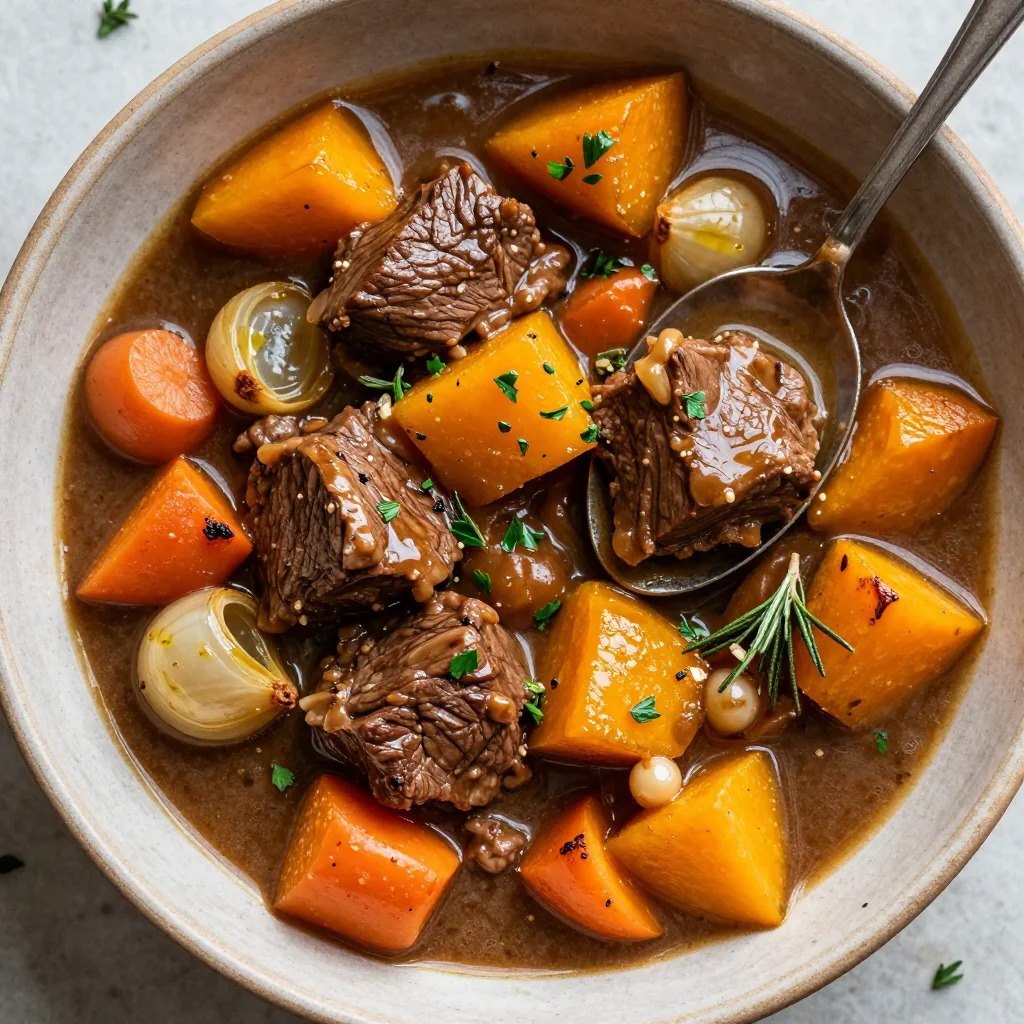
Serve the stew in shallow bowls to showcase the colorful vegetables. Garnish with a sprinkle of fresh parsley and a drizzle of high‑quality olive oil for a glossy finish. Pair with a crusty baguette to soak up the broth, and consider a light drizzle of aged balsamic for a sweet‑savory contrast.
🏆 Pro Tips
Professional chefs rely on precision, timing, and scientific understanding to turn a good stew into an unforgettable masterpiece.
- 🎯 Sear at the Right Temperature : Heat the pan until a drop of water sizzles and evaporates instantly. This ensures the surface temperature is high enough for the Maillard reaction, creating complex flavor compounds.
- 🎯 Deglaze Promptly : After searing, add the wine while the pan is still hot. The rapid deglazing lifts caramelized bits, preventing them from burning and infusing the broth with deep, roasted notes.
- 🎯 Layer Salt : Lightly salt the beef before searing and again after the broth has reduced. This staged salting builds flavor without making the final dish overly salty.
- 🎯 Control Moisture : Adding potatoes too early releases starch, thickening the broth prematurely. Introducing them midway preserves their structure and allows you to adjust thickness later.
- 🎯 Use a Heavy‑Bottomed Pot : Uniform heat distribution prevents scorching and ensures a consistent simmer, crucial for breaking down collagen evenly.
- 🎯 Rest Before Serving : Let the stew rest off the heat for 10‑15 minutes; this allows flavors to meld and the sauce to achieve a velvety texture.
"A great stew is a symphony of patience, heat, and love. The longer you let the flavors converse, the richer the story becomes." — Chef Alain Ducasse
🔄 Variations & Adaptations
The beauty of this stew lies in its adaptability. Below are several ways to customize the dish for dietary preferences, flavor profiles, and seasonal twists.
🥬 Vegetarian / Vegan Version
Replace the beef with hearty plant‑based proteins such as seitan or soy‑based “beef” chunks. Use vegetable broth instead of beef broth and add a tablespoon of miso paste for umami depth. The cooking process remains the same, but add the plant proteins after the broth has reduced to avoid over‑cooking.
- Seitan cubes (1.5 lb) – provides a chewy texture similar to meat.
- 1 tbsp white miso – adds savory depth without dairy.
🌶️ Flavor Variations
Experiment with global spice blends to give the stew a new personality.
Spicy Mexican Twist :
Stir in 1 tsp chipotle powder and a diced jalapeño during the simmer. Finish with a squeeze of lime and a handful of fresh cilantro.
Mediterranean Flair :
Replace thyme with oregano, add ½ cup chopped olives, and finish with a drizzle of extra‑virgin olive oil and a sprinkle of feta cheese.
Asian‑Inspired Variation :
Swap the red wine for ½ cup soy sauce mixed with ¼ cup rice vinegar. Add 1 tbsp grated ginger and a splash of sesame oil at the end.
⚠️ Dietary Adaptations
Gluten‑Free :
All ingredients are naturally gluten‑free; ensure the broth and any added sauces are certified gluten‑free.
Lactose‑Free :
This recipe contains no dairy, making it automatically suitable for lactose‑intolerant diners.
Low‑Calorie :
Trim the amount of olive oil to 1 tbsp, use leaner cuts of beef (such as sirloin tip), and increase the proportion of vegetables while reducing the broth volume.
👶 Family / Kids Version
For younger palates, reduce the amount of thyme and bay leaf, and add a splash of apple juice to introduce a subtle sweetness. Serve with soft dinner rolls and let kids sprinkle their own cheese on top for a fun, interactive meal.
📦 Storage & Reheating
🧊 Conservation
Refrigerator :
- Duration: 4 days
- Container: Airtight glass or BPA‑free plastic container
- Tip: Let the stew cool to room temperature before sealing to prevent condensation.
Freezer :
- Duration: 3 months
- Method: Portion into freezer‑safe bags, remove excess air, label with date.
- Defrost: Transfer to refrigerator overnight or use the defrost setting on your microwave.
💡 For best texture, reheat only the portion you plan to eat; large batches can become overly thick after multiple reheats.
♨️ Reheating
🔥 Oven (Recommended) :
- Preheat to 180 °C (350 °F).
- Cover the dish with aluminum foil to retain moisture.
- Heat for 20‑25 minutes, stirring halfway.
- Remove foil, increase temperature to 200 °C and bake 5‑7 minutes to restore a slight crust on the meat.
⚡ Microwave (Quick) :
- Place portion in a microwave‑safe bowl, cover with a microwave‑safe lid.
- Heat on medium power for 2‑3 minutes, stir, then continue in 1‑minute bursts until hot.
🍳 Stovetop :
Transfer the stew to a saucepan, add a splash of broth if needed, and simmer over low heat, stirring occasionally, until bubbling gently.
🍷 Perfect Pairings
🥗 Side Dishes
- Garlic‑Herb Sourdough : The crusty texture soaks up the broth, while the garlic complements the stew’s aromatics.
- Arugula & Walnut Salad : Peppery arugula and crunchy walnuts add contrast to the soft stew.
- Roasted Brussels Sprouts : Their caramelized edges echo the stew’s deep flavors.
🍷 Wine & Beverage Pairings
- Red Bordeaux : Its firm tannins balance the richness of the beef and cut through the broth’s fat.
- Pinot Noir : Light‑bodied with bright acidity, it enhances the herbal notes.
- Non‑Alcoholic : A sparkling apple cider provides a refreshing, slightly sweet counterpoint.
🍰 To Complete the Meal
Start with a simple mixed greens salad dressed with lemon vinaigrette, followed by the stew as the main course. Finish with a classic French tarte Tatin or a light lemon panna cotta for a sweet, citrusy finale that cleanses the palate.
❓ Frequently Asked Questions
Q: Can I use a pressure cooker instead of a Dutch oven?
Yes. After browning the beef and sautéing the aromatics, transfer everything to a pressure cooker. Cook on high pressure for 25‑30 minutes, then perform a natural release. This method reduces cooking time dramatically while still delivering tender meat and infused flavors.
Q: How do I know when the beef is perfectly tender?
When you insert a fork into a piece of meat, it should glide in with minimal resistance and the meat should feel almost buttery. If the beef still feels firm, continue simmering, checking every 10 minutes.
Q: My stew turned out too salty. What can I do?
Add a peeled raw potato to the pot and simmer for 10‑15 minutes; the potato will absorb excess salt. Remove the potato before serving. Alternatively, dilute with a bit more unsalted broth.
Q: Can I freeze the stew with the potatoes?
Yes, but be aware that potatoes may become slightly grainy after thawing. For the best texture, consider freezing the stew without potatoes and add freshly cooked potatoes when reheating.
Q: How can I make the broth thicker without adding flour?
Puree a portion of the cooked carrots and potatoes, then stir the puree back into the stew. This naturally thickens the broth while enhancing the vegetable flavor.
Q: Is it possible to make this stew dairy‑free?
The original recipe is already dairy‑free. Just ensure any optional garnishes, such as cheese, are omitted or substituted with a dairy‑free alternative.
🎉 To Your Kitchen!
Beef Stew with Potatoes is more than a recipe; it’s a celebration of patience, flavor, and comfort. By following the detailed steps and embracing the tips shared, you’ll create a dish that warms the heart and satisfies the palate, whether it’s served on a chilly winter night or a sunny summer evening.
Remember, the magic lies in the slow simmer, the careful layering of aromatics, and the love you pour into each stir. Share your results, ask questions, and let this stew become a beloved staple in your culinary repertoire.
Have you tried this recipe?
Leave a comment and rating below! Share your photos on Instagram with #StewSeason for a chance to be featured.
Beef Stew with Potatoes
A hearty, slow‑cooked stew that blends tender beef, buttery potatoes, and aromatic herbs for ultimate comfort.
📝 Ingredients
Stew Base
Vegetables & Herbs
👨🍳 Instructions
- 1
Pat beef dry, season, and brown in olive oil until a deep crust forms.
- 2
Sauté onion, garlic, and tomato paste until fragrant.
- 3
Deglaze with red wine, reduce by half.
- 4
Add broth, herbs, and browned beef; simmer covered for 60 minutes.
- 5
Add carrots and potatoes; continue simmering uncovered for 30‑35 minutes.
- 6
Season with salt, pepper, and smoked paprika; stir in parsley.
- 7
Serve hot, accompanied by crusty bread.
- 8
Store leftovers in airtight containers; reheat gently.
- 9
Enjoy the comforting flavors and share with loved ones.
- 10
Leave a review and let us know how you customized the stew!
🥗 Nutrition Facts (per serving)
*Nutritional values are estimates based on standard ingredient data.
📚 You Might Also Like

Classic Chicken Noodle Soup

Lentil & Sausage Stew

Moroccan Lamb Tagine





💬 Comments & Reviews
Leave a Comment
[User comments will appear here]